

Kalhibih Drinks: Redefining zero-proof beverage culture in Addu and beyond
When Hamdan Ali returned to Addu after sixteen years working across resorts in the Maldives, the pause brought by the pandemic presented an unexpected turning point. What began as casual experiments in home mixology soon evolved into the country’s first dedicated zero-per-cent cocktail bar — Kalhibih Drinks, an emerging name now shaping conversations around wellness, creativity, and beverage innovation within the Maldivian hospitality sector.
Today, Kalhibih Drinks operates as both a community hub in Addu City and a growing partner for resorts seeking beverage programmes that reflect global no-and-low trends. But its origins remain firmly rooted in a moment of curiosity. “After dedicating over 16 years to luxury hospitality, the pandemic brought me back home,” Hamdan recalled. “Initial boredom soon led to an exciting new venture, ordering mixology essentials from Malé and experimenting at home. Inviting friends over to taste my creations, their enthusiastic reception was an undeniable ‘aha’ moment.”
A friend later coined the name “Kalhibih Drinks,” drawing from the Kalhibih side of Feydhoo — a reminder that the brand was built from place and community before it evolved into a hospitality concept. Yet the deeper spark emerged from a gap Hamdan had long observed in resorts: “Guests enjoying alcoholic beverages often revelled in beautifully crafted cocktails, while those abstaining were typically relegated to simple juices or basic mocktails. I realised there was no reason why 0% options shouldn’t receive the same imaginative attention, creativity, and storytelling.”
Kalhibih Drinks would become his response — a platform to elevate the standard of alcohol-free beverages while exposing local communities to the craft behind modern mixology.
Kalhibih Drinks is known for its commitment to using local ingredients, not for novelty but for grounding its drinks in the landscape and identity of the southern atolls. The process, however, is far from straightforward.
“The islands are our daily muse,” Hamdan said. “We feature everything from vibrant screw pine and delicate hibiscus to the truly rare mudi coconut apple — an island speciality light-years beyond standard coconut.” Many of the herbs and botanicals used in the drinks are not commercially harvested, which means the team must often travel between islands to source what they need. “Finding these consistently is a constant treasure hunt,” he explained. “But this relentless pursuit is worth it, as these exceptional ingredients imbue every drink with the authentic spirit and soul of the Maldives.”
For resort F&B managers seeking to deepen their own connection to local ingredients, Kalhibih’s approach represents an opportunity: the Maldives’ biodiversity offers flavours and textures that cannot be replicated elsewhere, but tapping into them requires systems, relationships, and patience.
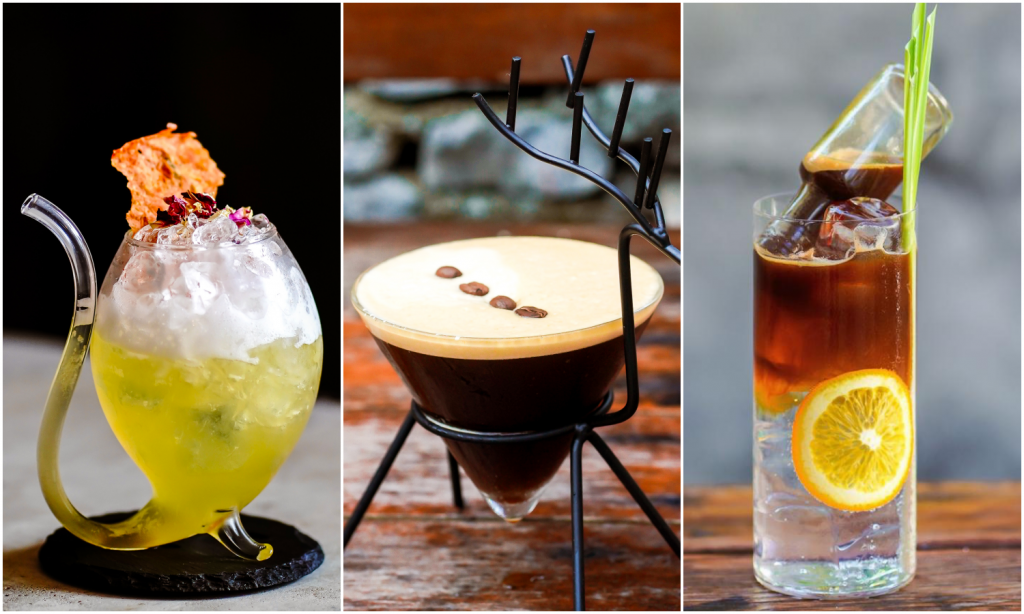
Globally, the no-and-low (NoLo) movement is entering the mainstream. For a destination where celebratory cocktails are integrated into the guest experience, the Maldivian resort market has been slower to adopt specialised zero-proof offerings. That is changing.
“It’s becoming more relevant every season,” Hamdan observed. “Guests who come to the Maldives are focused on wellness, connection, and presence. They want to feel good, not just party.” While guests continue to enjoy wine and cocktails, he has seen a shift in how people define indulgence. “We see it as the new definition of luxury: you can celebrate, stay clear-headed, and still enjoy something beautiful in your glass.”
As high-value travellers place increasing importance on health, clarity, sleep, and balance, premium non-alcoholic beverages align naturally with Maldives’ positioning as a destination for restorative escapes.
Sustainability is a central principle in Kalhibih’s operations, not expressed through messaging alone but embedded in drink development. “Sustainability isn’t just a concept; it’s the guiding principle woven into the very fabric of our drink design,” Hamdan explained.
The bar applies a closed-loop system aimed at eliminating waste. Fruit pulp becomes dehydrated garnishes, powders, or concentrated syrups. Coffee grounds and tea bags are repurposed into infusions or experimental blends. Even clarification sediment — often discarded in beverage programmes — is transformed.
“Take our Roso clarified, carbonated pre-batch drink,” he said. “The sediment from its clarification process is instead transformed into an edible fruit leather. This garnish then features in another distinct cocktail.” The approach creates consistency across the menu and adds narrative depth to each drink. It also demonstrates that low-waste systems do not require large investments; they require intentional processes.
“For any F&B team, this approach is a reminder that sustainability can be seamlessly integrated into daily operations through small, thoughtful systems that transform perceived ‘waste’ into valuable assets,” he added.
Hamdan co-runs Kalhibih with his partner Charline, whose background at EHL (École hôtelière de Lausanne) adds a structured layer to the business. “Our partnership is really about balance,” he said. “Charline brings the structure, creativity, and attention to detail she gained from EHL, while I bring a deep connection to local culture and taste and the art of mixing.”
Together they ensure that every drink reflects both global standards and local identity. “It’s about creating something that feels refined yet rooted,” he added.
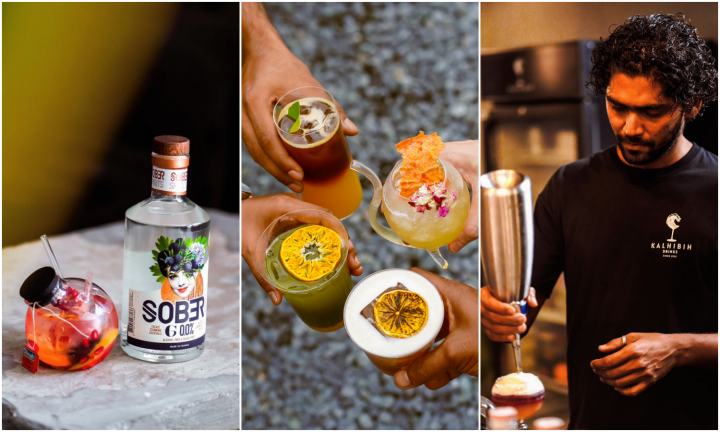
A central challenge in zero-per-cent mixology is the removal of alcohol’s warmth, structure, and body — components that typically carry flavour. For Kalhibih Drinks, the answer begins with premium non-alcoholic spirits.
“We work with Sober Spirits, a brand that’s been voted the Best Non-Alcoholic Spirit in the World multiple times,” Hamdan explained. “Their craftsmanship allows us to capture the same depth, aroma, and structure you’d expect from classic spirits, without the alcohol.”
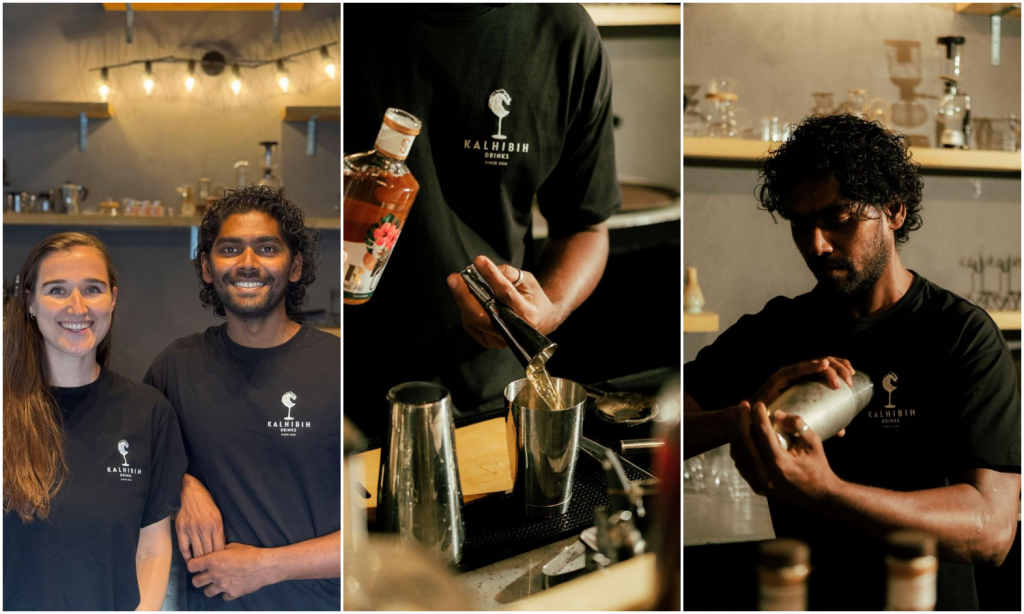
Layering flavours becomes the next step. Local botanicals, spices, teas, vinegars, syrups, and clarifications contribute to the complexity. “Every drink has a beginning, middle, and finish,” he said. “That’s what makes it feel premium. Alcohol doesn’t have to be present to enjoy a flavour journey.”
Kalhibih’s team undergoes specialised training that differs from traditional bartending in several key ways. “In 0% mixology, we have to create complexity, depth, and mouthfeel purely from non-alcoholic ingredients,” Hamdan noted. The absence of alcohol pushes bartenders to refine their culinary approach.
Key elements of the training include:
- Culinary flavour profiling — understanding herbs, spices, fruits, teas, vinegars, and local produce.
- Advanced flavour pairing — exploring savoury, bitter, umami, and non-traditional profiles.
- Creation of syrups, shrubs, and tinctures — key to building layers in drinks without spirits.
- Textural manipulation — from foams to infusions and ice techniques.
- Mastering non-alcoholic spirits — including their behaviour, pairing potential, and structure.
“We also train with Sober Spirits, which helps the team understand how premium alcohol-free spirits behave,” he added. The goal is to develop “liquid chefs” capable of innovation within a growing segment of global beverage culture.
Despite opportunities in Malé and inside resorts, Hamdan chose to launch the flagship in his home city. “Addu is home — and that connection matters,” he said. During the pandemic, Kalhibih Drinks ran locally for nine months and gained a strong following. “That experience showed us there was genuine interest and appreciation for crafted, alcohol-free drinks outside the resort environment.”
Addu also gives the team space to refine operational systems and test new recipes. “It’s a place that represents both our roots and our vision,” he added.
When asked about the biggest opportunity for hoteliers, Hamdan pointed to mindset. “Most places still see 0% drinks as a backup — something you offer when someone doesn’t drink. But that’s where the opportunity is,” he said. If resorts apply the same creativity to zero-proof as they do to cocktails, beverage programmes immediately become more inclusive, diverse, and revenue-driven.
Kalhibih’s product lines most suited to resorts include its high-end zero-per-cent cocktails and probiotic blends — particularly for wellness-driven properties.
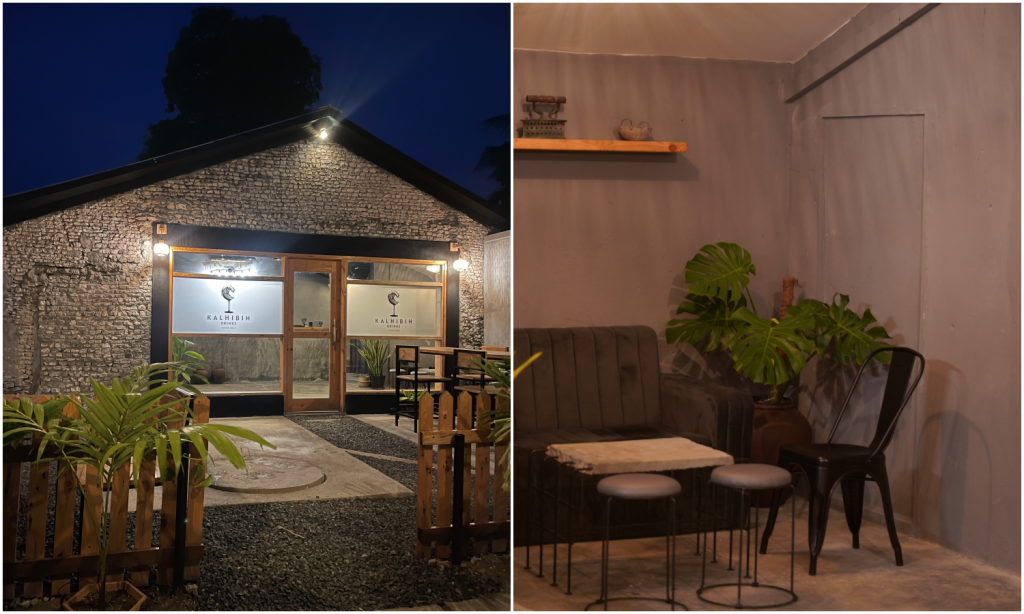
Kalhibih Drinks is still growing, but Hamdan’s vision is clear. “Our vision is simple: to make that standard accessible across the Maldives and beyond,” he said. Potential expansion paths include working directly with hotels to develop 0% programmes, collaborating on pop-ups, and creating signature resort beverage offerings.
“Whatever form it takes, the core focus remains the same: elevating the guest experience through memorable non-alcoholic beverages,” he added.
Looking back, the transition from resort bartender to founder has brought unexpected challenges. “The most surprising challenge has been shifting from creating cocktails within an established resort framework to building an entire brand from the ground up,” Hamdan said. Sourcing, branding, training, and scaling required a new mindset.
But the reward has been consistent. “Seeing guests’ faces light up when they try our 0% drinks for the first time” remains his defining moment. “That moment, when people truly ‘get’ what we’re creating, makes every challenge worth it.”
As the Maldives continues to evolve its wellness and beverage landscape, Kalhibih Drinks stands as an example of how local initiatives can influence national hospitality trends — rooted in craft, clarity, and a belief that premium experiences are not defined by alcohol content, but by intention and creativity.