



Impact over optics: Six Senses Laamu philosophy on authentic CSR in Maldives
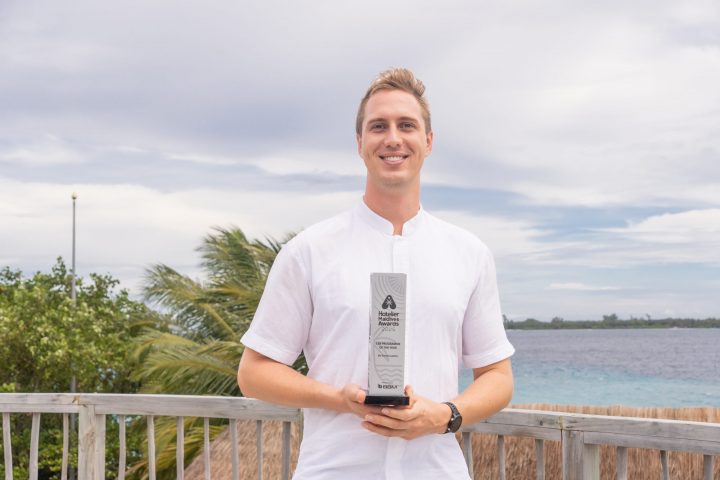
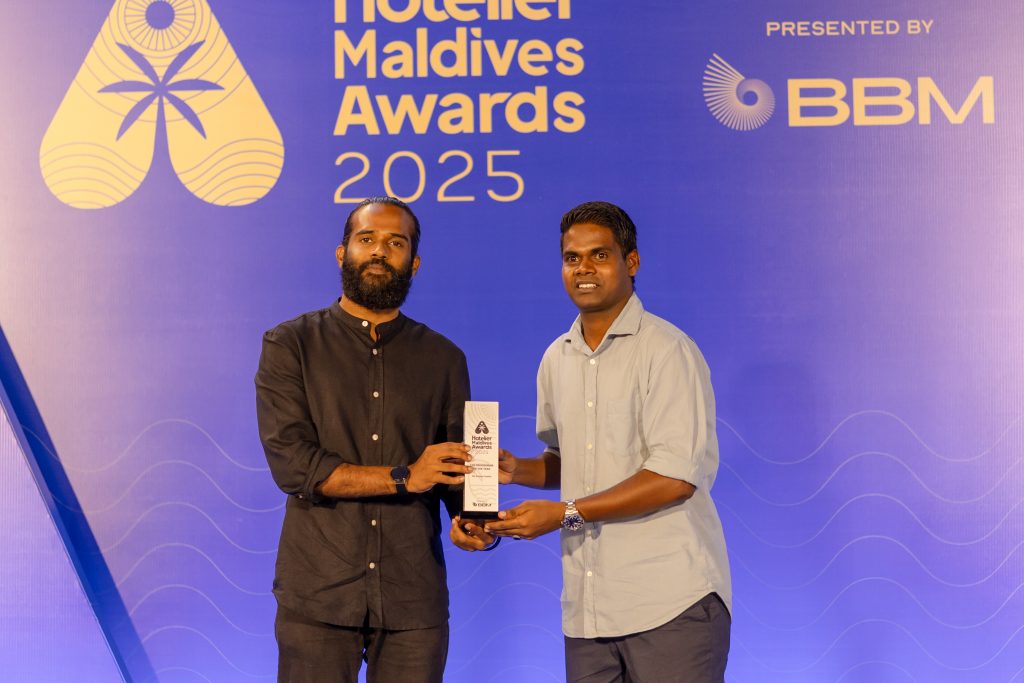
In the remote atoll of Laamu, Six Senses Laamu has earned a reputation not only as a luxury destination, but as a frontrunner in sustainability and community engagement. At the centre of this work is Lawrence Menz, the resort’s Director of Sustainability and Conservation. Under his leadership, Six Senses Laamu was recently named winner of the ‘CSR Programme of the Year’ at the Hotelier Maldives Awards 2025 — recognition that underscores a deeper, more complex journey of integrating environmental and social responsibility into resort operations.
Menz’s role spans an unusually broad scope: from overseeing the resort’s corporate social responsibility (CSR) and environmental reporting, to managing marine conservation programmes and facilitating partnerships with local communities. His remit also includes storytelling — not in the marketing sense alone, but in ensuring that the resort’s sustainability efforts are documented, shared, and used as a learning model.
“We look at sustainability from a holistic view,” Menz explains. “It’s resort operations, carbon, food miles — but it’s also the local community and environment. We’re part of that local fabric and culture. If we were just a cookie-cutter resort that doesn’t engage, then what’s the point?”
This perspective is rooted in the Six Senses brand philosophy of reconnecting people with themselves, each other, and the world around them. At Laamu, this takes shape through a triple bottom line framework — people, planet, and profit — which informs every aspect of the resort’s sustainability operations. The resort maintains a dedicated Sustainability Fund, which finances a growing list of environmental and community projects across the atoll.
“The guideline is simple: invest in local community and environmental projects that don’t directly benefit the resort, but do serve the greater good,” Menz says. “We plan out the year’s partnerships and projects, and that plan goes for approval to our owners and head office.”
The fund supports a range of efforts — from marine research and water purification systems to inclusive education initiatives. For example, a recent collaboration involved setting up a dedicated classroom for students with special needs on a neighbouring island. “It was a space identified by teachers, equipped with materials that would enhance learning and provide equal access,” says Menz. “That was an easy one to approve.”
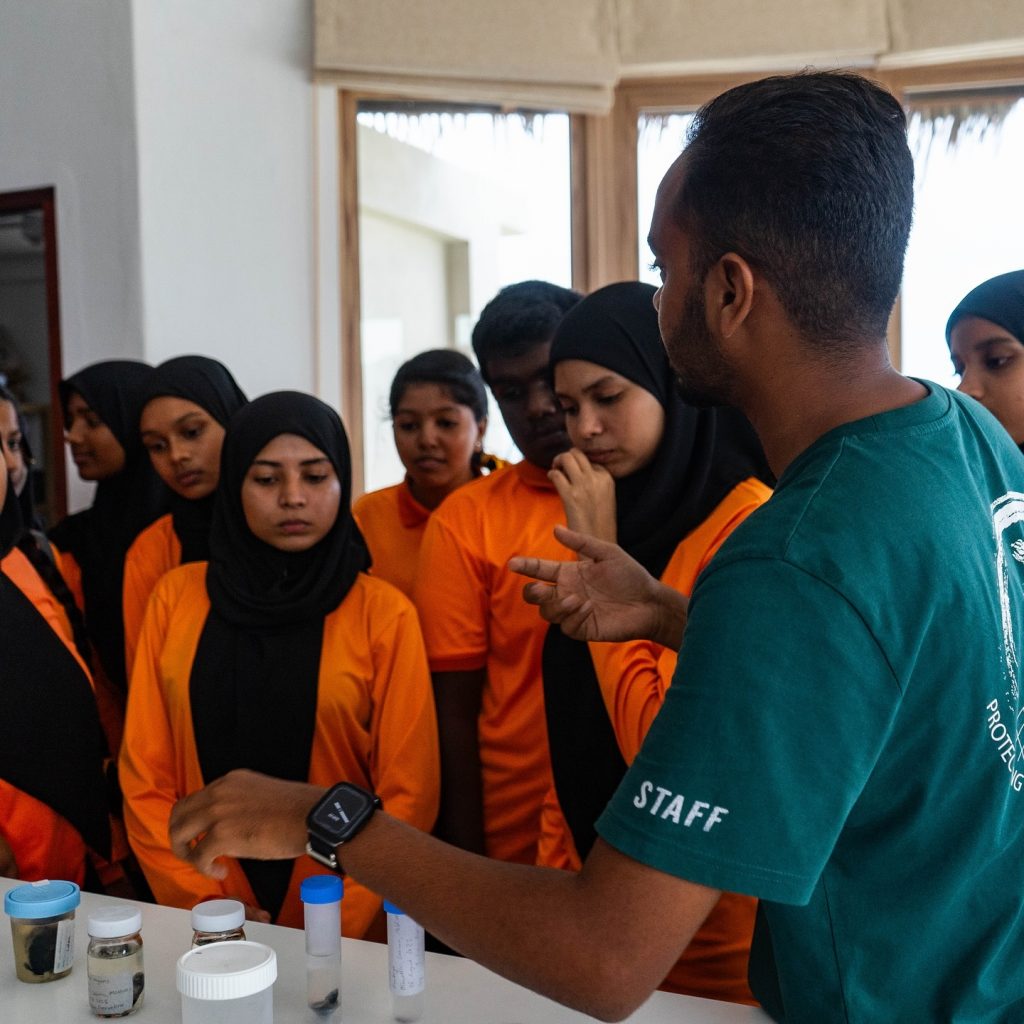
Other initiatives include awareness days, clean-ups, zero-waste sporting events, and long-term capacity building programmes. In all cases, Menz stresses the importance of impact over optics: “Marketing should never get ahead of impact.”
At any one time, the resort manages between three and seven active projects, depending on complexity and timelines. Requests for support come in various forms — from formal applications and proposals to casual text messages and face-to-face conversations. “We visit local islands regularly,” Menz says. “But Laamu is remote, and logistics can be a challenge. Still, we try to maintain that presence.”
The evaluation process is designed to be accessible and inclusive. Application forms are distributed to councils and development committees in both English and Dhivehi. “Sometimes proposals aren’t quite aligned with our sustainability framework,” he explains. “Something like a sports tournament might not qualify unless it has a gender equity or zero-waste angle. But if there’s a broader social or environmental component, then it’s considered.”
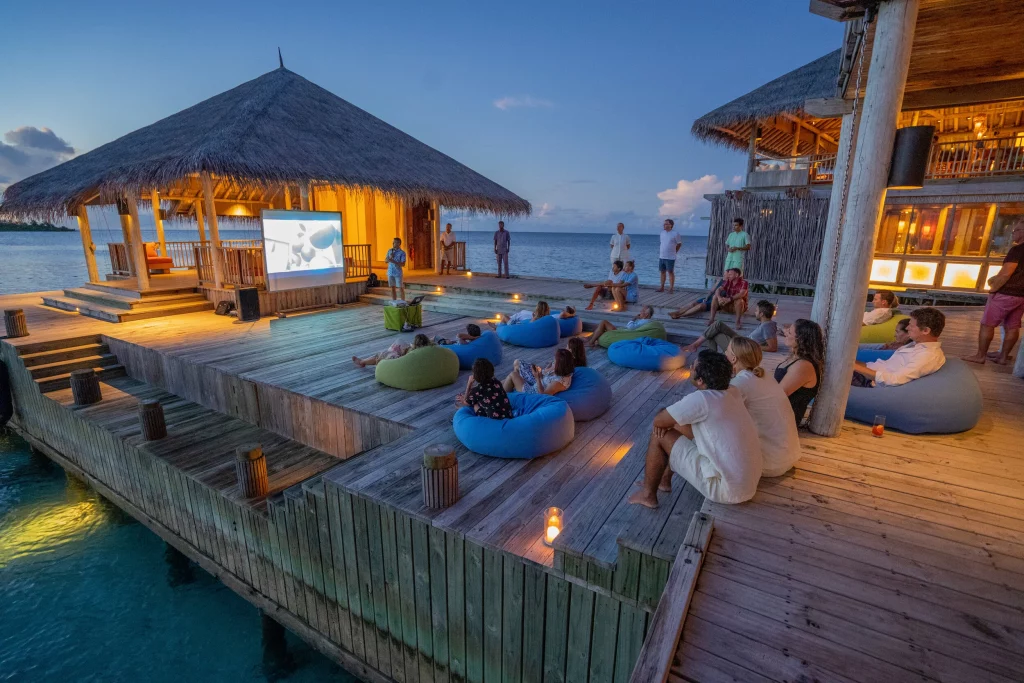
On measuring success, Menz is candid about the complexity. “You can count attendees at an event or the number of pledges made. But the real challenge is measuring long-term behavioural or cultural change.”
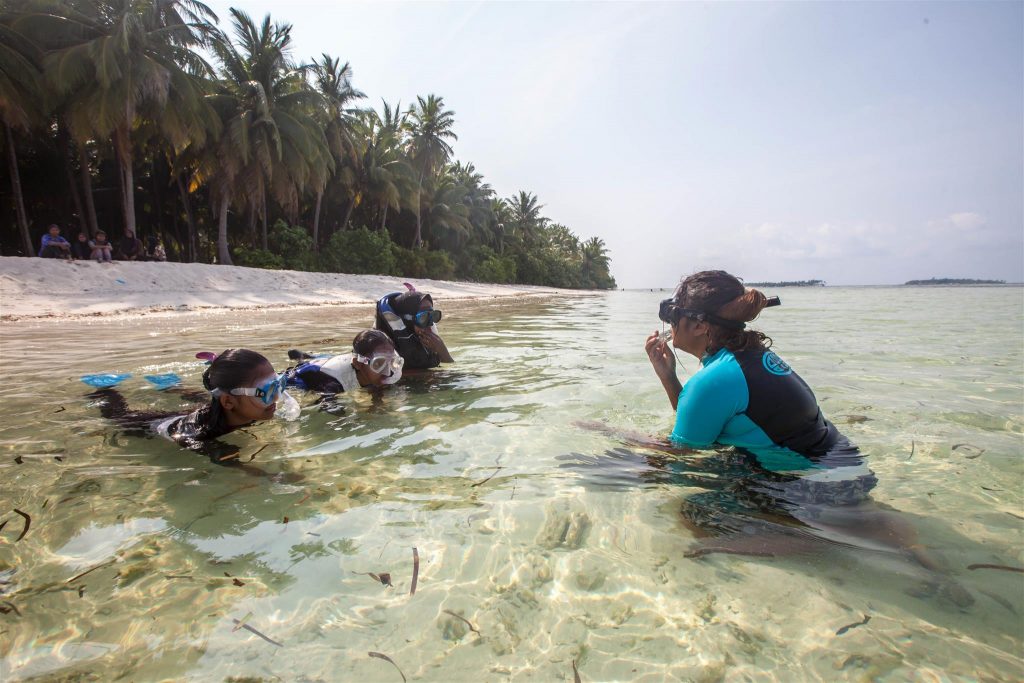
One example is the resort’s marine education programme for students from grades 7 to 10. Participants attend a day of learning at the resort, followed by pre- and post-programme assessments. “We see changes in understanding and awareness, but what we need is a six-month or one-year follow-up to assess retention and deeper impact,” he notes.
There are, however, tangible stories of long-term influence. Menz recalls Laisha, a student from a neighbouring island who took part in one of the resort’s educational sessions. “She later joined as our sustainability intern, then became Earth Lab Coordinator, and now works at another resort. She saw what we did here, believed in it, and became a part of it.”
The team behind the sustainability work at Six Senses Laamu is deliberately lean, consisting of Menz, Community Engagement Coordinator Aishath Fithura, and contributions from other departments, especially the marine conservation unit, the Maldives Underwater Initiative. Project work also draws on volunteer support from across the resort, particularly during activities such as school refurbishments or community events. “Sustainability is not just my role,” Menz insists. “It’s the whole resort’s responsibility.”
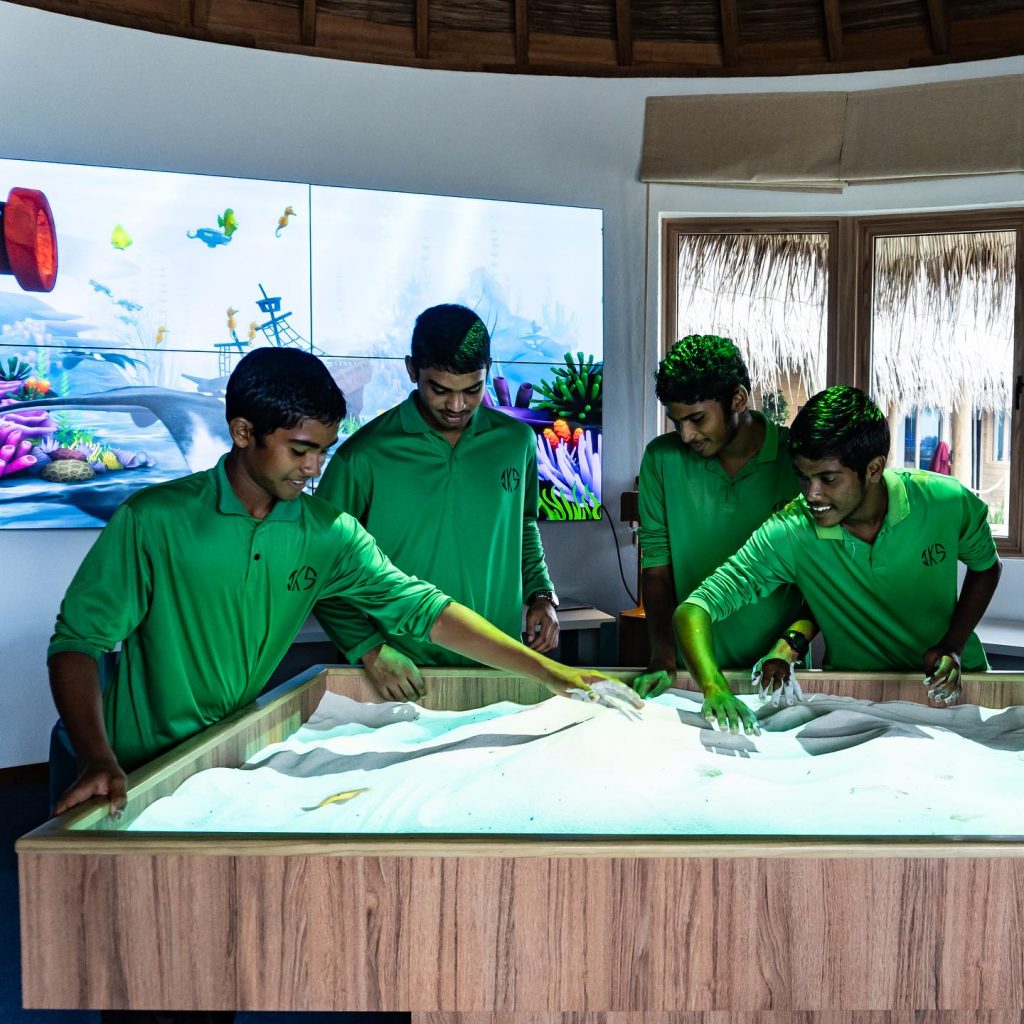
Partnerships are key to expanding both capacity and impact. The resort collaborates with NGOs, government bodies, research institutions, and local councils. One long-running project is the restoration of a centuries-old mosque on a nearby island, which began with guest donations and has since grown into a cross-sector initiative involving the Maldives Heritage Society and international restoration experts. “It’s a great example of how something small — a guest noticing an overgrown site — can evolve into a sustainable heritage project.”
The Sustainability Fund itself is sustained through a combination of allocations from resort revenue and guest donations. While careful planning helps maintain year-on-year funding, guest contributions play a significant role. “Our hosts understand the projects and help identify guests who may want to support them,” says Menz. “Sometimes I’m invited to speak directly with guests, explain the initiatives, and they choose to donate.”
Donations, however, are not solicited as part of a sales pitch. Rather, guest interaction is embedded in sustainability activities wherever appropriate — from marine conservation snorkels to cultural excursions. The aim is to make the experience meaningful. “It’s not about turning community projects into attractions. We think carefully about guest involvement so it’s respectful and beneficial to all parties.”
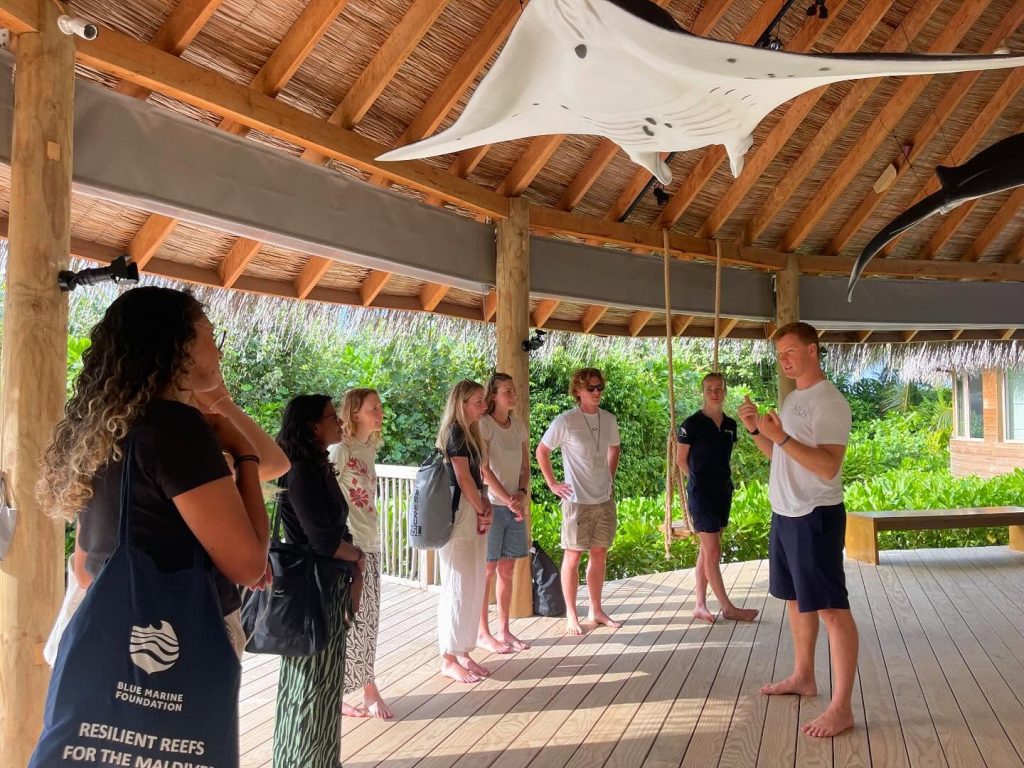
Despite its accolades and internal systems, Menz acknowledges the constraints of working in a remote region. “Laamu is still developing. Some islands don’t yet have centralised sewage systems. These are projects that require significant funding and government involvement. We want to help, but there’s a limit to what we can do as a private resort.”
Even so, the resort continues to operate one of the most comprehensive sustainability teams in the Maldives. Menz attributes this to two key drivers: the long-term commitment of some his colleagues who have been with Six Senses Laamu since opening, and the brand’s values, which position sustainability as integral, not auxiliary, to hospitality. “It’s in our operations, in our procurement, in our hiring practices. We’re not doing it for the badge. It’s part of how we exist.”
To industry peers, Menz offers a measured message: “Sustainability isn’t a destination — it’s a journey. Every step, however small, takes you further than you were before. Integrate it into your culture. Understand your communities. Don’t go in with solutions; go in with questions.”
For young people interested in this path, his advice is equally grounded: “Start with an internship. Learn how systems work. If resorts aren’t for you, work with local NGOs or start your own initiative. There are partners, grants, and resources out there. But you have to be intentional, informed, and committed.”
Asked to sum up his philosophy, Menz offers a simple reflection: “In the Maldives, everything is connected — conservation, culture, community. You can’t isolate one from the other. That’s why we do what we do.”