




JOALI Maldives scales up reef restoration as coral plantings surpass 11,000
JOALI Maldives, the Maldives’ first art-immersive resort, marks a significant new chapter in its long-term commitment to marine conservation as its JOALI Reef Restoration Programme (JRRP) continues to expand across the waters surrounding Muravandhoo Island.
Developed to support the natural recovery and resilience of the island’s surrounding reef ecosystem, the programme has grown over the years to encompass multiple coral nursery systems, artificial reef structures and dedicated outplanting areas. Today, 11,124 coral fragments have been planted across the programme, including 1,500 fragments successfully outplanted onto the house reef.
Led by the resort’s Marine Lab, the programme nurtures small coral fragments through different nursery systems until they develop into healthy, established colonies. Once they reach a suitable size, selected colonies are transferred onto designated areas of the house reef, where their growth and development can continue to be monitored over time.
The programme has also received approval and permit from the relevant Ministry to continue its reef restoration activities, supporting JOALI Maldives’ ongoing efforts to develop and expand its long-term approach to coral conservation.
From coral fragments to thriving colonies
At the heart of the JRRP is a diverse network of coral nurseries and artificial reef structures designed to support different stages of coral growth.
The programme currently encompasses 57 spider frames holding 1,995 coral fragments; Mineral Accretion Technology (MAT) tables with 5,424 fragments; rope nurseries with 2,000 fragments; grid nurseries with 250 fragments; Christmas tree structures with 450 fragments; and the Coral House with 1,500 fragments.
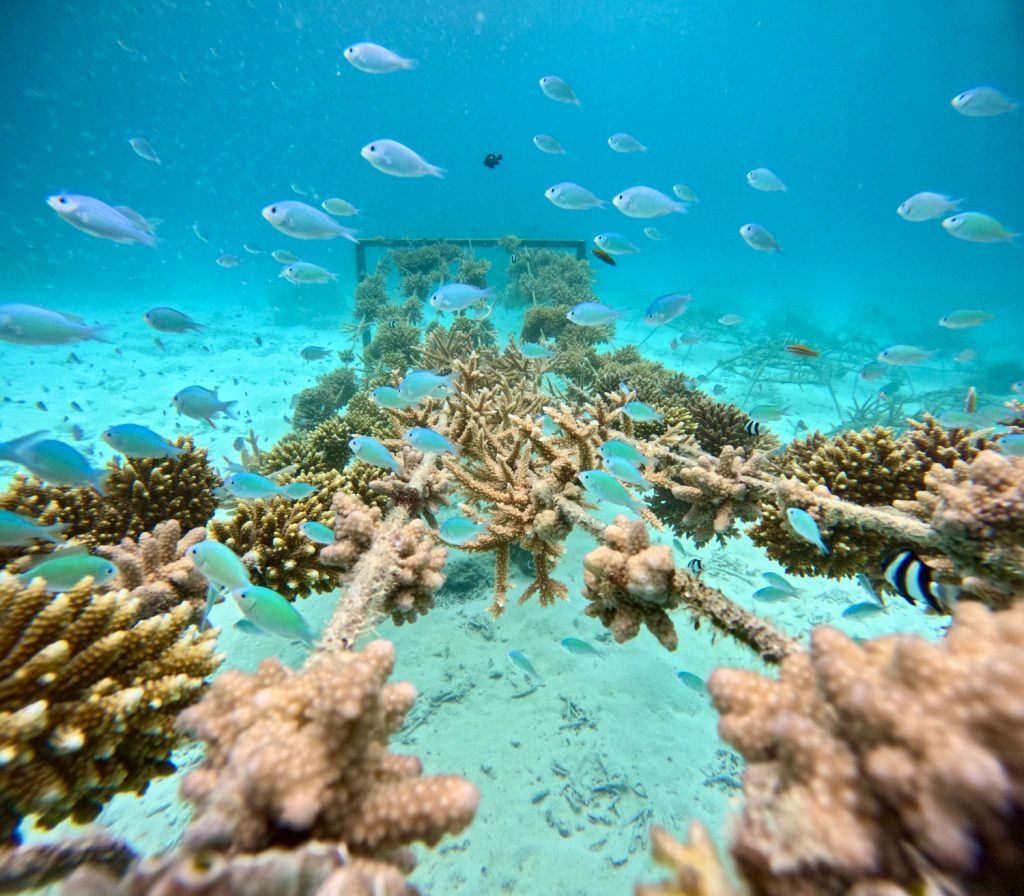
Rope and grid nurseries serve primarily as intermediate growing environments, where smaller coral fragments are nurtured until they reach an appropriate size for outplanting. Spider frames, Christmas tree structures and the Coral House provide stable surfaces where corals can continue to establish themselves and gradually develop into artificial reef habitats.
Together with the 1,500 fragments already outplanted onto the house reef, these initiatives represent 11,124 coral fragments planted across JOALI Maldives’ coral restoration activities to date.
“One of the most meaningful parts of this programme has been watching coral fragments that we planted years ago develop into large, healthy colonies. When we first placed them in the nurseries, they were only small pieces of coral. Today, many have become established parts of the reef, with fish and other marine life returning around them. Seeing that transformation makes all the time and care behind the programme incredibly rewarding,” says Shameem, Senior Marine Biologist at JOALI Maldives.
Restoring the house reef
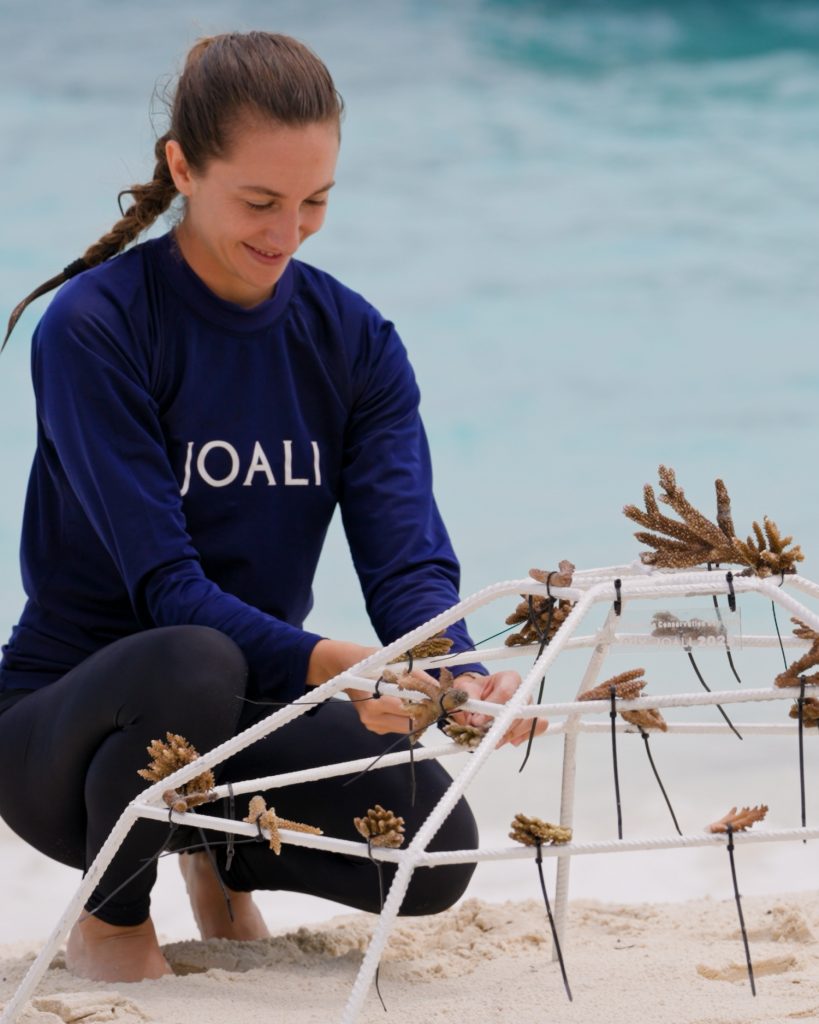
Outplanting has been an important part of the programme since operations began in November 2022.
Healthy and established coral colonies are carefully transferred from the nurseries to suitable areas of the house reef, where they can continue to grow within the natural reef ecosystem.
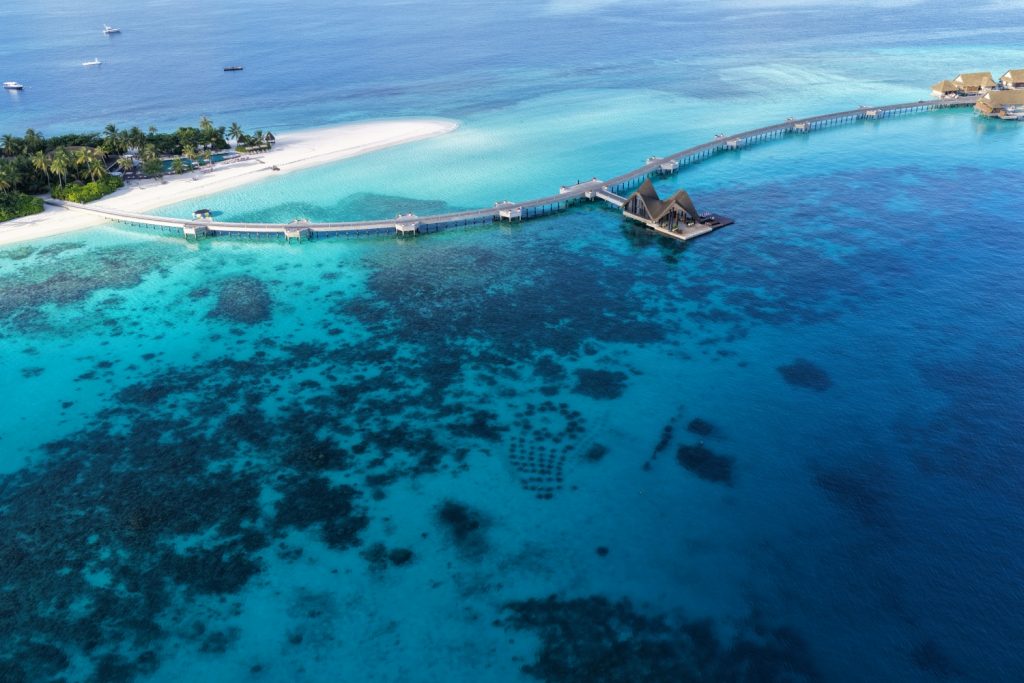
A dedicated restoration area around the resort’s Arrival Centre has been established to allow appropriate spacing between colonies while enabling the Marine Lab team to monitor their health, growth and development over time.
To date, 1,500 coral fragments have been outplanted onto the house reef, representing an important step in translating the nursery programme into direct reef restoration.
“Successful reef restoration is not simply about how many corals we plant. What matters is seeing those corals survive, grow and become part of the natural reef ecosystem. When fish and other marine life begin using the restored areas, that is when we can really see the impact of the work,” adds Shameem.
Advancing restoration through Mineral Accretion Technology
Among the programme’s developments is the introduction of Coralive Mineral Accretion Technology (MAT).
The MAT nursery consists of 24 tables arranged in two circles and uses a low-voltage direct current system designed to promote the attachment of calcium carbonate – an important component of coral skeletons – and support coral growth.
Corals remain on the tables for approximately 10 to 12 months, allowing them time to establish and grow before they are considered for outplanting.
Each table can accommodate up to 113 coral fragments, providing the nursery with capacity for approximately 2,712 fragments per cycle. Once mature colonies are transferred to the reef, the tables can be replenished with new coral fragments, creating an ongoing restoration cycle.
Creating new habitats beneath the surface
Alongside its nursery and outplanting activities, the JRRP incorporates a collection of artificial reef structures designed to provide stable environments for coral development.
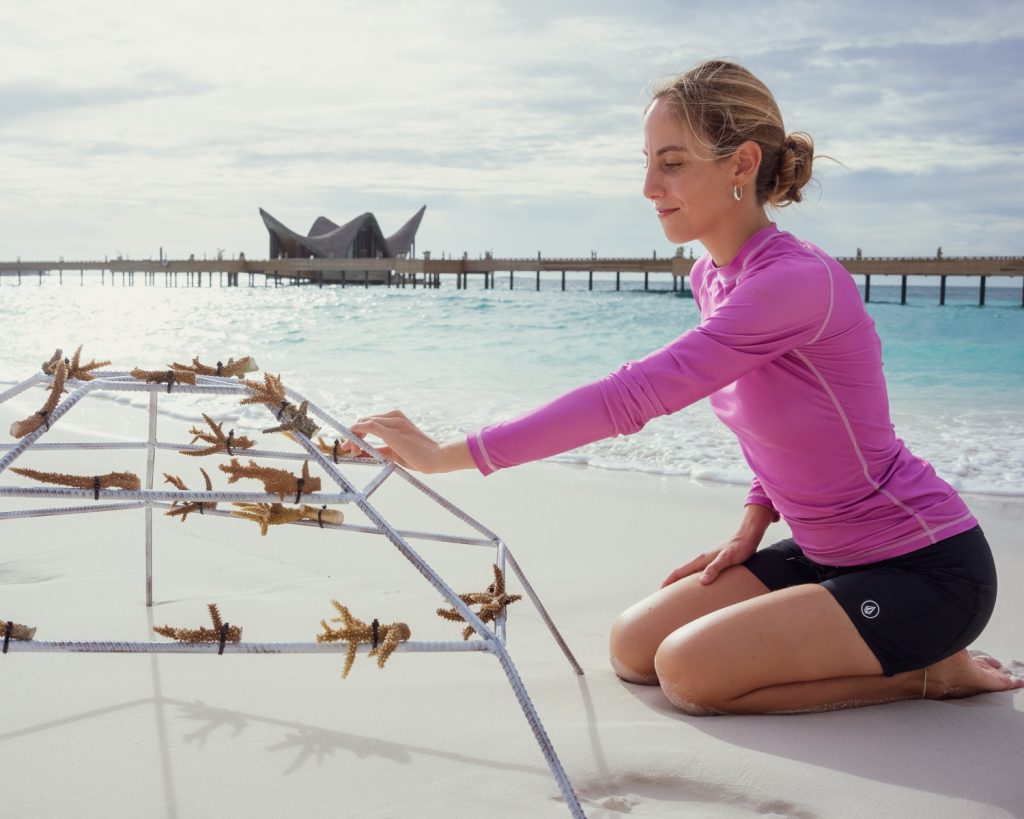
Spider frames, Christmas tree-shaped structures and the Coral House allow fragments to establish themselves and, over time, contribute to the creation of new underwater habitats.
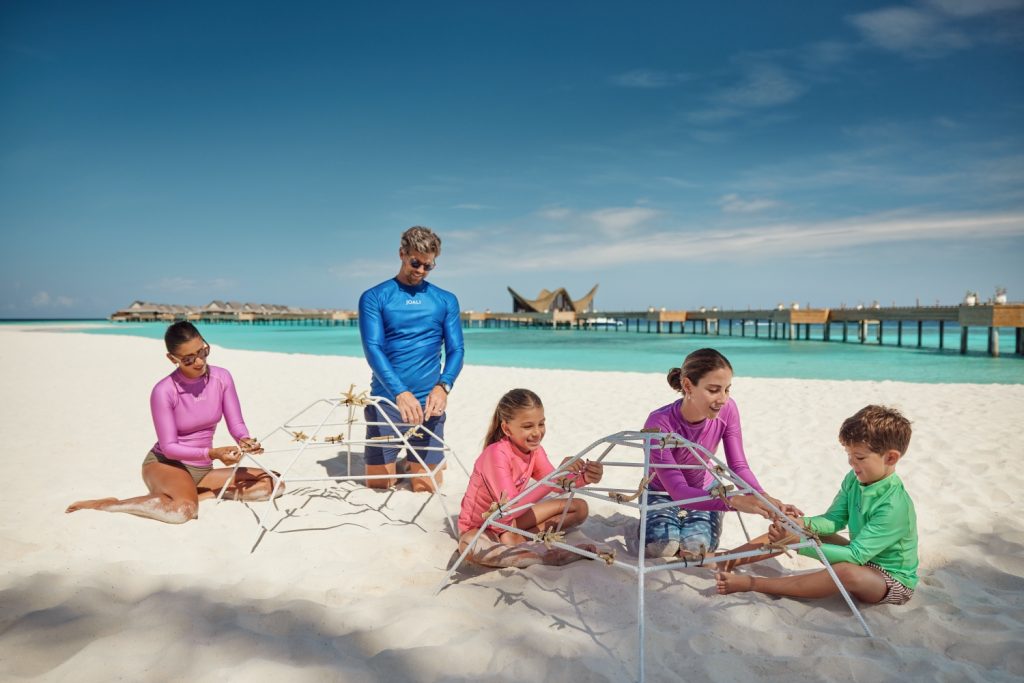
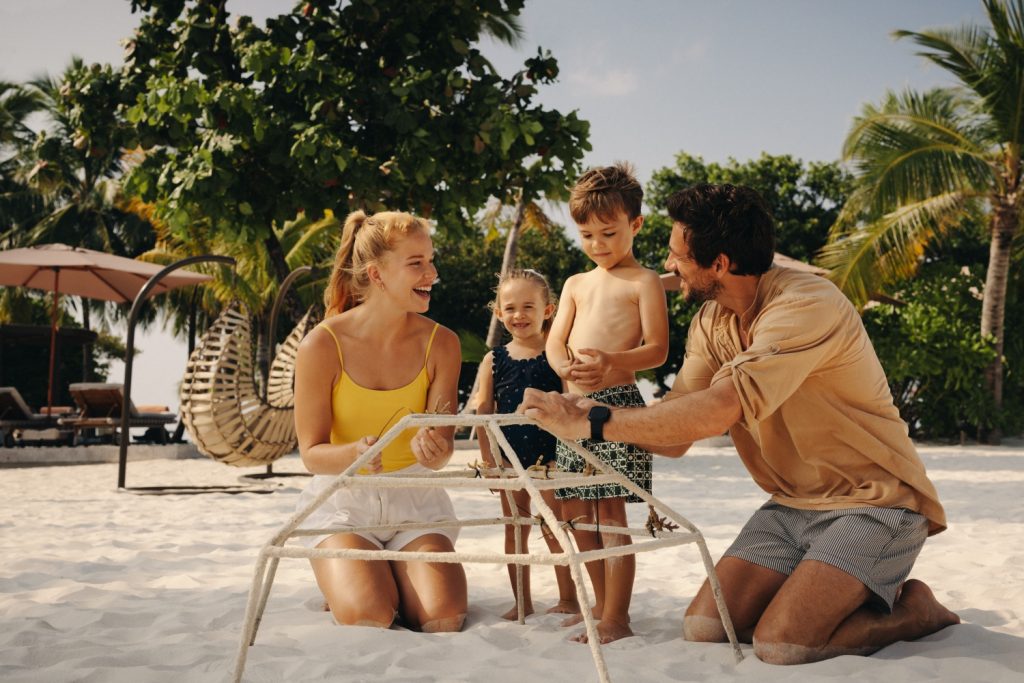
These initiatives also provide opportunities to connect guests more closely with marine conservation. Through selected experiences, guests can participate in coral planting and learn directly from the Marine Lab team about reef ecosystems, coral restoration and the importance of protecting the marine environment of the Maldives.
The resort’s Christmas Corals tradition, for example, invites guests to add coral fragments to a Christmas tree-shaped frame, bringing together festive creativity and meaningful conservation.
Connecting guests with coral restoration
Alongside its scientific restoration work, the JOALI Maldives Reef Restoration Programme invites guests to become active participants in the conservation journey. Through experiences led by the Marine Lab team, guests can learn about coral ecosystems, take part in coral planting and contribute directly to the long-term restoration of the reef surrounding Muravandhoo Island.
Guests can support the programme through three dedicated experiences. The Private Coral Planting and Adoption experience allows guests to take part in a private planting session and plant their own coral frame. A personalised sign with the guest’s name is added to the frame, and the Marine Lab team shares progress updates every three months for one year.
For guests who would like to contribute without participating in the planting themselves, the Adopt a Coral Frame experience is available. The adopted frame is personalised with the guest’s name, with progress updates shared every three months for one year.
Through Adopt a Coral Table, 24 guests each year also have the opportunity to sponsor one of the programme’s Mineral Accretion Technology tables, directly supporting the nursery system used to enhance coral growth.
Through these experiences, guests are able to follow the journey of coral restoration beyond their stay, creating a meaningful connection with the reef and supporting JOALI Maldives’ wider approach to restoration, monitoring and marine education.
A long-term commitment to the reef
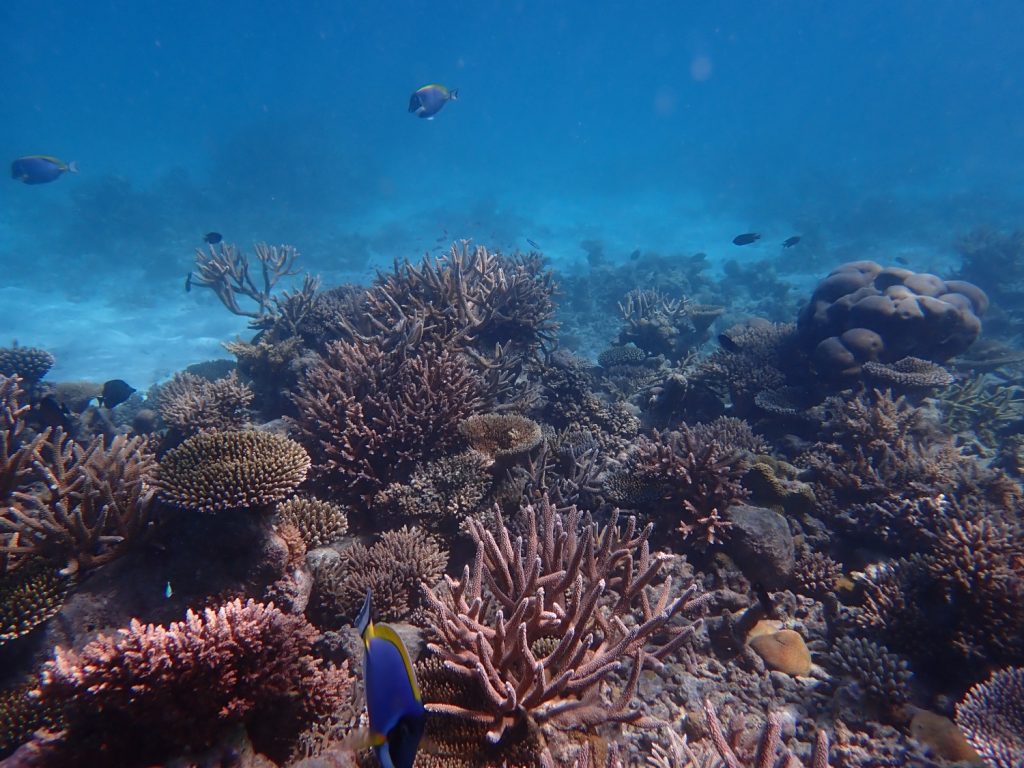
The next chapter of the JOALI Maldives Reef Restoration Programme will focus on increasing nursery capacity, growing healthy coral colonies and progressively outplanting more established corals onto suitable areas of the house reef.
The Marine Lab will continue to monitor coral health and growth, maintain existing nursery and artificial reef structures, and explore further restoration initiatives.
Alongside the scientific and conservation work, education remains an important part of the programme. Through guest engagement and experiences led by the Marine Lab, JOALI Maldives aims to encourage greater awareness of coral reef conservation and the importance of protecting the fragile ecosystems surrounding the Maldivian islands.
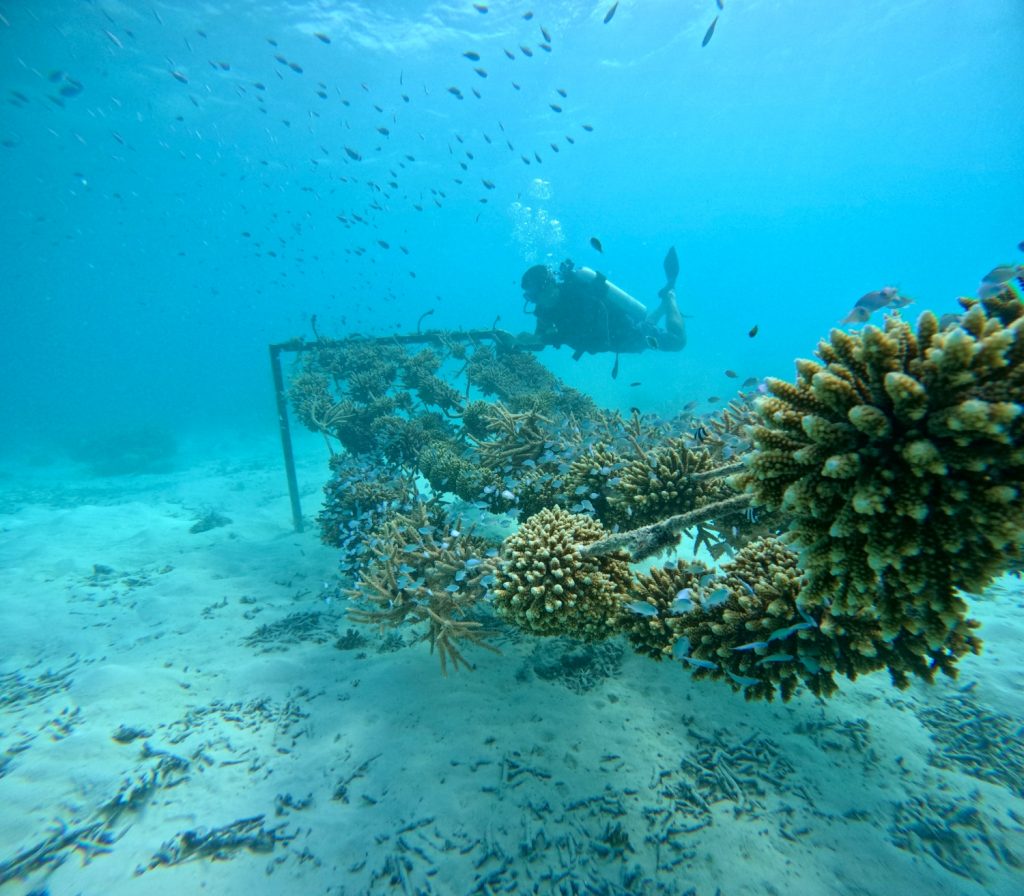
As the nurseries continue to mature and established colonies make their way back onto the house reef, the JOALI Reef Restoration Programme reflects a long-term approach to conservation – one built around continuous restoration, monitoring, education and a deeper connection between guests and the natural world surrounding Muravandhoo Island.
“Coral restoration requires patience. Change does not happen overnight, but over the years we have seen how resilient corals can be when they are given the right conditions to recover and grow. My hope is to see these restored areas become healthier and increasingly diverse, while continuing to help our guests understand that corals are living animals and that every one of us has a role to play in protecting them,” says Shameem.