




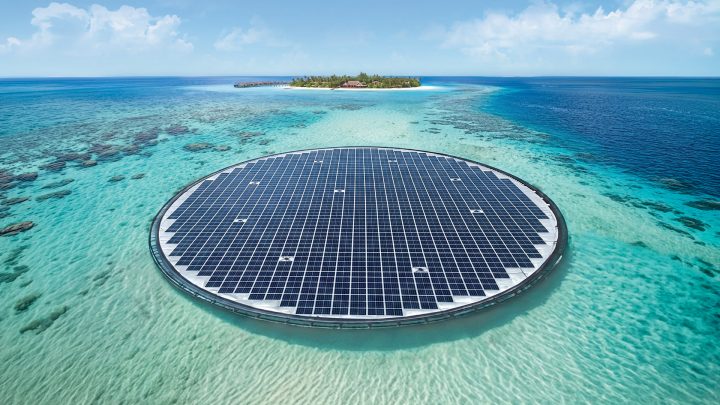
Energy resilience: The next priority for Maldivian resorts
For decades, energy planning at Maldivian resorts has largely been about one thing: reliability. Keep the generators running, maintain sufficient redundancy, and ensure that guests never know what is happening behind the scenes.
More recently, another priority has moved to the forefront; sustainability. Solar PV has become increasingly common across the industry, helping resorts reduce diesel consumption, lower emissions and manage energy costs.
But the next stage of the conversation needs to bring these two priorities together.
The question is no longer simply how much renewable energy a resort can generate. It is how resilient its entire energy infrastructure can become.
For an island resort, energy resilience has a very particular meaning. Unlike a city hotel, there is no utility grid sitting beyond the property boundary to fall back on. Electricity must be generated, managed and balanced locally, every hour of every day.
Traditionally, this resilience has come from diesel generators and fuel storage. It is a proven model, but one that also leaves resorts exposed to fuel prices, logistics, mechanical dependencies and the cost of maintaining substantial spinning reserve.
Solar alone does not eliminate those vulnerabilities.
The opportunity now emerging is to treat solar PV, battery energy storage, generators and intelligent microgrid control as one integrated energy system.
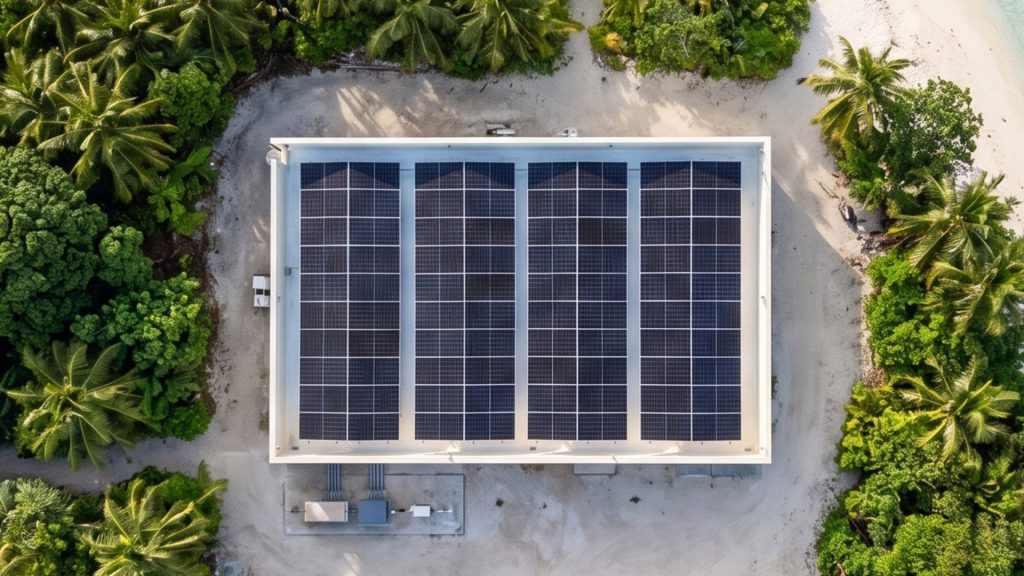
A well-engineered microgrid can use solar whenever it is available, store surplus energy in batteries, manage sudden changes in demand and coordinate generators around the actual requirements of the resort.
This changes the role of renewable energy.
Instead of solar simply being an additional source connected to an existing diesel power station, the entire power infrastructure can be engineered around the most efficient combination of available energy sources.
Battery storage is particularly important in this transition. Its value should not be measured only by how many kilowatt-hours can be stored. Batteries can respond almost instantly to changes in generation and demand, providing a level of flexibility that conventional generation cannot deliver in the same way.
That can allow generators to operate closer to their optimal loading, reduce unnecessary runtime and provide another layer of protection against short-term disturbances.
But resilience is not achieved simply by installing more equipment.
The control architecture becomes increasingly important as renewable penetration rises. Solar inverters, BESS, generators, switchgear and protection systems must operate as a coordinated system. The microgrid controller effectively becomes the intelligence behind the resort’s power plant — continuously deciding how available energy should be generated, stored and dispatched.
There is also a wider strategic consideration.
Maldivian resorts have traditionally devoted valuable island space to utility infrastructure. Rooftop solar has helped introduce renewable generation without significantly increasing that footprint, but many properties eventually reach the physical limits of suitable roof area.
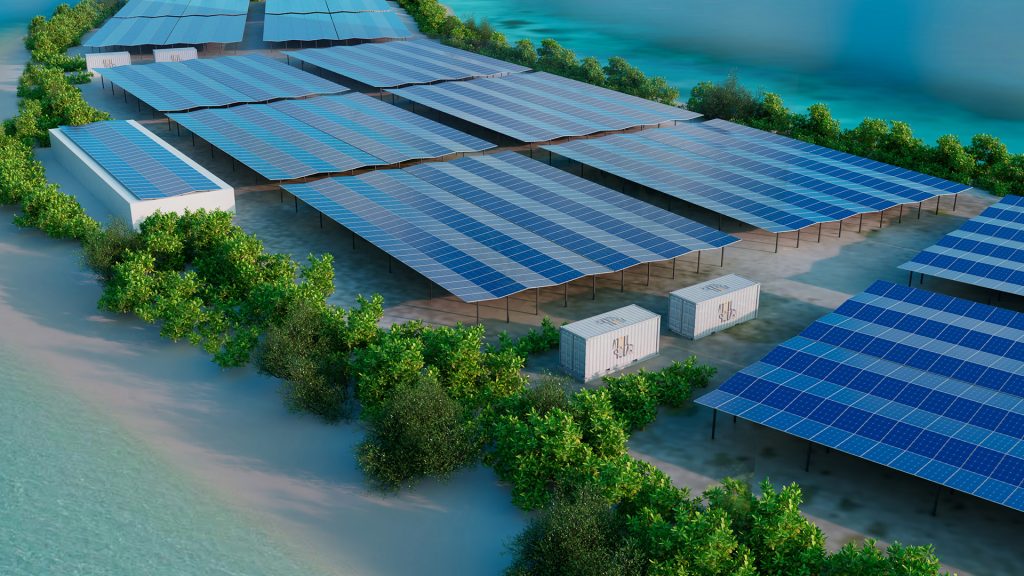
New approaches, including floating solar and purpose-designed renewable energy infrastructure, are beginning to expand what is technically possible.
The result is that resorts can now start asking a much more ambitious question than “How much diesel can we save with solar?”
They can ask: “How should we design the energy infrastructure of this resort for the next 20 years?”
That conversation encompasses operating cost, fuel-price exposure, redundancy, renewable penetration, battery storage, control systems, future expansion and ultimately the resort’s ability to operate reliably through changing circumstances.
For General Managers, this is no longer solely an engineering discussion.
Energy is one of the largest operational considerations of an island resort. Decisions made about energy infrastructure today can influence operating expenditure, sustainability performance and operational resilience for many years.
The resorts that make the greatest progress may therefore not necessarily be those that install the most solar panels.
They will be those that begin treating energy as an integrated infrastructure strategy rather than simply a utility cost.
As the Maldives hospitality industry gathers for the GM Forum, energy resilience deserves to be part of that wider conversation about the future of resort operations.
Atoll Solar is a Silver Sponsor of the GM Forum 2026.