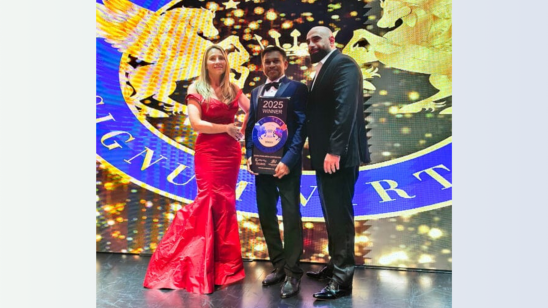



Leadership 5.0: Pulse Hotels’ Aalim Mohamed urges hoteliers to rethink, redefine, reboot at GM Forum 2025
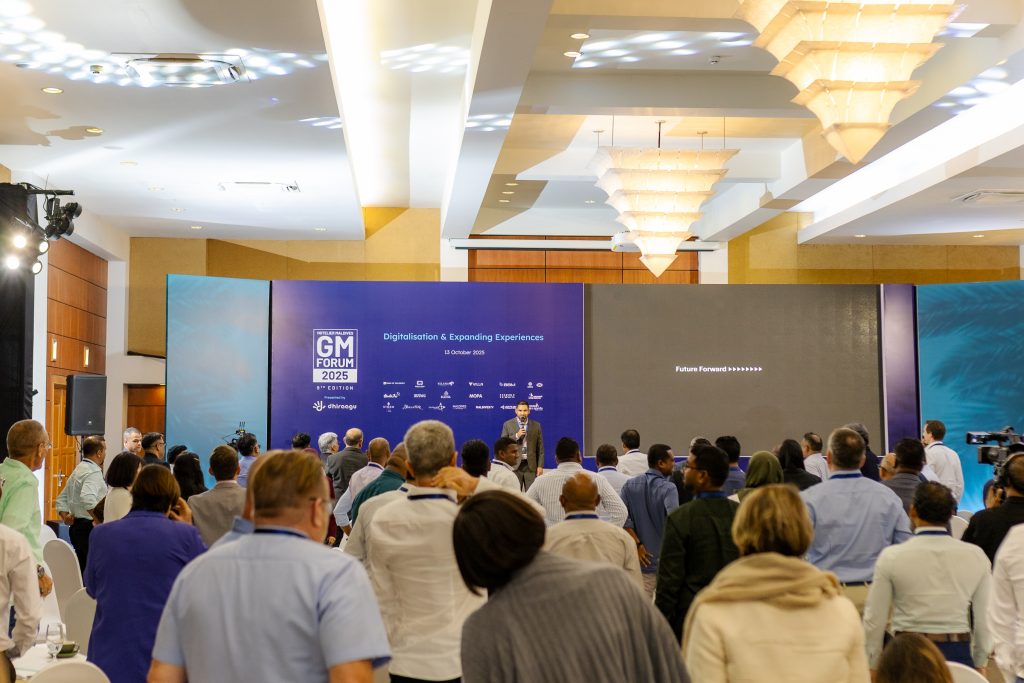
At the Hotelier Maldives General Managers (GM) Forum 2025, Aalim Mohamed, Group Director of Human Resources at Pulse Hotels & Resorts, invited a ballroom full of GMs to stand, take three deep breaths, and reset. It was a fitting prelude to a session that asked leaders to pause, rethink long-held assumptions, and embrace a model he unveiled for the first time: Leadership 5.0. “Everyone talks about AI and technology,” he said, “but leadership hasn’t evolved at the same pace. We’re expecting different results while doing the same things. It’s time to change the operating system.”
Aalim argued that while the world is moving through the fifth industrial revolution, hospitality leadership still borrows tools and measures from earlier eras. His proposed Leadership 5.0 model sets a clear vision “to redefine premium hospitality in the Maldives—purposely, digitally empowered, and consistently profitable across any global challenge.” The model rests on five pillars he believes will carry Maldivian hospitality beyond mere resilience: strategic foresight, value-driven purpose, velocity, adaptive structure, and capability building. “Foresight is critical,” he said. “We must anticipate and innovate, not just react.”
He urged the industry to modernise how it measures progress. Instead of relying solely on legacy KPIs, he called for indicators that reflect today’s realities: innovation cadence and time to pilot new services; psychological safety scores rather than generic engagement scores; a wellness index that captures the real business risk of poor mental health; personalisation scores from the guest’s point of view; and service-recovery speed. “We’re in a repeat-guest market,” he noted. “The question is simple: what’s different from last year? If you can’t answer that quickly, your innovation engine is idling.”
Technology, for Aalim, is an enabler—not an end. He prioritised robust AI and data infrastructure, seamless digital collaboration tools, and truly personalised learning and development. But the keystone is culture, which he described as the organisation’s “operating system.” He called for “a belief in augmentation, a humble leader mindset, and a culture that embraces productive failure.” In his words, “Velocity beats rigidity. Fluid operations will always outperform rigid policies when the market moves.”
A major theme of his talk was generational diversity and the patience deficit of a digital world. “We live in an impatient world,” he observed. “Your guests don’t have patience. People browsing your website don’t have patience. If Murad said 15 seconds, it’s less than that now—three seconds.” He contrasted “traditionalists and baby boomers who could wait weeks for a letter” with digital natives conditioned by instant responses, and he challenged leaders to adjust service design, communication, and decision-making accordingly. “AI integration is not optional,” he said. “It’s how we meet a world that won’t wait.”
Aalim grounded his arguments in Maldivian demographics. A live poll in the room skewed heavily towards Gen X and millennial leaders, while national data show a workforce increasingly dominated by younger cohorts. “From the 2022 census, 68% of the working-age population were Gen Z and millennials,” he said. “In hospitality, that average rises to around 82%, and some public-sector samples hit 85%. By 2030, Gen Alpha will begin arriving at work.” He also pointed to a worrying decline in youth shares between the 2014 and 2022 censuses and a forecast of tens of thousands of new roles in the next five years. “We’re not creating enough manpower. If we don’t leverage AI, redefine structures and synergise teams, margins will suffer.”
That talent challenge, he argued, requires new leadership behaviours. “Millennials adapted well to Gen X and boomer styles because they were born without tech and adopted it later,” he said. “Gen Z is different. If we use the same approach, we will struggle.” He urged leaders to replace command-and-control with clarity of purpose, coaching, and faster, more stimulating goals. “Connect every role—from back-of-house to front-of-house—to value. Why does this task matter? How does it contribute to the big picture?” He cited research that “85% of executives say they know the why, but only about 15% of line-level staff do. When people know the why, motivation is around 86%; without it, it drops to roughly 44%.” The implication, he said, is unmistakable: “Purpose isn’t soft. It’s performance.”
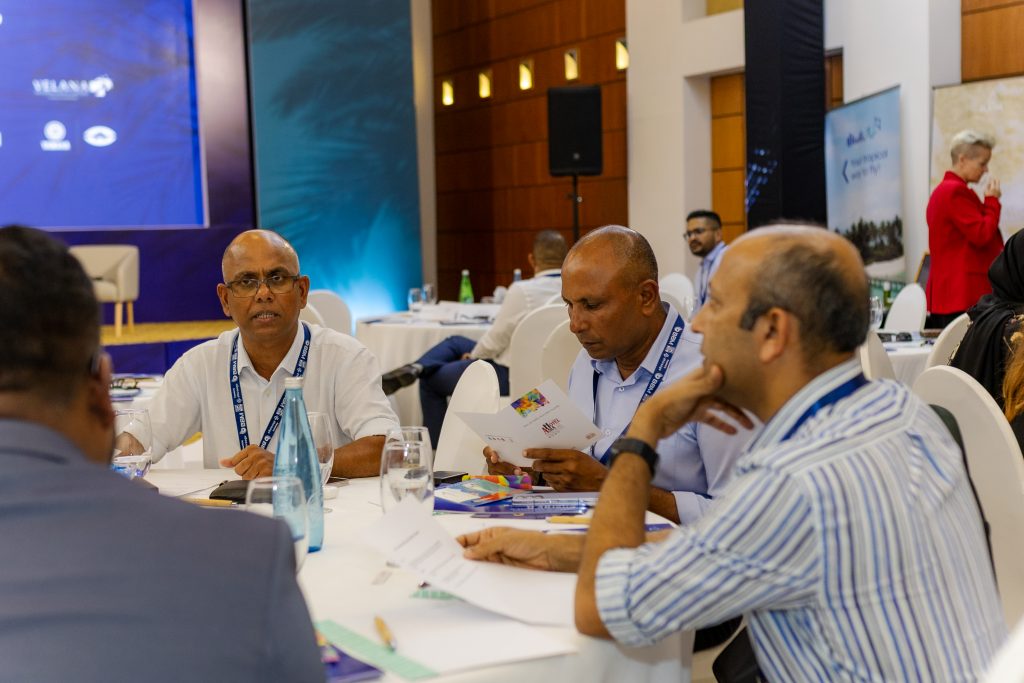
Wellbeing, too, has moved from a “personal issue” to a board-level risk. “If 40% of a 400-person team faces mental-health challenges, that’s not HR’s side project—it’s a business risk,” he said, noting that local clinical services report a high volume of cases originating from resorts, driven by isolation, distance from family and workload. “Leaders must build psychological safety, teach people how to ask for help, and make listening a discipline.” He shared a favourite lesson from Nelson Mandela: learn to speak last. “There are many speaking associations,” he quipped, “but no listening association. Maybe we should start one.”
Aalim warned against “analysis paralysis” and urged practical data hygiene. “We have a black hole problem—too much data, too little decision,” he said. “Clean your data. Use AI to accelerate—not delay—decisions.” On digital risk, he was equally direct: “Cybersecurity training is still underinvested. Every day brings a new threat. Digital hygiene must be continuous.” He added a stark reminder about privacy in an AI era: “If your CV or contact details live on social media or job portals, they are accessible. Ethical use of data is non-negotiable.”
Turning to the future of work, he referenced global findings showing rapid shifts in skill priorities and a rising automation frontier. “By 2030, overall automation could exceed 80%, with hospitality around 78%,” he said. “We’ll still need people—this is hospitality—but roles will change.” He highlighted the World Economic Forum’s skill signals: analytical thinking remains vital, while resilience, flexibility and agility have surged from fifth to second place in just a few years; motivation and self-awareness, along with empathy and active listening, have climbed markedly. “It mirrors what top school-leavers in the Maldives told us last year,” he added. “They ranked motivation and self-awareness as the number-one skill. Human skills are the new hard skills.”
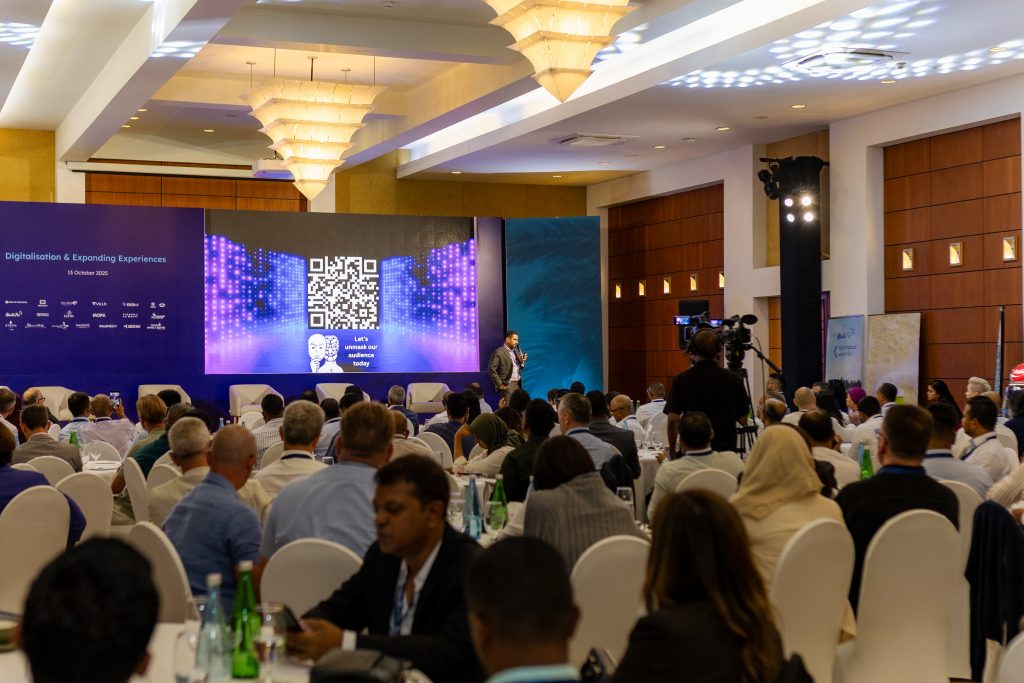
Capability building, in his model, is the engine that powers the other pillars. He advocated T-shaped development—deep functional mastery with broad collaboration fluency—and a shift from one-off training to ongoing, personalised learning. “Gen Z and millennials demand growth on the job,” he said. “If you don’t offer it, they will move—and they might not tell you before they do.”
The session returned, finally, to the heart of Maldivian hospitality: service. “The Maldives will retain its uniqueness,” Aalim said. “Human warmth will always matter. Leadership 5.0 doesn’t replace people—it elevates them. It aligns foresight, purpose, speed, structure and capability so we can innovate faster, care deeper and perform better.” His closing challenge to the room was simple and disarming: “Be humble. Think bold. Go beyond. The future belongs to leaders who can listen, learn and move—at the speed of the guest, with the heart of the host.”
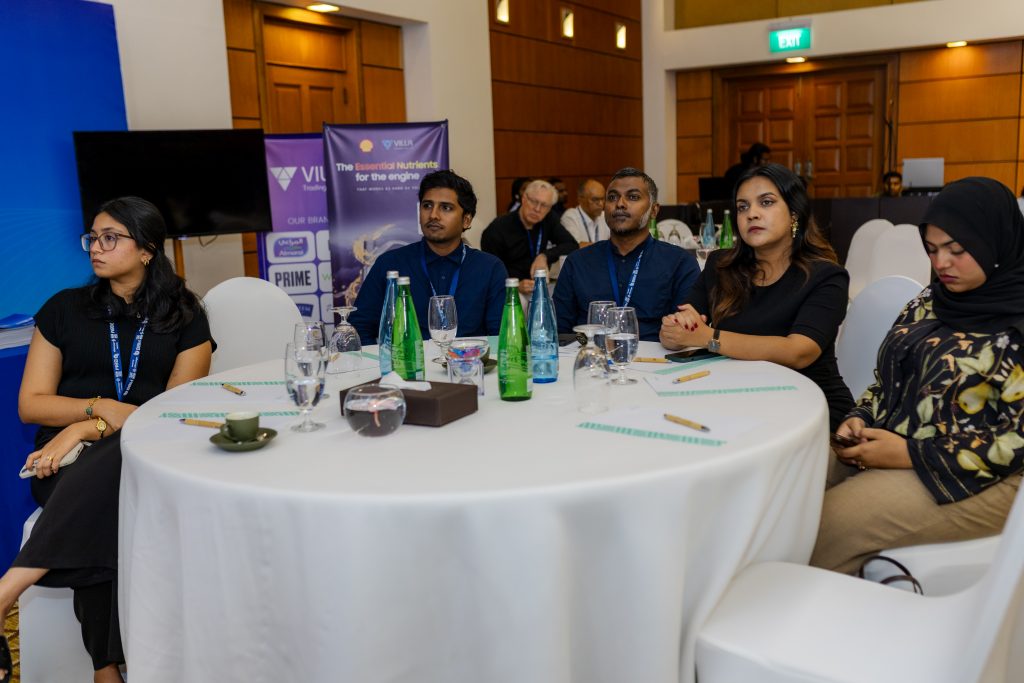
Launched in 2016, the Hotelier Maldives GM Forum has become a cornerstone event for the country’s tourism industry. Each edition brings together general managers, resort owners, developers, and senior executives to share insights, exchange ideas, and discuss strategies for innovation and collaboration.
The 2025 Forum, held on 13 October 2025 at Kurumba Maldives, once again convened leaders from across the Maldives’ hospitality sector to discuss digital transformation, sustainability, human capital, financing, and long-term competitiveness — reaffirming its role as the premier platform for thought leadership in the industry.
Partners and sponsors of GM Forum 2025 include:
- Dhiraagu – Platinum Partner
- Bank of Maldives – Banking Partner
- Dhivehi Insurance – Gold Sponsor
- Maldives Airports Company Limited – Silver Sponsor
- Villa Hakatha – Silver Sponsor
- Bestbuy Maldives (BBM) – Silver Sponsor
- Manta Air – Aviation Partner
- Male’ Aerated Water Company – Beverage Partner
- Atmosphere Wellness – Wellness Partner
- Alia Investments – Associate Sponsor
- Uniforms Unlimited – Associate Sponsor
- Hotels and Resorts Investment Maldives (HARIM) – Associate Sponsor
- Souvenir Marine – Transport Partner
- Storm Events – Organising Partner
- Lightsout – Associate Partner
- Maldives TV – Media Partner
- Maldives Ocean Plastics Alliance (MOPA) – Sustainability Partner
- Supporting Partners – Navean Maldives, Maldives Insider and Blue n White