

Maldives to Sosei: Sonu Shivdasani on renewal, reinvention and what comes next
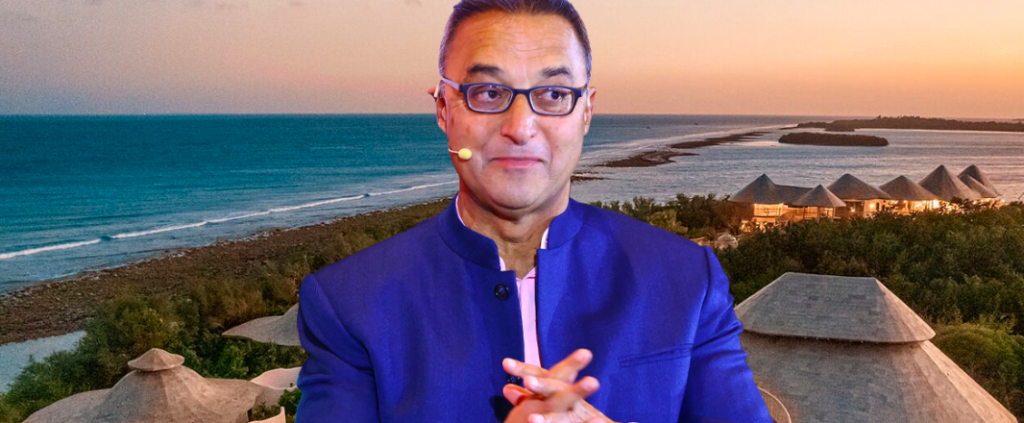
When Sonu Shivdasani stepped onto the HICAP stage in Singapore for a conversation with Yeoh Siew Hoon, the founder of WiT, the audience was reminded of his longstanding reputation for challenging the norms of luxury hospitality. Calm, reflective and candid, he spoke about renewal, reinvention and what it means to start again — not from ambition, but from introspection.
For the Maldives, where Sonu’s vision shaped some of the destination’s most influential resorts, his next chapter carries particular resonance. It is here that his philosophy matured, his ideas took form, and his brand moulded the country’s luxury identity. Now, with the launch of Sosei, he begins a new journey — one that is both a continuation and a departure.
Rooted in Maldives
Sonu’s relationship with the Maldives spans three decades, beginning with a chance discovery that would reshape the country’s hospitality landscape. In the early 1990s, he and his wife, Eva, fell in love with the simplicity and natural purity of the islands. What they created next — Soneva Fushi — was unprecedented.
Set on an island in Baa Atoll, Soneva Fushi introduced a new vocabulary to global luxury travel: “no shoes, no news”, barefoot living, eco-design, outdoor bathrooms, and villas nestled into nature rather than imposed upon it. It was the opposite of traditional luxury, yet it instantly redefined it.
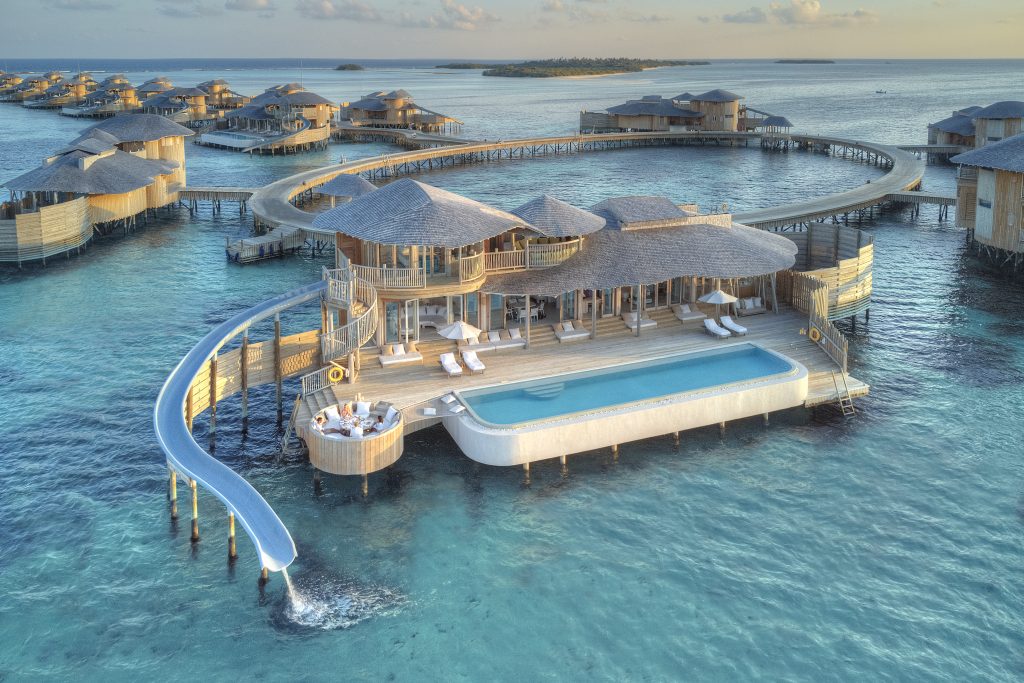
Over time, Soneva became synonymous with the Maldives’ top tier. The brand expanded to Soneva Jani, a benchmark for resort design, lagoon living and service culture. Elements of the “Soneva DNA” — sustainability, wellness, privacy, personalisation — influenced a generation of developers and operators who arrived later.
At HICAP, Sonu described the Maldives today not as saturated, but “immature” — a destination still far short of its latent potential.
He pointed out that while 90% of current visitors fly long-haul, 2.5 billion people live within regional range. If even a fraction were captured, he said, the Maldives could become one of the most visited island destinations in Asia, not just a long-haul luxury escape.
His optimism underscores a belief that the Maldives continues to evolve — and that its next opportunity lies in diversity, regional access, and refined storytelling.
Defined by Reinvention
Educated at Eton and Oxford, Sonu entered hospitality not through conventional training but through passion and intuition. Over the years, he created and co-created several brands including Six Senses, Evason, and Soneva — each with a distinct philosophy.
He was among the first to champion sustainability long before it became a global imperative. Waste-to-wealth recycling, solar energy, desalination, marine conservation and farm-to-table dining became part of the Soneva identity. He famously introduced the Maldives’ first carbon levy for guests, using the funds to support renewable projects around the world.
But his greatest innovation was cultural. Sonu often said, “True luxury is not physical. Guests remember people, not buildings.”
It is this “software” — the hosts, the warmth, the intention — that he believes separates good resorts from unforgettable ones.
Sosei: Renewal, not replica
The HICAP interview marked the first time Sonu spoke at length about Sosei, his new brand. The name, derived from the Japanese concept of “rebirth”, reflects a personal and professional transformation that followed a period of introspection.
Unlike earlier ventures, Sosei will operate with long-term, values-aligned investors rather than private equity. The focus is on meaning, not scale. Its early projects include developments in Costa Rica, South Africa, Botswana, Switzerland and Asia — each selected for its natural context and community narrative.
But Sosei is not Soneva 2.0. It is less about architecture and spectacle, more about renewal, experience and emotional connection.
At HICAP, Sonu shared the idea that shaped Sosei: “You have to give up who you are to become who you will be.”
For him, this means stepping away from the identity of a founder synonymous with one brand, and embracing a new role guided by curiosity and creativity.
Sosei’s core themes include:
- Transformational hospitality — stays designed around reflection and personal growth
- Host-led service — meaningful encounters over scripted luxury
- Purpose-centred development — environmental and social impact baked into the model
- Low-density design — privacy through space, function and intention
It is, in many ways, an evolution of the philosophy he developed in the Maldives — taken further, deeper and with global relevance.
What Maldives can expect from new chapter
While Sosei’s first properties are located outside the Maldives, the destination remains close to Sonu’s heart. His insights carry weight for the country’s future, especially at a time when development is accelerating and the market is diversifying.
- A shift from hardware to heartware: As resorts race to build bigger, grander and more technologically advanced villas, Sonu’s message is a counterbalance: the real differentiator will be people. The Maldives’ strength has always been human connection — and that may be where its next evolution lies.
- Sustainability will move from “feature” to “foundation”: Soneva showed that luxury and sustainability can coexist. Maldives properties — especially new entrants — will need to embed environmental commitments into operations, not just green-label marketing.
- Regional markets will become the next frontier: If Sonu’s prediction about short-haul Asia materialises, the Maldives could see a transformation similar to destinations like Bali or Phuket — but with higher positioning and stronger regulatory oversight.
- Wellness and meaningful escapes will define the future: With Soneva Soul influencing wellness in the region, Sosei’s debut signals a deepening of experiential, introspective travel. The Maldives is well-positioned to lead this movement if operators embrace it early.
Sonu Shivdasani’s appearance at HICAP felt less like a brand launch and more like a philosophical reset. For an industry preoccupied with new openings, investment deals and pipeline numbers, his emphasis on renewal served as a powerful reminder: luxury hospitality is ultimately a human craft.
For the Maldives — a destination that shaped his worldview and benefitted immeasurably from his innovations — his next chapter is worth watching closely. Whether Sosei arrives on Maldivian shores or influences its trends from afar, its ideas will ripple through the industry.
And for Sonu himself, the journey comes full circle: a creator once again becoming a beginner.