


When dredgers draw near: Resorts sound alarm on safety, privacy, guest experience
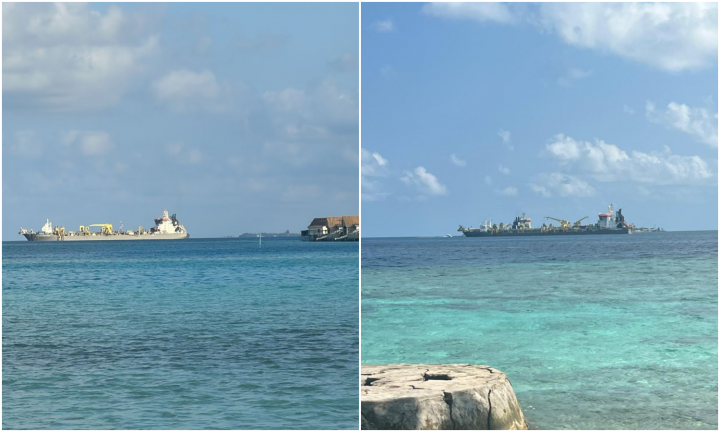
Resort operators in the Malé Atoll are increasingly voicing concern that dredging activity linked to land reclamation projects is taking place uncomfortably close to resort lagoons, heightening anxieties around guest safety, privacy, and the overall holiday experience.
The Environmental Regulatory Authority (ERA) has confirmed it has received multiple complaints alleging illegal sand extraction tied to approved reclamation works, including claims that dredgers have crossed into areas near resort boundaries and removed sand beyond permitted zones. The regulator said it “regularly receives complaints” about lagoon dredging and reclamation in the Malé Atoll, with online videos showing dredging taking place close to resort areas and fuelling concern among both the public and resort operators.
Guest experience, safety, and privacy at stake
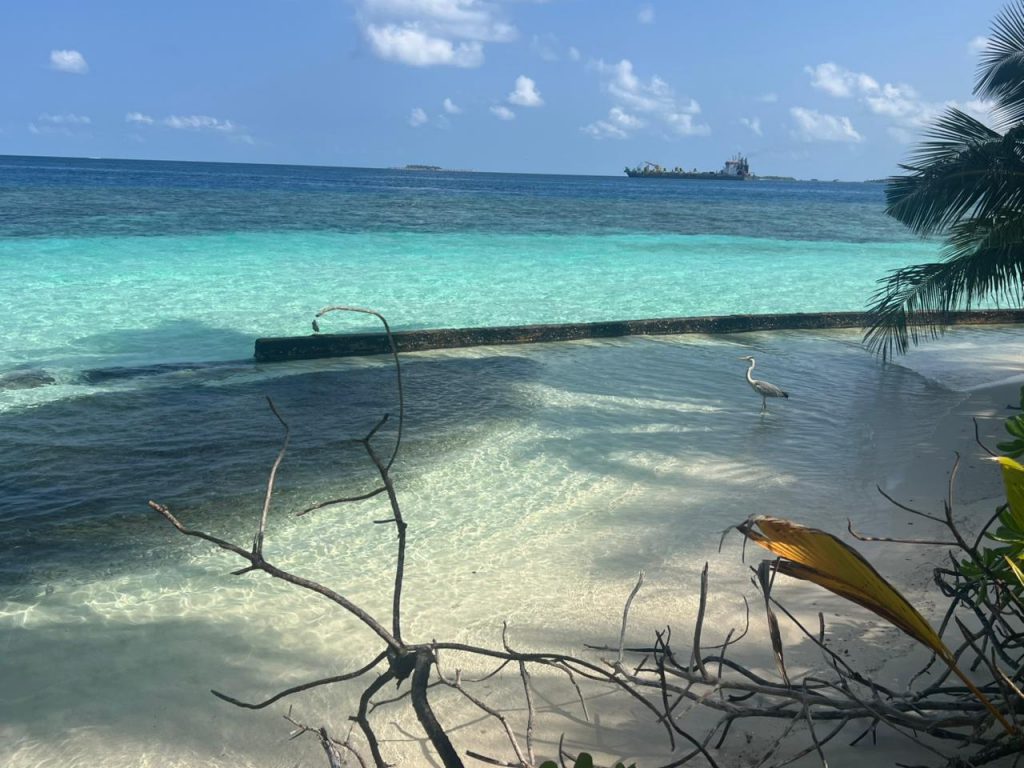
For resorts, the issue is not purely environmental. Operators warn that visible industrial activity near a resort’s perimeter can undermine the sense of seclusion that underpins the Maldives’ luxury proposition and create real operational and reputational exposure.
According to ERA, several resorts have filed complaints with the Ministry of Tourism and the Ministry of Environment, raising issues that include contamination of seawater used by resorts, impacts on marine life, and disruptions to activities such as snorkelling. ERA also noted a resort warning in writing that such practices could affect the visitor experience and future bookings.
Industry stakeholders point out that these concerns compound during peak seasons, when lagoons and nearshore waters are heavily used for guest transfers, watersports, and excursions, and when privacy expectations are at their highest.
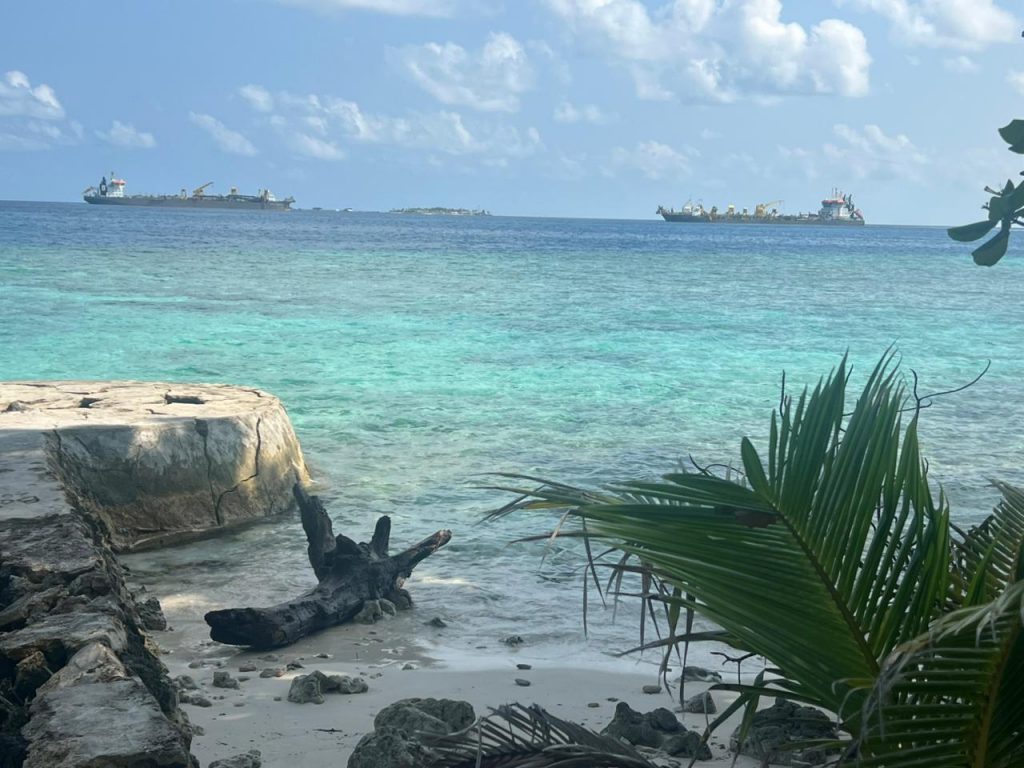
Environment Minister Thoriq Ibrahim has acknowledged the public concern around dredging near reefs and resort boundaries, while maintaining that sand extraction is “usually permitted at least 500 metres from the reef line”. He added that the size of dredgers can create the impression that operations are closer than allowed.
“If violations are identified and proven, necessary action will be taken,” Thoriq said.
He also conceded that continuous monitoring is not currently feasible.
“We do not have the capacity or human resources to place a person on every dredger,” he said, noting that the ministry responds to complaints as they are received.
Wider regulatory backdrop: boundaries and buffers
The concerns come against an already complex operational landscape for resorts navigating boundaries, lagoons, and shared waters. Under the Ministry of Tourism’s updated Boundary Regulations (2023/R-90), the “general principle” is a boundary of 500 metres measured from dry land at mean tide where lagoon area allows, with specific exceptions and additional zoning provisions.
Operators say the practical challenge lies in translating these measurements and permit conditions into on-water realities: dredgers, pipelines, and support vessels can shift position; sediment plumes can travel with currents; and even legally compliant works can still be highly visible and disruptive if conducted near guest-facing areas.
Impacts beyond resorts: visibility and noise
Tourism-adjacent businesses have also warned of immediate knock-on effects. In a recent report on dredging-driven sediment plumes in the atoll, dive operator Abdulla Hasrath ‘Haththu’, owner of Dive Club, described deteriorating water conditions and disturbance to marine life around popular sites.
“It’s very murky in the shark tank near Hulhumalé. Murkiness and visibility is one problem and the other is the noise from the dredgers when they are doing the work, which really affects shark sightings,” he told Maldives Independent.
He added that sedimentation was a “very big problem” during the north-east monsoon, with some operators reportedly losing revenue and even suspending dives in affected areas.
Tighter compliance and enforcement
Even within the dredging sector, there have been public warnings about weak adherence to environmental controls. The Dredging Association of Maldives (DAM) has argued that while Environmental Impact Assessment (EIA) documentation is meant to guide dredging activity, “in many cases, the project activities do not follow the approved EIA report”.
“Sadly, in many cases, the project activities do not follow the approved EIA report,” DAM said, calling for action against unlawful practices and warning of environmental and governance risks when works deviate from permitted scope.
The Maldives Association of Tourism Industry (MATI) has separately urged stakeholders to adhere to mitigation measures during periods of heightened reef stress, including calls to stop the use of heavy machinery such as dredgers in sensitive contexts.
While regulators assess complaints, resort operators say risk reduction needs to be practical and immediate, with measures such as:
- clearer demarcation and public mapping of approved dredging zones and exclusion buffers;
- mandatory AIS tracking and reporting for dredgers and support craft operating near tourism islands;
- stricter time-of-day limits where dredging is visible from resort beaches or overlaps with peak watersports windows;
- rapid-response verification protocols when resorts submit footage or GPS coordinates alleging encroachment; and
- enforceable penalties for operating outside permitted boundaries or failing to implement EIA mitigation requirements.
For an industry built on tranquillity, discretion, and pristine lagoons, operators argue that the bar for managing dredging interfaces with active resorts must be exceptionally high, not only to protect reefs but to protect the Maldives’ brand promise itself.