




Before the guest arrives: Nora Imeli on the human side of hospitality
During a recent resort stay, Nora Imeli thanked a waiter and addressed him by name. She recalled his expression changing immediately. In subsequent encounters, she noticed him smiling, talking more with other guests and returning to engage with her.
“So he shaped my experience and I shaped his experience,” she told delegates at the Hotelier Maldives General Managers (GM) Forum 2026.
It was a simple exchange that illustrated a wider point running through her presentation: the way people feel at work influences the experience they create for others. For hospitality leaders, that places the emotional environment within a resort firmly within their responsibility.
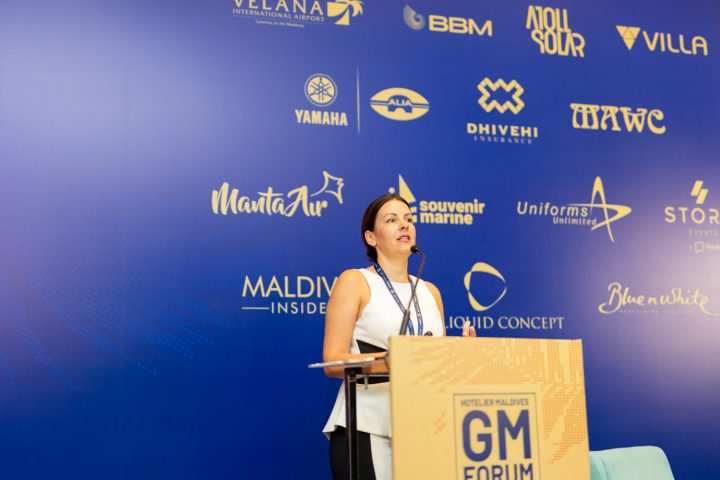
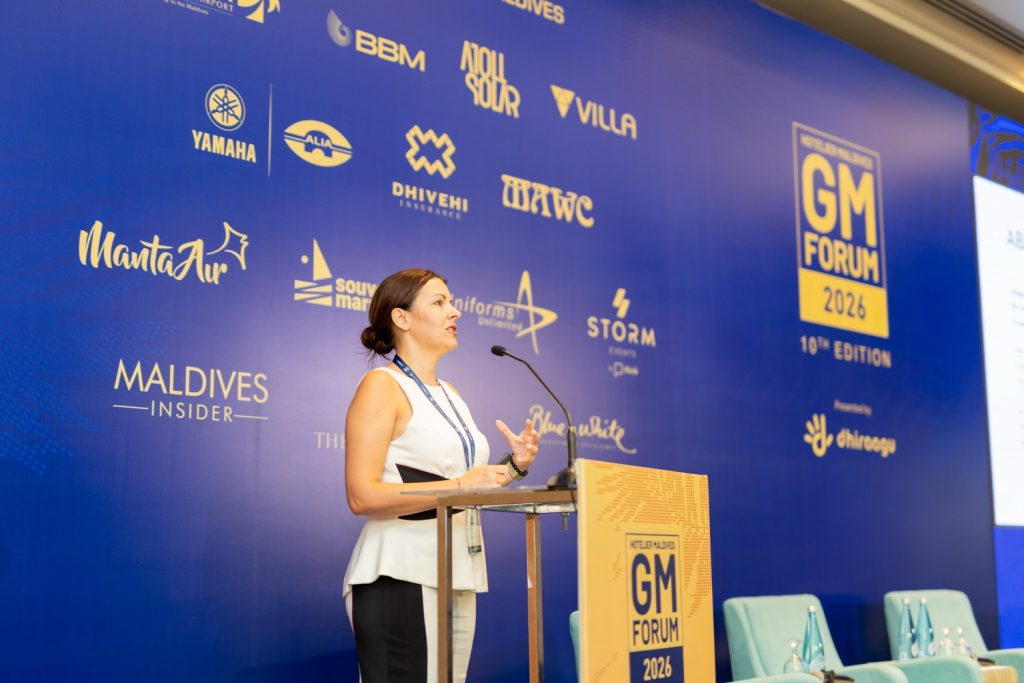
In her session, “The Human Side of Hospitality: How Emotional Intelligence Shapes the Guest Experience,” the Leadership and Human Capacity Consultant explored how leaders’ behaviour shapes teams, workplace culture and the interactions that eventually reach the guest. Her starting point was the leader’s ability to understand and manage themselves, particularly when pressure rises.
Originally from Hungary and now based in Colombo, Imeli drew on more than 15 years of corporate experience. Her work, she explained, occupies the space between knowing and doing: organisations invest in leadership skills and training, yet the environment employees return to can undermine that investment.
Sending colleagues on courses has limited value if the conditions in which they work remain unchanged. Leaders contribute to those conditions every day through how they speak, listen and respond. In Imeli’s account, the question of developing people therefore begins with examining the behaviour around them.
She described being approached by a leader concerned about declining productivity. He complained that employees lacked focus, appeared disengaged and shut down. As he spoke, she noticed his anger and frustration, and asked how he addressed these concerns with his team. He acknowledged bringing the same frustration into those conversations.
Her response was that his own behaviour was contributing to the withdrawal he wanted to resolve. The example challenged delegates to consider how a manager’s attempt to improve performance might itself make it harder for employees to participate.
“How much pressure do we create in the environment unnecessarily just by how we actually respond to each other?” she asked.
That question gave her discussion of emotional intelligence a practical focus. A leader’s manner can encourage people to contribute or make them reluctant to speak. Recognising that influence requires attention to personal triggers, past experiences, beliefs and the emotions brought into a conversation.
Imeli used the image of an orange under pressure to make the point. Squeezing it produces what is already inside. In her analogy, unresolved frustration, anger or hurt can similarly emerge when a person faces pressure. The language of empathy means little to a team if the leader’s behaviour changes sharply when circumstances become difficult.
The consequences, she argued, reach into trust. Employees can become confused and begin to doubt themselves when someone’s actions contradict the values they express. Consistency matters because colleagues need to know how they will be treated when a situation becomes uncomfortable.
Her emphasis on self-awareness was accompanied by an appeal for greater care in interpreting other people’s behaviour. “People are carrying an invisible backpack,” she said, referring to the private pressures that may sit behind a professional appearance.
Imeli spoke openly about experiencing clinical depression for four years while working in the UAE. She said she continued to attend work and remain productive, while others were unaware of what she was experiencing. Her account underlined the limits of judging a colleague’s wellbeing by how they appear at work.
Family responsibilities, financial concerns and other expectations can remain unseen. Her advice was to ask questions, pay attention and build connections, allowing colleagues to share their circumstances rather than assuming a smile means everything is well.
The connection with guest service became explicit in a hypothetical example. Two colleagues have a disagreement, and one carries the frustration into their next interaction. Within minutes, that employee is at the front desk welcoming an arriving guest. The words may be correct and the smile in place, yet Imeli suggested that the unresolved tension can still influence the encounter.
“We are expecting our colleagues to look after the guests, but we need to look after our colleagues,” she said.
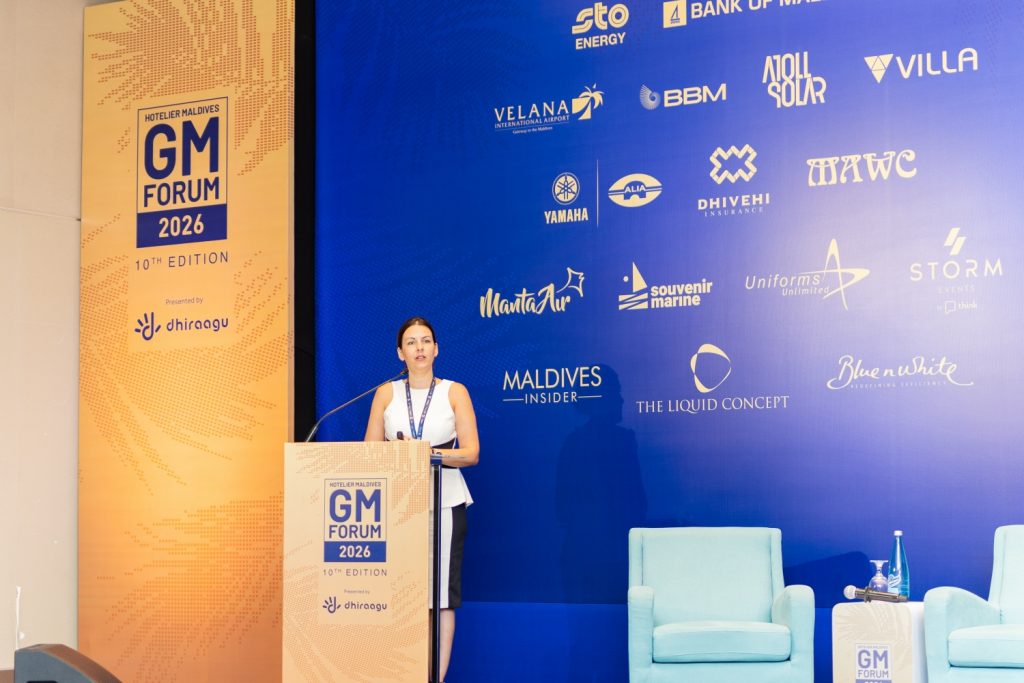
For general managers, this makes the internal working environment part of the work of delivering hospitality. The guest-facing moment is influenced by what has happened beforehand: whether colleagues feel supported, whether disagreements are addressed and whether people can approach their work with confidence.
Imeli presented self-regulation as a skill that leaders could develop. First comes recognising pressure and understanding personal triggers. With that awareness, a leader can begin to choose how to respond, rather than immediately passing frustration on to others. As she put it: “A response is intentional.”
Recognition and appreciation offered another practical route towards stronger relationships. Asked what made them feel seen, heard and valued, audience members identified the opportunity to contribute and to receive recognition. Imeli added the value of a genuine thank you, returning to the lesson of her exchange with the waiter.
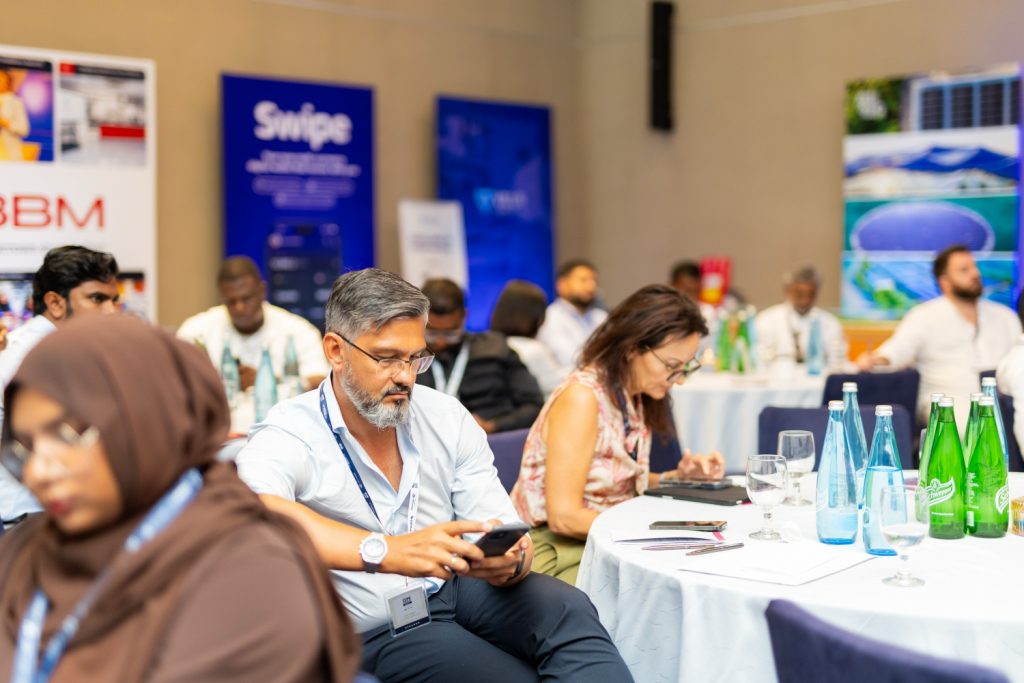
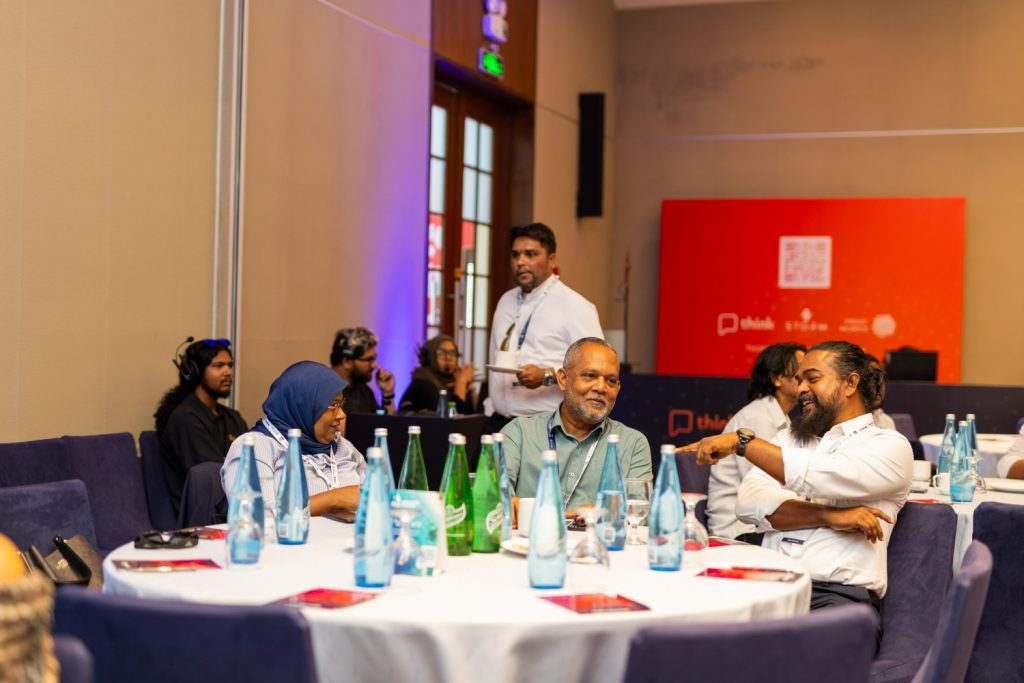
She then invited delegates to offer a small expression of appreciation to someone beside them. The exercise brought her argument into the room: acknowledging another person takes little time, yet can change the tone of an interaction. She encouraged leaders to take that habit back to their workplaces, alongside a willingness to ask questions and learn about their colleagues’ lives.
These responsibilities also framed her discussion of artificial intelligence. Technology might provide guidance on handling a difficult conversation, she observed, but a person must still conduct it. Building trust and managing relationships require leaders to put their understanding into practice.
For Imeli, developing that capacity demands continuing attention. “But one workshop will not fix it,” she said. Organisations need to understand the problems within their own environments, support new habits and recognise that people learn at different paces.
Her call was for investment in people alongside properties, systems, technology and standards. That investment needs to be reflected in everyday behaviour and supported by leaders who create space for employees to speak, contribute ideas and be themselves. She described this as a psychologically safe environment, in which people feel able to participate.
“The human side of hospitality is not separate from the guest experience,” she said.
Her challenge to general managers was to attend to the moments that precede a guest interaction: the tone of a conversation under pressure, the opportunity for a colleague to contribute and the appreciation that takes only seconds. In those moments, too, a resort’s guest experience is being shaped.
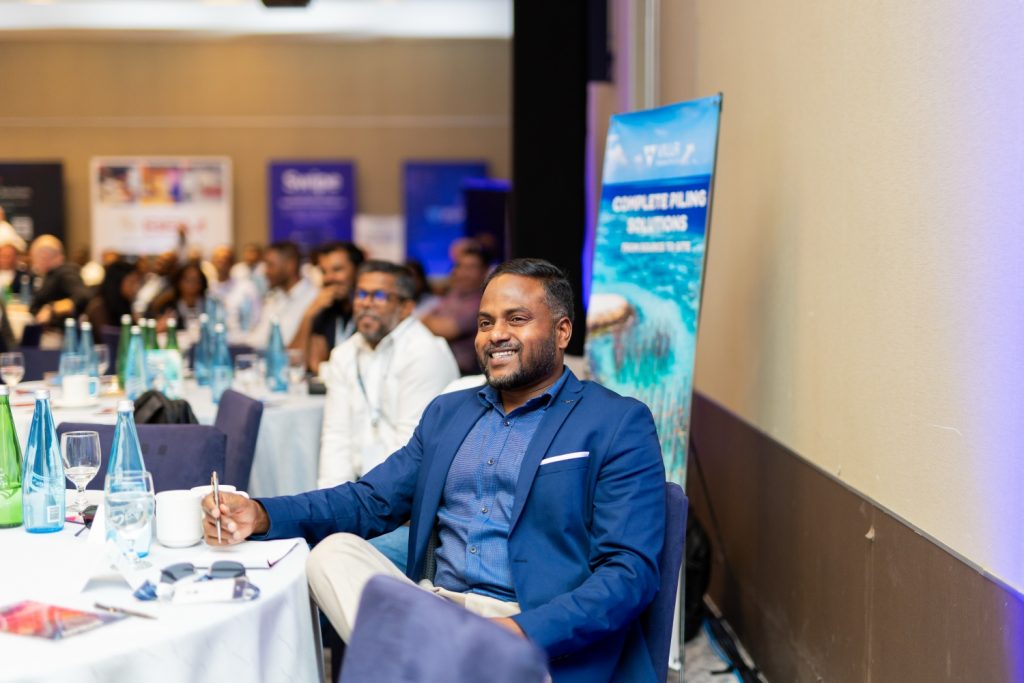
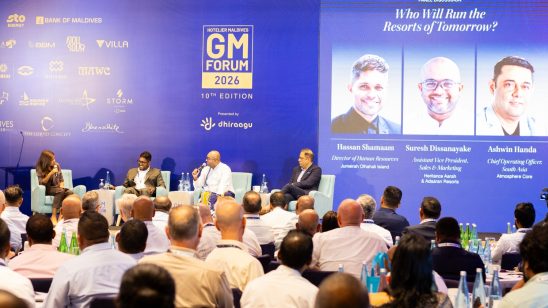
Established in 2016, the Hotelier Maldives GM Forum provides an annual platform for hospitality leaders and businesses serving the tourism sector to exchange perspectives on operational and strategic issues. The 2026 gathering marked the forum’s 10th edition.
A range of companies supporting different areas of the tourism industry partnered with GM Forum 2026.
Dhiraagu was the Premier Sponsor, while STO Energy was the Platinum Sponsor. Bank of Maldives (BML) was the Banking Partner, Dhivehi Insurance was the Insurance Partner, and Male’ Aerated Water Company (MAWC) was the Beverage Partner.
The Silver Sponsors were Maldives Airports Company Limited (MACL), Villa Hakatha, Bestbuy Maldives (BBM) and Atoll Solar.
ALIA, Uniforms Unlimited, The Liquid Concept, Maldives Insider and Blue N White supported the forum as Associate Sponsors.
Souvenir Marine was the Transport Partner, Manta Air was the Aviation Partner, and Storm Events was the Organising Partner.
Through its 2026 programme and partnerships, the GM Forum brought together resort leadership and the businesses supporting hospitality operations to examine how the sector can strengthen resilience while adapting its people, technology and operating models.