




Who will run tomorrow’s resorts? Building careers people want to stay for
“Their best capabilities become a prison,” Suresh Dissanayake observed.
He was describing a management dilemma: the employee so good at their current job that the department is reluctant to let them move. A reservations agent may understand why guests book, hesitate or walk away, yet spend years being told that reservations is where they belong.
At the Hotelier Maldives General Managers (GM) Forum 2026, that example brought the question of future leadership close to everyday resort management. Developing the next generation could begin with recognising the potential of people already on the team, then giving them a genuine opportunity to use it.
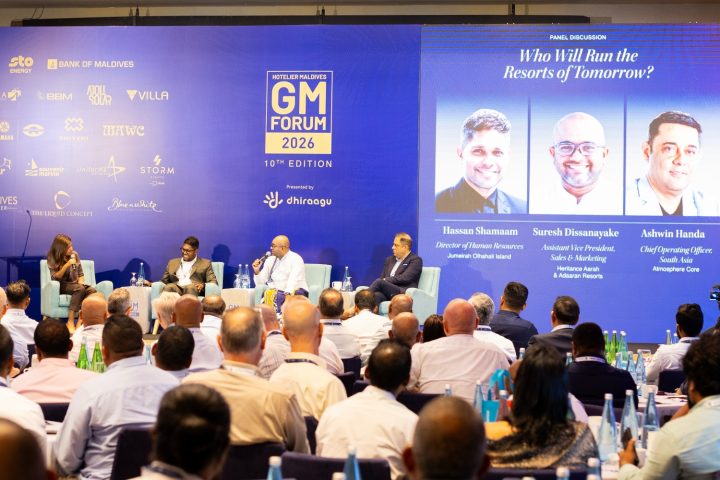
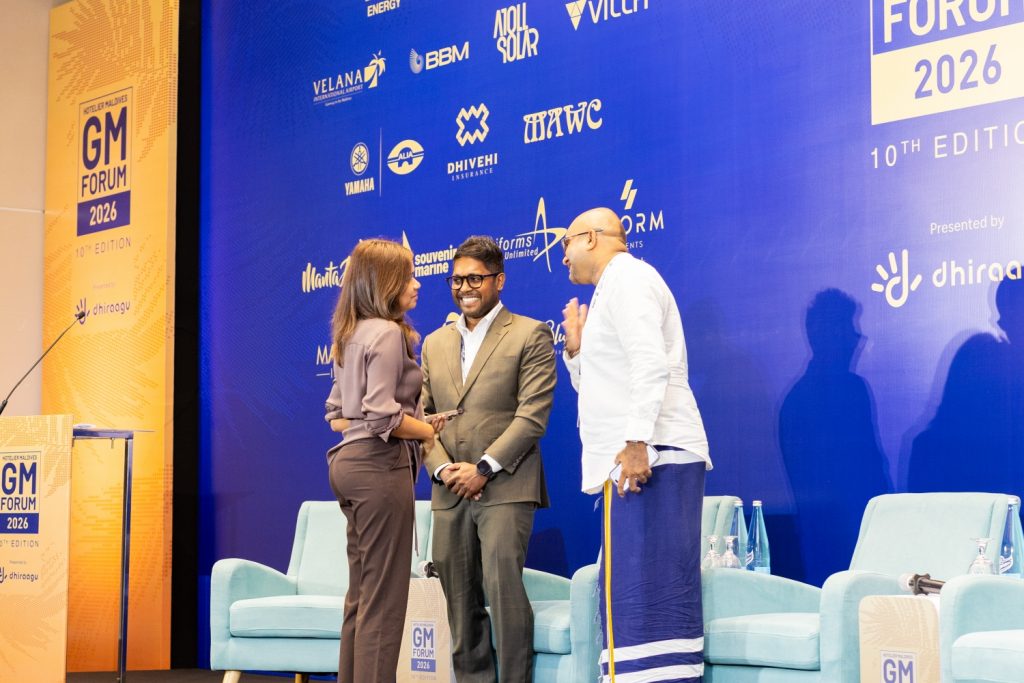
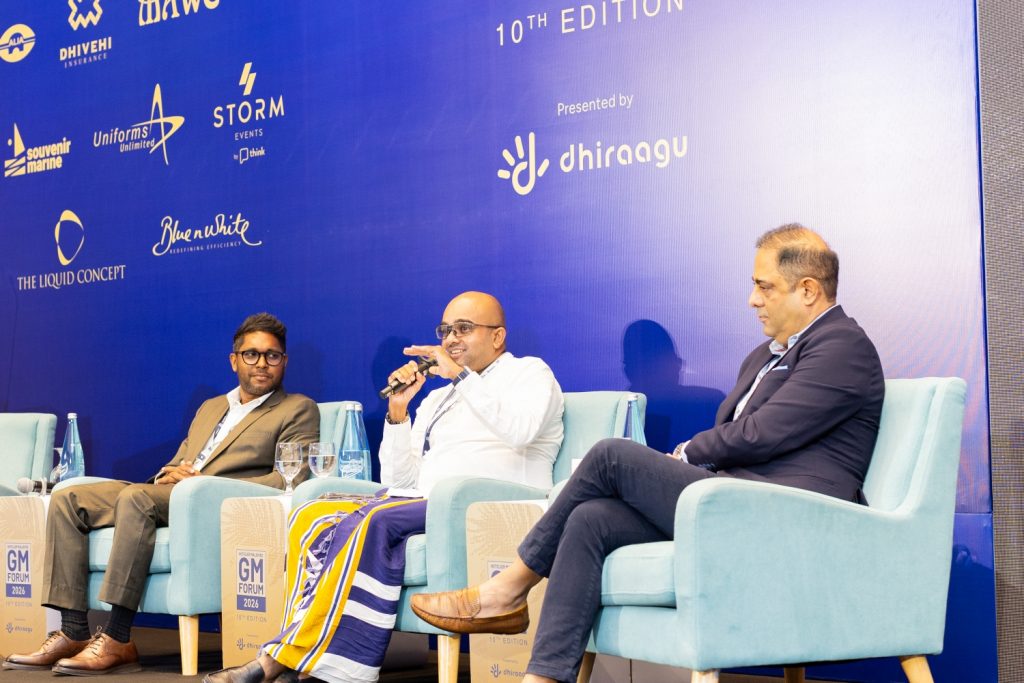
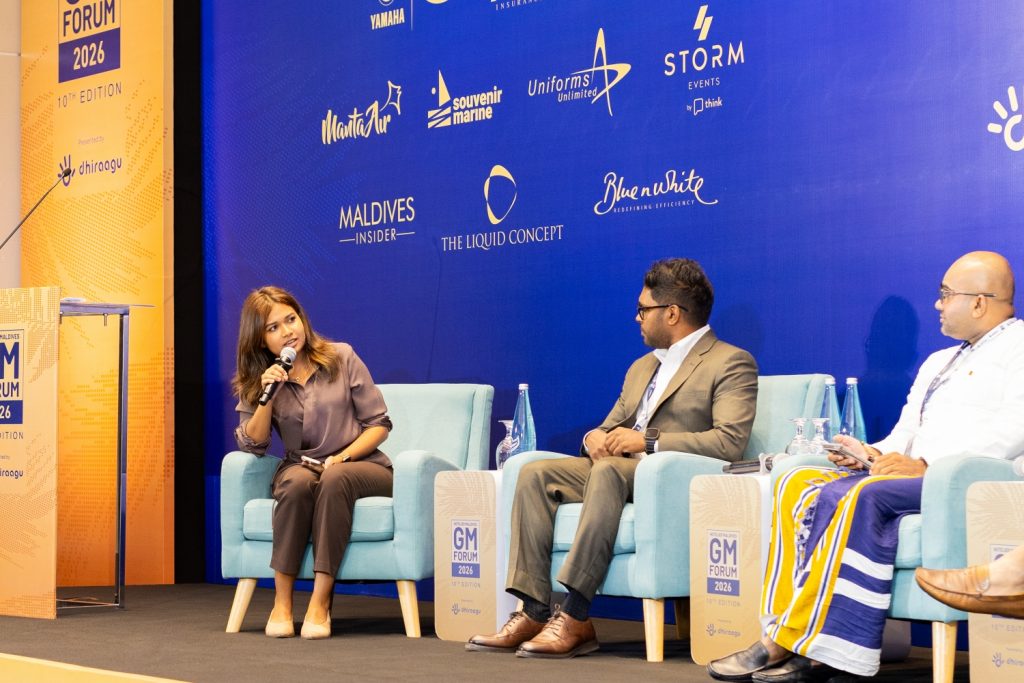
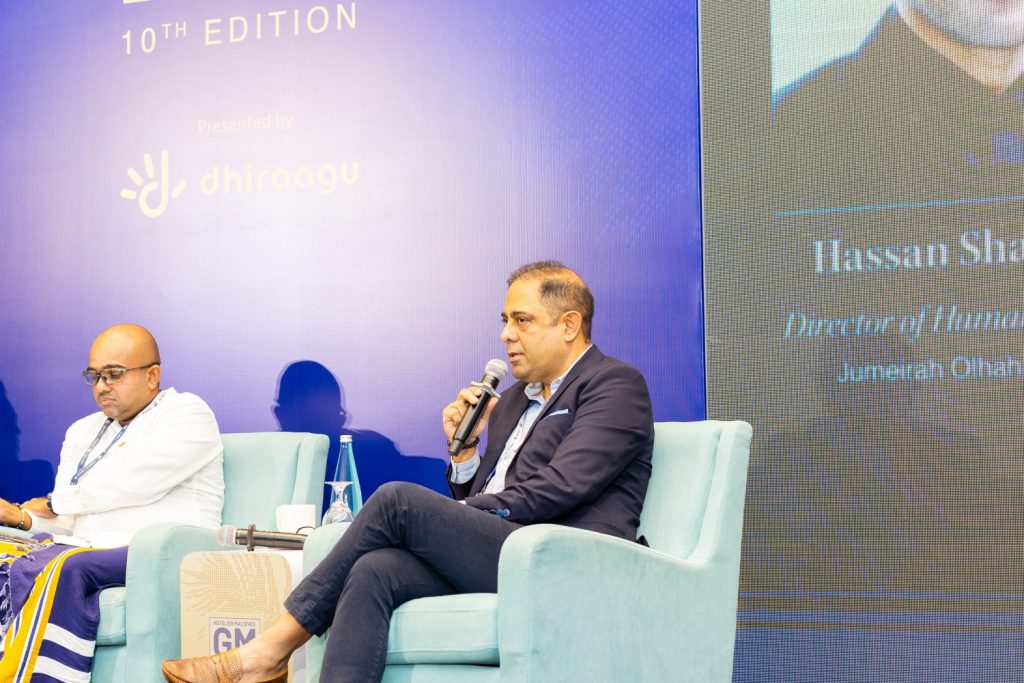
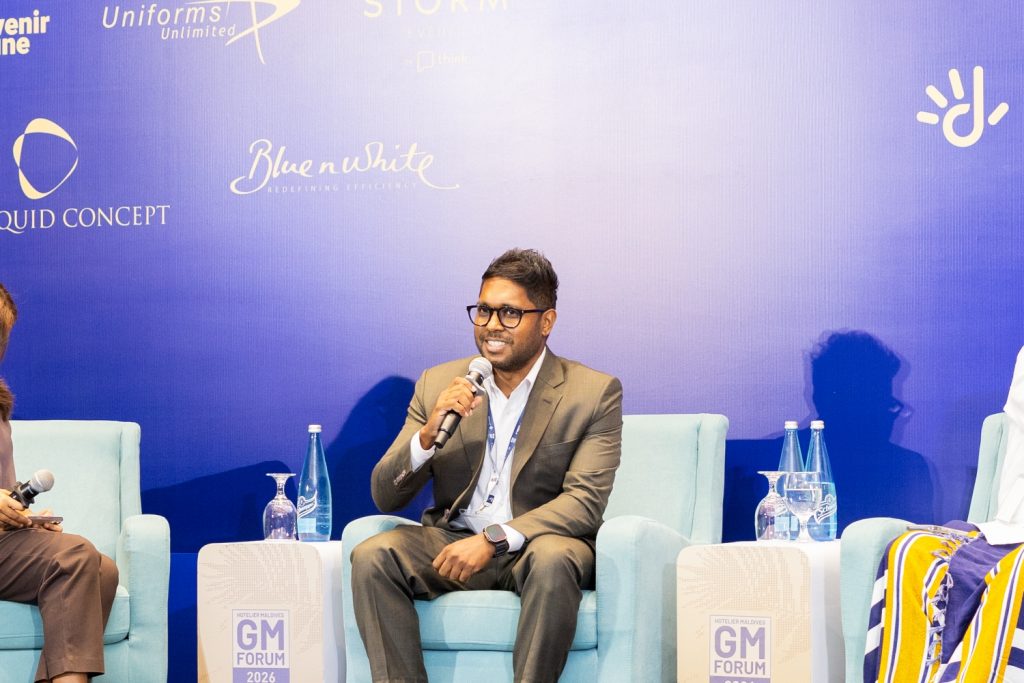
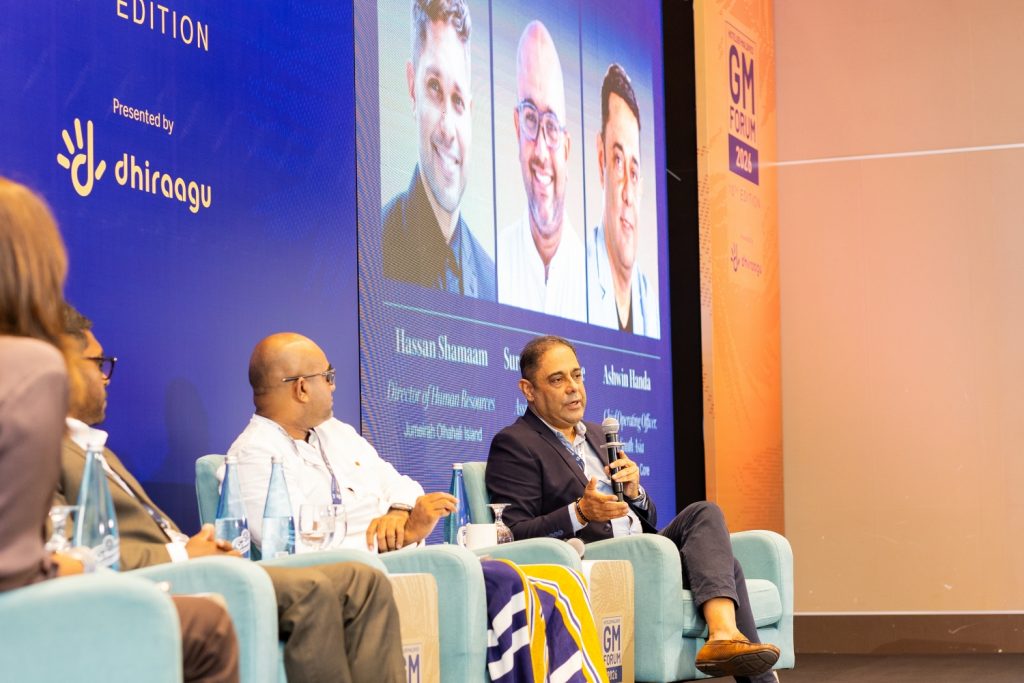
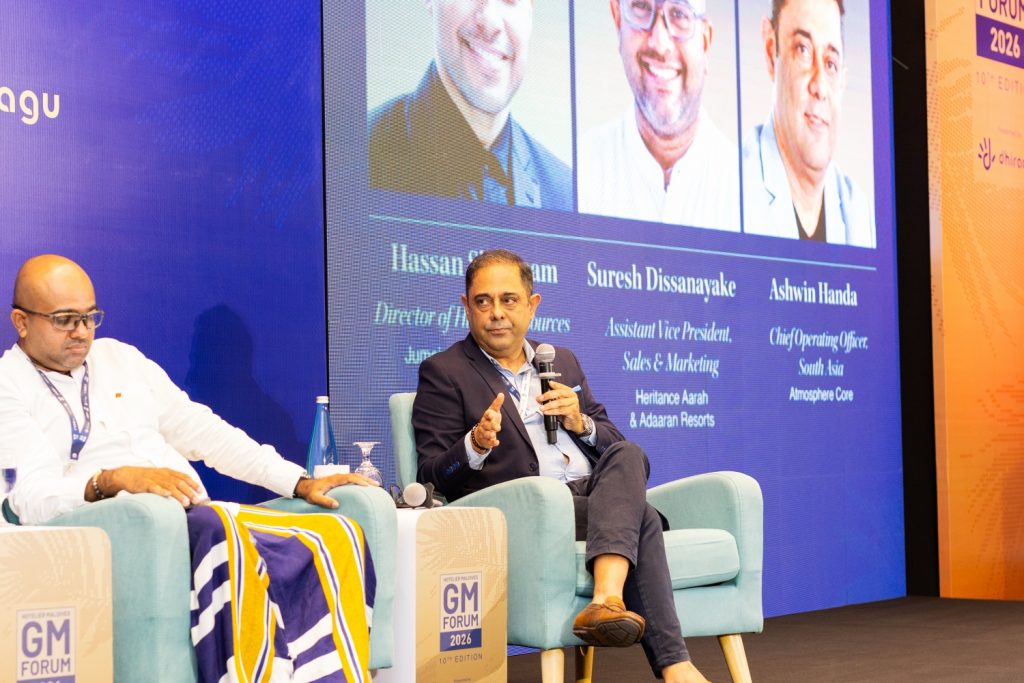
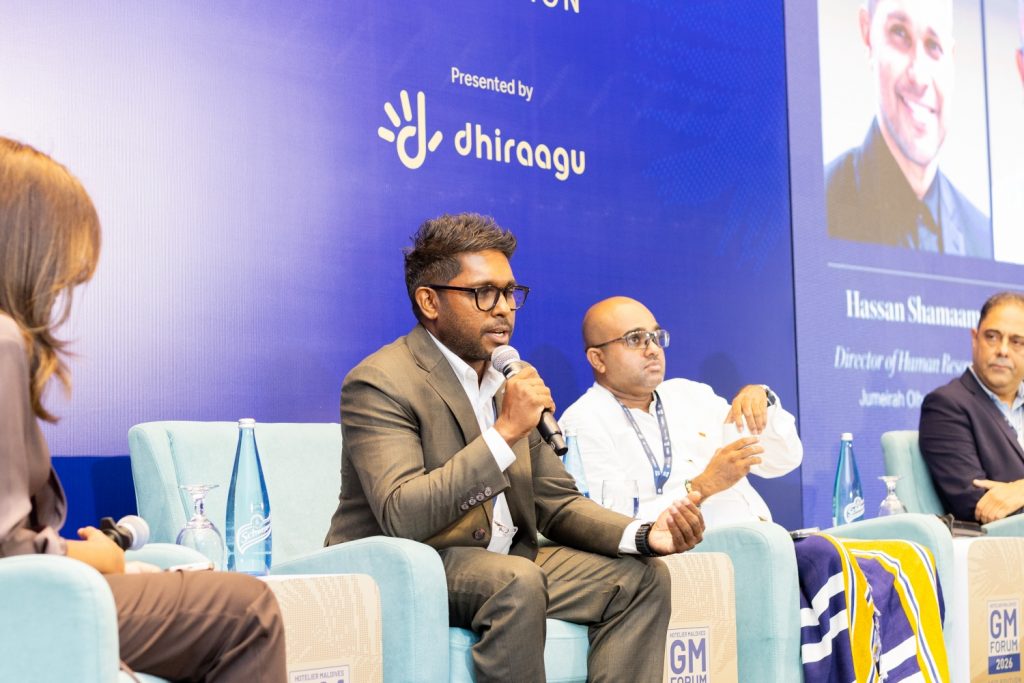
The panel, “Who Will Run the Resorts of Tomorrow? Talent, Retention and the Next Generation of Hospitality Leaders,” was moderated by Aishath Ihuma, Director of Business Development at Reollo Group. Joining her were Hassan Shamaam, Director of Human Resources at Jumeirah Olhahali Island; Dissanayake, Assistant Vice President, Sales & Marketing at Heritance Aarah & Adaaran Resorts; and Ashwin Handa, Chief Operating Officer of Atmosphere Core.
The discussion connected career development with the conditions that make employees stay, the expectations surrounding resort work and the skills needed to take responsibility for an entire business.
For Dissanayake, commercial understanding should reach beyond sales and marketing teams. A guest might discover a property through social media, consult reviews, compare prices and complete a booking through a conversation with reservations. Employees working at different stages of that journey could contribute valuable insight into demand.
He proposed giving promising colleagues a business problem to solve over a defined period, supported by a mentor and exposure to other departments. A young employee could spend time with reservations, revenue management and operations, then present the results to the executive committee after 90 days.
“Give them a problem to solve,” he said.
The assessment would concern what the employee had understood and achieved: how demand had changed, why a price moved or what influenced a guest’s willingness to book.
Dissanayake illustrated the approach with a reservations employee asked to help grow business from the United States. The assignment would encourage them to examine enquiries that failed to convert, question pricing and consider whether marketing promises matched customers’ expectations. In food and beverage, a colleague given responsibility for developing a beach dinner experience could begin examining costs, guest preferences and profitability.
Such opportunities required managers to release capable people. Ihuma pointed out the immediate difficulty: moving an excellent employee into development created a gap in the job they already performed well.
Dissanayake argued that department heads should be recognised for the people they developed for the wider organisation. A manager’s success in holding on to a team could otherwise become a barrier to an individual’s progress.
Handa approached advancement from another direction. Becoming a general manager, he cautioned, should not be treated as the only measure of a successful hospitality career. Someone who found satisfaction and balance in a specialist role could have a very different, equally valid view of achievement.
For those seeking the top operational role, the transition required a change in how they worked. Handa described the move from spending much of the day with guests and colleagues to taking on broader responsibilities and planning well ahead. Strong performance in a department did not automatically establish a person’s suitability for that shift.
He emphasised practical skills, experience and the ability to handle several responsibilities together. In discussing potential, he spoke of a person’s “spark”: their adaptability, willingness to learn, confidence and readiness to take on a challenge.
Purpose mattered too. Employees needed to understand why a task was worth doing and how it contributed to the business. Access to information was becoming easier, Handa argued; the challenge for employers was helping colleagues turn knowledge into useful skills.
The panel returned repeatedly to changing expectations among younger workers, although Ihuma challenged the tendency to group millennials and Generation Z together. That exchange reinforced the need to understand individual ambitions alongside broader changes in attitudes to careers and lifestyle.
For Shamaam, understanding employees also meant looking more closely at when and why they left.
An annual turnover figure could conceal quite different problems. He described an approach that examined departures at the 30-, 90- and 180-day stages, using those patterns to investigate recruitment and onboarding, the working environment and career prospects.
The purpose was to direct attention towards the stage at which the employment relationship was breaking down. Recruitment also carried costs beyond an advertised vacancy, including the time spent by managers interviewing and replacing staff.
Shamaam encouraged earlier conversations with employees through “stay interviews”, which could reveal frustrations while there was still an opportunity to respond. By the time someone arrived for an exit interview, the decision to leave might already be settled.
He also described probation as a period of mutual assessment. While a resort considered whether a new colleague suited the role, that colleague was deciding whether the resort was a good employer.
Regular conversations during the first months, clear goals at every level and coaching discussions could make that relationship more meaningful. For promotion decisions, he advocated talent reviews and mapping that allowed senior leaders to understand individuals’ performance and potential through a visible process.
Handa brought the discussion back to the experience of living on an island. Staff accommodation, food and the environment outside working hours were central to retention when colleagues spent so much time away from their families.
He pointed to the difference that fewer people sharing a room could make, while acknowledging the cost and limited land available on resorts. Remuneration remained important, but repeated salary increases alone could not resolve the question of whether employees wanted to build their lives within that environment.
The difficulty of attracting Maldivians into resort careers added another dimension. Ihuma pressed the panel on how development systems could improve progression for local employees and women, and on the family attitudes that could discourage young people from entering the industry.
Drawing on her work with the Nautilus Foundation, she described a chef training opportunity intended to combine study with employment that had attracted only two applicants. Conversations with prospective entrants had revealed parents who did not regard becoming a chef as a desirable career.
Shamaam offered another example: 17 internship opportunities at Jumeirah had attracted only one local candidate, he said. He argued that the education sector needed greater capacity and stronger connections with hospitality, including opportunities to learn through placements.
Ihuma maintained that awareness and stigma required direct attention. Her concern was that creating or reserving positions would achieve little if young Maldivians and their families remained unconvinced about the careers on offer.
The issue resurfaced in an audience question about competition for talent from public-sector employment, including the attraction of shorter hours and remaining close to family.
Dissanayake’s response was to begin earlier, in schools. He argued that the industry needed to show students the range of careers available and take responsibility for developing local talent. The appeal of those careers had to be understood from the perspective of the people being asked to choose them.
Shamaam called for a wider commitment to structured apprenticeships across international and local hotel brands. He favoured programmes with recognised accreditation, so practical learning could also carry value when participants pursued further qualifications. Building that supply of talent, he suggested, required sustained effort over years.
An audience question about the general manager’s role in 2035 brought artificial intelligence into the discussion. Dissanayake argued that the ability to use AI effectively would become a professional advantage.
Handa urged the industry to view AI as support for human judgement, describing it in terms of augmented intelligence. He saw emotional connection as a continuing responsibility for hospitality professionals, even as technology helped them work more quickly.
“AI is artificial intelligence. We are emotional intelligence,” Ihuma said.
Her closing suggestion returned the discussion to the people whose future had occupied the panel: invite school and college students to forthcoming forums. It would give prospective hospitality professionals an opportunity to hear these conversations, ask their own questions and begin to see where they might belong.
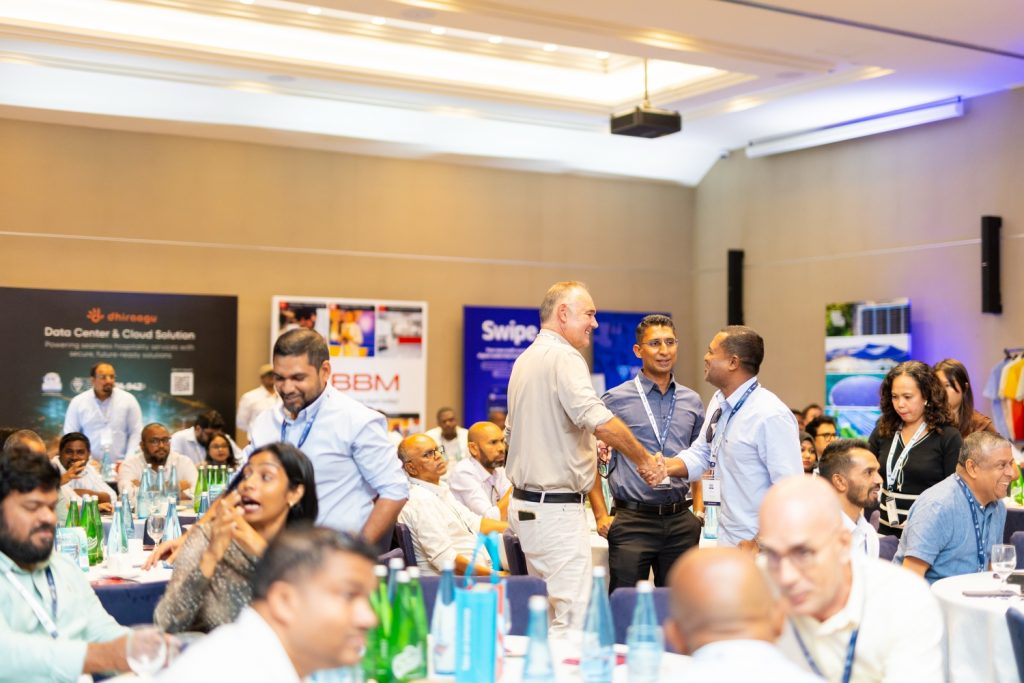
Established in 2016, the Hotelier Maldives GM Forum provides an annual platform for hospitality leaders and businesses serving the tourism sector to exchange perspectives on operational and strategic issues. The 2026 gathering marked the forum’s 10th edition.
A range of companies supporting different areas of the tourism industry partnered with GM Forum 2026.
Dhiraagu was the Premier Sponsor, while STO Energy was the Platinum Sponsor. Bank of Maldives (BML) was the Banking Partner, Dhivehi Insurance was the Insurance Partner, and Male’ Aerated Water Company (MAWC) was the Beverage Partner.
The Silver Sponsors were Maldives Airports Company Limited (MACL), Villa Hakatha, Bestbuy Maldives (BBM) and Atoll Solar.
ALIA, Uniforms Unlimited, Maldives Insider and Blue N White supported the forum as Associate Sponsors.
Souvenir Marine was the Transport Partner, Manta Air was the Aviation Partner, and Storm Events was the Organising Partner.
Through its 2026 programme and partnerships, the GM Forum brought together resort leadership and the businesses supporting hospitality operations to examine how the sector can strengthen resilience while adapting its people, technology and operating models.