



Emotional ownership can turn talent into a lasting asset, Atmosphere Core’s Shrikant Dash tells GM Forum 2026
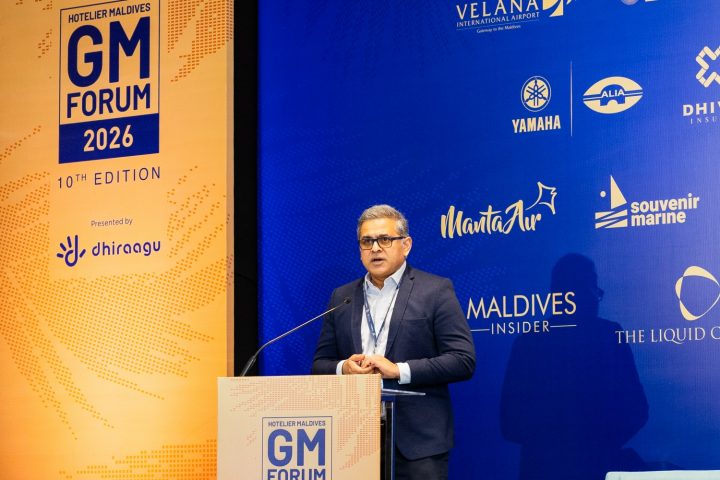
Shrikant Dash, Deputy Managing Director – Corporate at Atmosphere Core, has called on resort leaders to build ‘emotional ownership’ among their teams, arguing that a stronger sense of purpose, trust and belonging can turn talent into an enduring organisational asset.
Delivering the keynote address at the tenth edition of the Hotelier Maldives General Managers (GM) Forum 2026, Dash said employees’ emotional connection to their resort played a central role in transforming everyday service into memorable guest experiences.
While acknowledging the importance of financial performance, architecture, technology and sustainability, he encouraged general managers to consider what made guests feel connected to a property from the moment they arrived. The warmth of a welcome and the care shown by colleagues, he said, were fundamental to that experience.
“Do your colleagues really feel like they own the island? Not in a legal sense, in an emotional sense,” Dash asked.
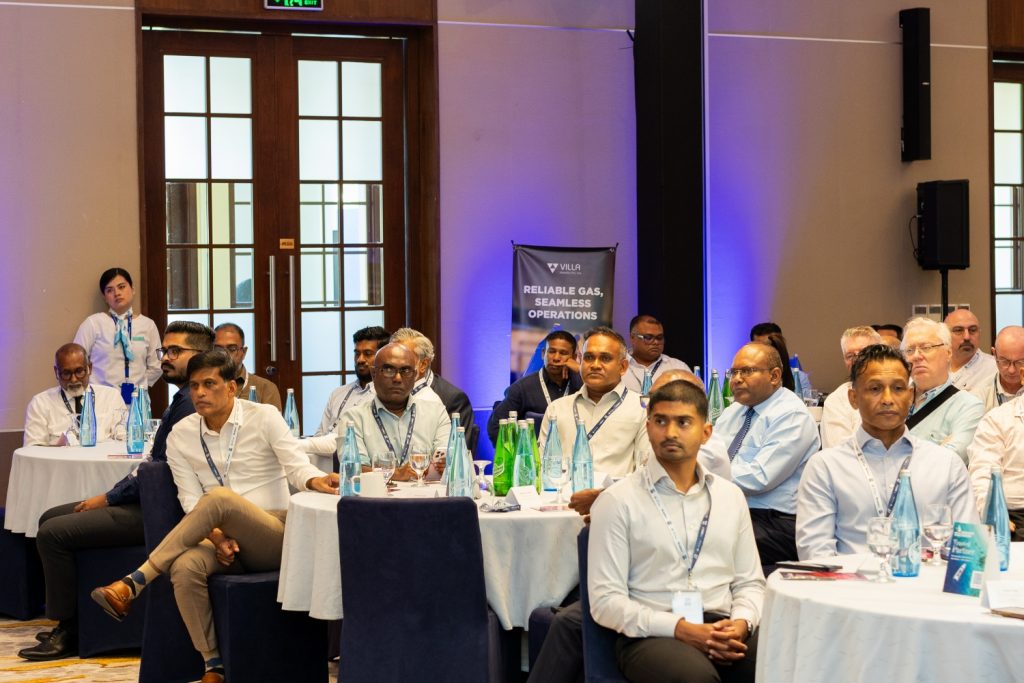
He described emotional ownership as the pride and personal responsibility employees feel towards their resort, its guests and their shared surroundings. Colleagues with that connection become hosts who care for the island as their home, he said.
Dash identified three factors that could help explain the difference between employees who felt deeply connected to their resort and those who approached their work primarily as a shift to complete: understanding purpose, having the authority to act, and feeling supported within the island community.
The first involved helping employees understand why their work mattered. Using turndown service as an example, he said colleagues needed to understand how an individual task contributed to a guest’s emotional experience, alongside knowing how to perform it.
The second was empowerment. Employees should have the authority to respond to guest concerns and turn problems into positive experiences without having to seek approval through several management levels.
“Ownership dies in bureaucracy,” he said.
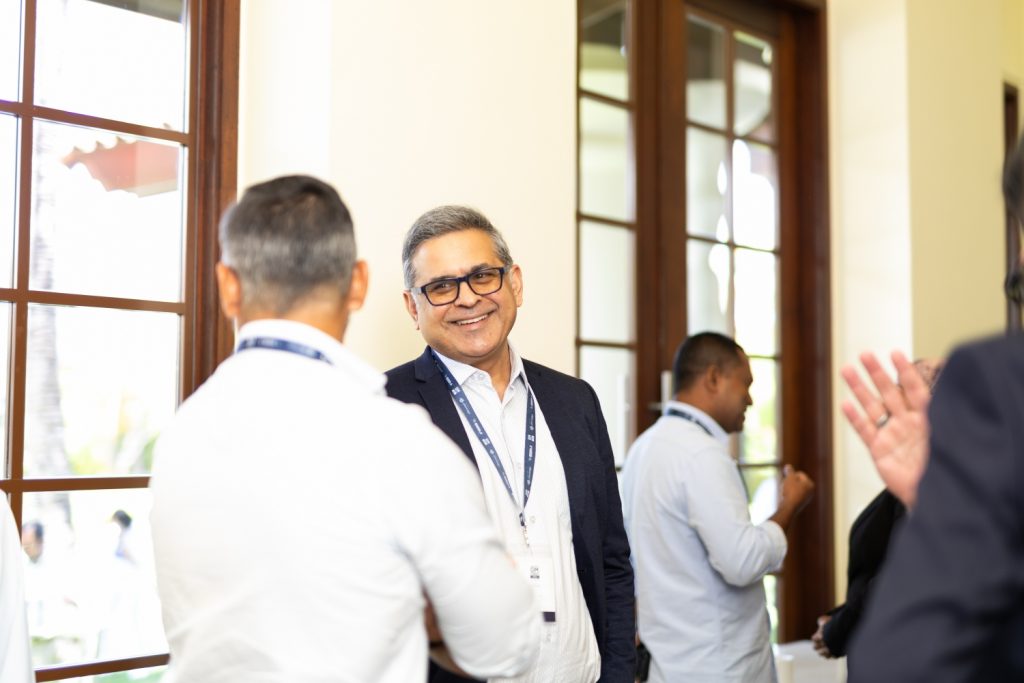
Dash noted that being told an employee would speak to management could be frustrating for a guest. Such responses, he argued, often reflected a lack of authority to act rather than an inability to solve the problem.
His third point addressed the particular circumstances of Maldivian resort employment, where colleagues live and work within island communities for much of the year. Whether employees felt connected to that community and properly cared for directly influenced the hospitality they could extend to guests, he said.
“If I’m deeply unhappy, I cannot possibly be expected to spread happiness throughout the day.”
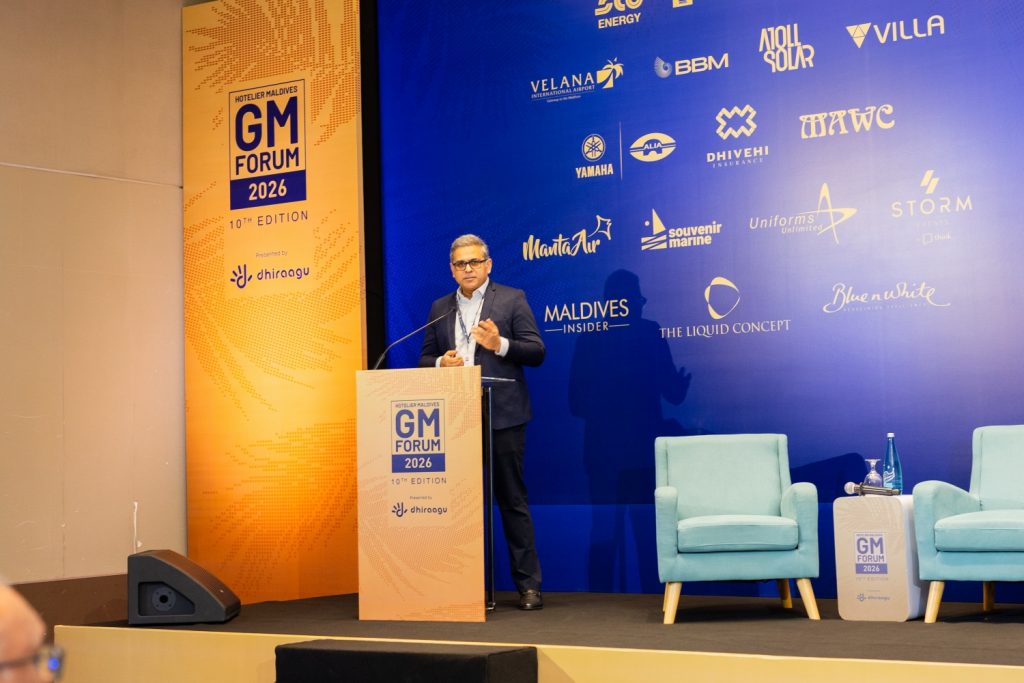
Turning to practical measures, Dash encouraged leaders to supplement training on standard operating procedures with explanations of the purpose behind each task. Although procedures were essential to consistency and quality, they did not, on their own, create passion.
He also urged resorts to recognise individual actions that demonstrated ownership, alongside commercial milestones such as revenue and occupancy achievements. Anticipating a guest’s needs or responding with personal care provided examples that other employees could understand and follow.
Recognising those behaviours, he said, helped make the organisation’s expectations tangible to colleagues whose daily contributions might otherwise feel distant from its financial results.
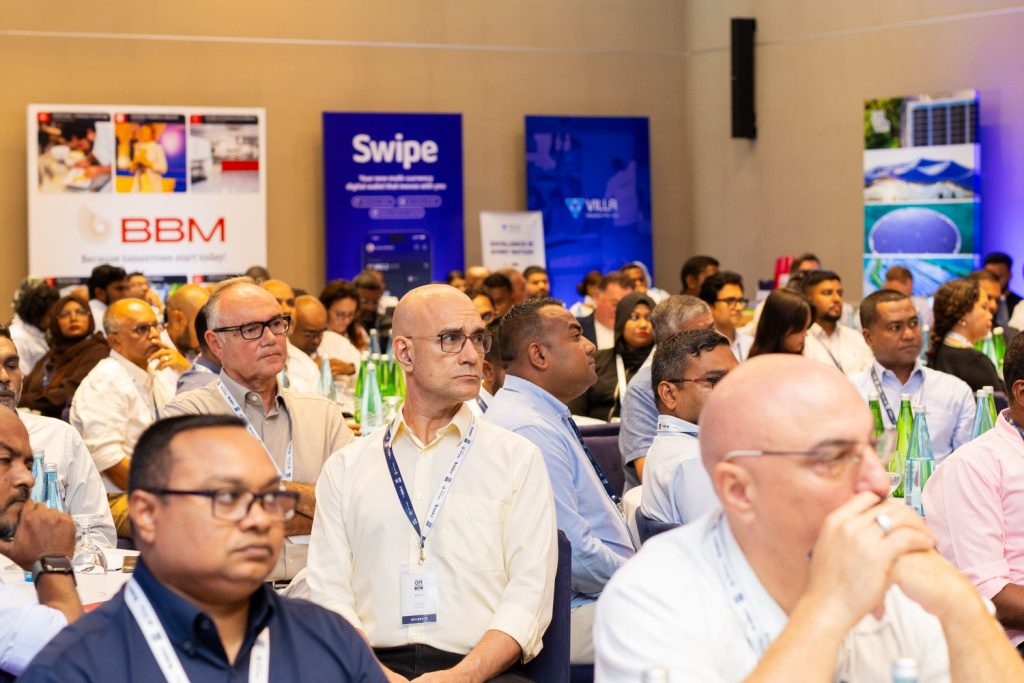
Listening to frontline employees was equally important. Dash highlighted how suggestions could lead to practical changes in operational processes, menus or restaurant opening hours. Even small adjustments could strengthen employees’ connection to the resort by demonstrating that their views mattered.
Dash said artificial intelligence, automation and other systems would continue to support functions such as pricing and inventory management. However, he argued that the emotional connection created through a warm welcome and attentive service would become increasingly important.
He concluded by encouraging general managers to inspire belief, offer trust and give colleagues a stronger sense of place and purpose. Building emotional ownership, he said, could deliver benefits extending beyond talent retention.
“You will build an irreplaceable and a resilient asset that will completely set your resort apart and make it unique.”
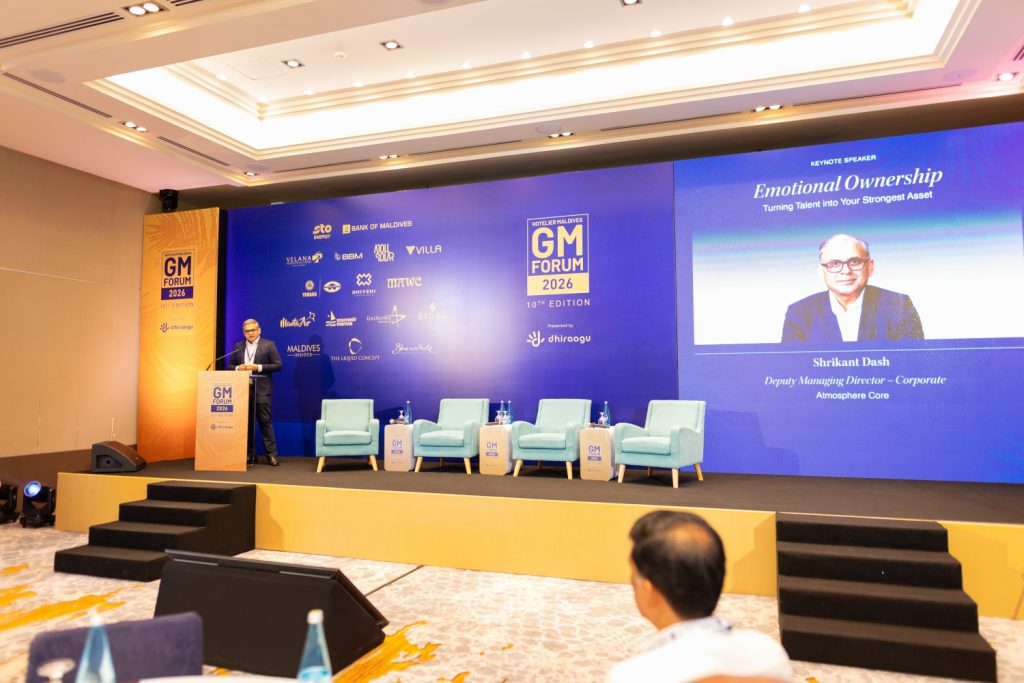
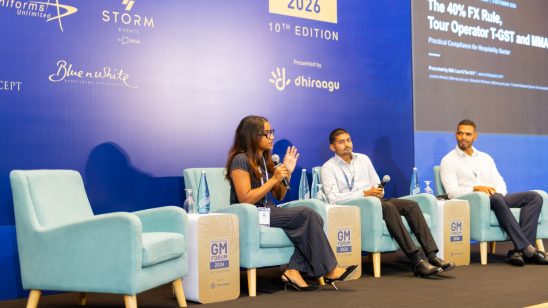
Established in 2016, the Hotelier Maldives GM Forum provides an annual platform for hospitality leaders and businesses serving the tourism sector to exchange perspectives on operational and strategic issues. The 2026 gathering marked the forum’s 10th edition.
A range of companies supporting different areas of the tourism industry partnered with GM Forum 2026.
Dhiraagu was the Premier Sponsor, while STO Energy was the Platinum Sponsor. Bank of Maldives (BML) was the Banking Partner, Dhivehi Insurance was the Insurance Partner, and Male’ Aerated Water Company (MAWC) was the Beverage Partner.
The Silver Sponsors were Maldives Airports Company Limited (MACL), Villa Hakatha, Bestbuy Maldives (BBM) and Atoll Solar.
ALIA, Uniforms Unlimited, The Liquid Concept, Maldives Insider and Blue N White supported the forum as Associate Sponsors.
Souvenir Marine was the Transport Partner, Manta Air was the Aviation Partner, and Storm Events was the Organising Partner.
Through its 2026 programme and partnerships, the GM Forum brought together resort leadership and the businesses supporting hospitality operations to examine how the sector can strengthen resilience while adapting its people, technology and operating models.