





MFLC’s Green Climate Fund accreditation opens a new chapter for decarbonising Maldivian tourism
The Maldives’ first National Direct Access Entity could help hotels and guesthouses finance the transition to cleaner, more efficient and climate-resilient operations
For the Maldives, decarbonisation is closely connected to the future of tourism.
The country’s tourism industry depends on reliable energy, efficient transport, secure water supplies, resilient infrastructure and healthy marine ecosystems. Hotels, resorts and guesthouses are therefore not only exposed to the impacts of climate change; they are also central to the country’s transition towards a lower-emission economy.
Against this backdrop, Maldives Finance and Leasing Company Pvt Ltd (MFLC) has achieved a significant milestone by becoming the Maldives’ first national Direct Access Entity accredited to the Green Climate Fund (GCF).
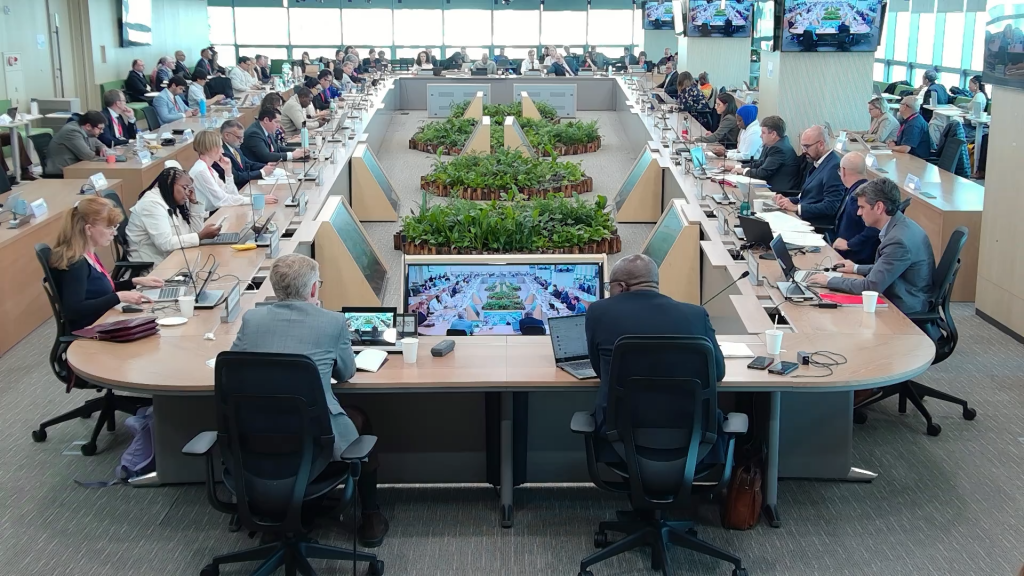
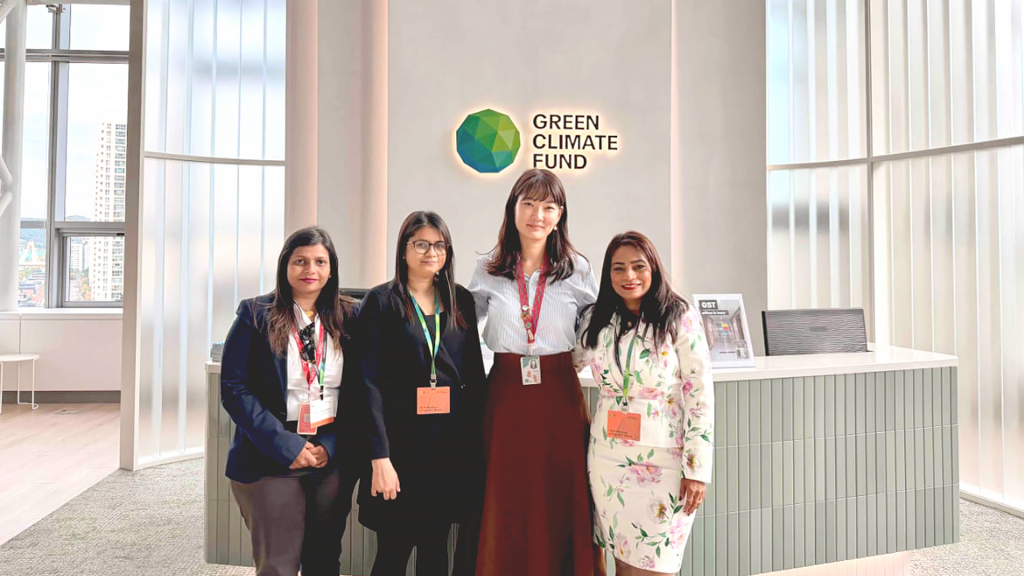
The accreditation was approved during the 46th meeting of the GCF Board, held from 26 to 29 October 2026 in Songdo, Incheon, Republic of Korea. It places MFLC among the national institutions able to work directly with the world’s largest dedicated climate fund to develop and submit proposals for climate-related projects and programmes.
For the tourism sector, the accreditation could create new opportunities to finance decarbonisation across resorts, hotels and guesthouses, while also supporting wider investments in climate resilience.
Why tourism decarbonisation matters
Tourism is one of the Maldives’ most important economic sectors, but it is also energy-intensive.
Resorts and accommodation providers require electricity for cooling, lighting, water production, refrigeration, kitchens, laundry, wastewater treatment and other daily operations. Many properties also depend on diesel generators, fuel-based transport and energy-intensive desalination systems.
These operating realities create both a challenge and an opportunity.
Reducing emissions can help tourism businesses lower fuel consumption, improve energy efficiency and reduce exposure to volatile energy costs. It can also strengthen the long-term competitiveness and resilience of the sector.
For resorts, hotels and guesthouses, decarbonisation may involve investments in solar power, energy-efficient cooling systems, efficient appliances, building improvements, electric or low-emission transport, water-saving technologies, waste management and other operational changes.
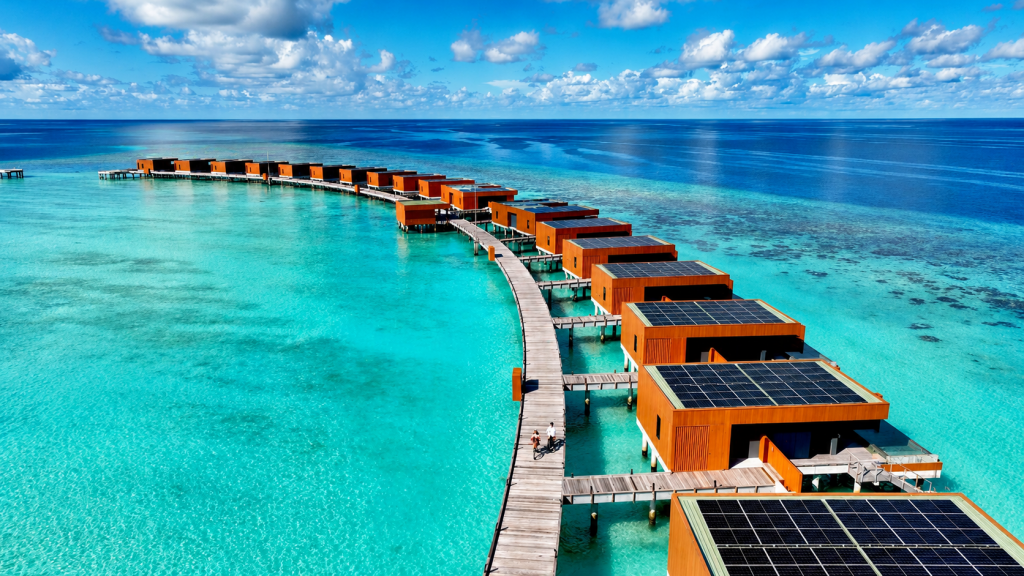
However, many of these investments require significant upfront capital. This is particularly relevant for smaller guesthouses and tourism businesses operating outside the main urban centres, where access to finance, technical expertise and reliable infrastructure can be limited.
Bringing climate finance closer to tourism businesses
The Green Climate Fund was established to support developing countries in transitioning towards low-emission and climate-resilient development. Through its Accredited Entities, the Fund supports projects that reduce greenhouse gas emissions and strengthen resilience to climate impacts.
As a National Direct Access Entity, MFLC will be able to develop and submit funding proposals directly to the GCF, subject to the Fund’s requirements and project-specific approval processes.
This creates an opportunity to develop financing programmes that reflect the realities of the Maldivian tourism industry.
A national institution can work more closely with local businesses, understand the operating conditions of island-based tourism and help structure financing around the needs of different types of accommodation providers.
The financing requirements of a large resort may differ significantly from those of a small guesthouse. A resort may require support for large-scale renewable energy systems, seawater cooling, electric transport fleets or wastewater treatment. A guesthouse may need financing for rooftop solar, efficient air-conditioning units, insulation, water-saving equipment or energy-efficient kitchen and laundry systems.
A more locally informed approach could help ensure that climate finance is accessible to a wider range of tourism businesses.
The decarbonisation work already under way
MFLC’s GCF accreditation builds on the Company’s existing focus on sustainable finance.
Since introducing its Green Loan and Lease financing programme in 2022, MFLC has supported investments in renewable energy, energy-efficient technologies, sustainable transportation and environmentally responsible business activities.
This work has provided a foundation for supporting the decarbonisation of the tourism sector.
The financing of cleaner equipment and technologies is an important part of the transition. Hotels and guesthouses may be able to reduce their emissions through investments in solar photovoltaic systems, high-efficiency air-conditioning, heat pumps, energy-efficient refrigeration, LED lighting, smart energy management systems and improved building design.
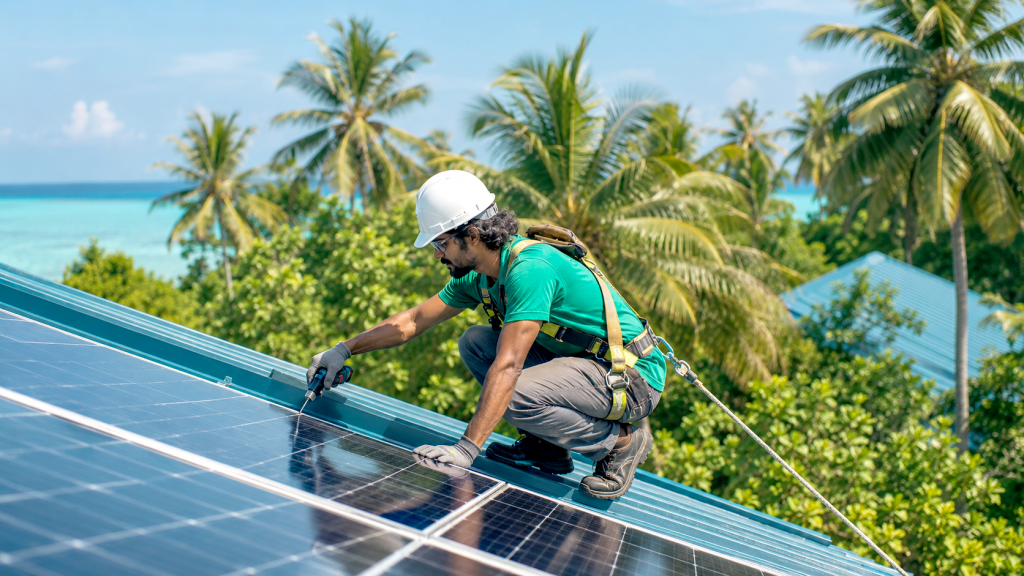
Other opportunities include electric vehicles and boats, more efficient marine transport, water treatment systems, rainwater collection, wastewater management and equipment that reduces food waste.
The objective is not simply to finance individual green products. It is to support practical investments that reduce emissions, lower operating costs and improve the resilience of tourism businesses.
Guesthouse decarbonisation requires a tailored approach
Guesthouses are an increasingly important part of the Maldivian tourism economy. They have expanded tourism beyond the traditional resort model and created new opportunities for local entrepreneurship, employment and community-based tourism.
At the same time, guesthouses often operate with smaller budgets, limited technical capacity and less access to specialised financing.
Their decarbonisation needs may therefore require a different approach.
A guesthouse decarbonisation programme could support investments such as:
- Rooftop solar systems and battery storage
- Energy-efficient air-conditioning and refrigeration
- Solar water heating
- Efficient lighting and appliances
- Building insulation and passive cooling improvements
- Water-saving fixtures and wastewater systems
- Electric scooters, vehicles and marine transport
- Waste separation, recycling and composting equipment
- Digital systems to monitor energy and water consumption
For smaller properties, standardised financing products could help simplify the process. Instead of requiring each guesthouse to develop a complex individual proposal, financing could be structured around eligible technologies, verified suppliers and clear performance criteria.
This could reduce transaction costs and make climate investment more accessible to businesses that may not have dedicated sustainability teams or technical advisers.

Supporting resort and hotel decarbonisation
Larger resorts and hotels may require more complex and capital-intensive solutions.
Potential investments could include large-scale solar installations, hybrid energy systems, battery storage, energy management platforms, efficient cooling systems, seawater air-conditioning, electric transport, low-emission marine vessels and advanced wastewater treatment.
Resorts may also benefit from financing structures that combine climate finance with commercial lending, leasing or private investment. Such blended approaches could help reduce the upfront cost of decarbonisation and improve the financial viability of projects with long payback periods.
For hotels in Malé and other urban areas, opportunities may include energy-efficient building retrofits, rooftop solar, efficient cooling, water conservation and waste reduction. For island-based properties, the focus may also include reducing dependence on diesel generation, improving energy storage and strengthening resilience against disruptions to fuel supply and transport.
The most effective programmes will need to recognise these differences rather than apply a single model to the entire tourism sector.
Decarbonisation and climate resilience must move together
For the Maldives, decarbonisation cannot be separated from adaptation.
Tourism businesses must reduce emissions while also preparing for rising temperatures, coastal flooding, stronger weather events, water stress, coral reef degradation and other climate-related risks.
Investments in renewable energy can reduce emissions and improve energy security. Water-efficient systems can reduce pressure on freshwater resources while lowering energy use. Stronger buildings and improved drainage can protect tourism infrastructure from climate impacts. Coral restoration and nature-based solutions can support coastal resilience while protecting the natural assets on which tourism depends.
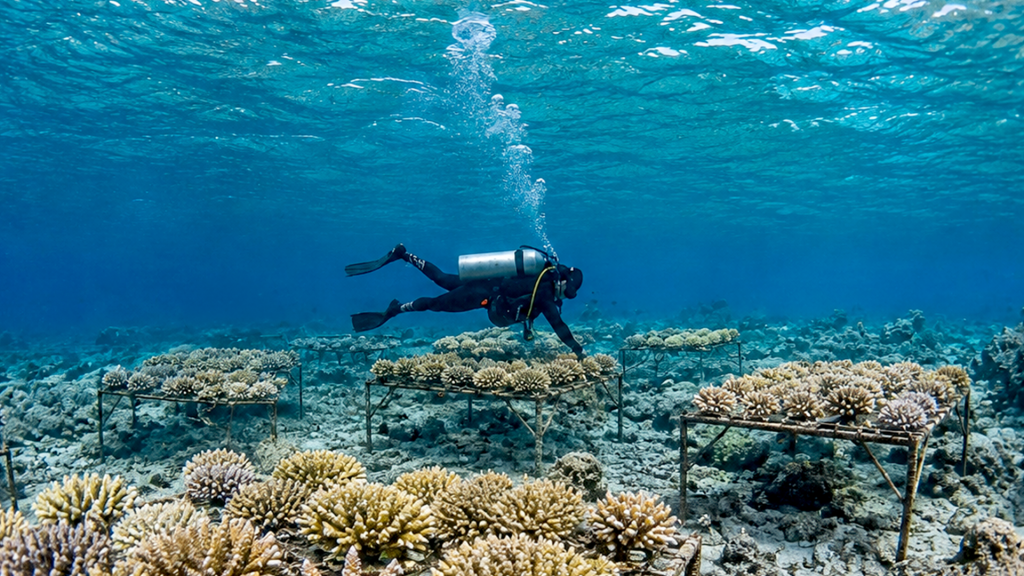
This means that future climate finance programmes should consider both mitigation and adaptation.
A guesthouse that installs solar panels and efficient cooling may reduce emissions. A resort that improves water security and protects its shoreline may strengthen resilience. A tourism project that combines both outcomes can deliver broader benefits for businesses, communities and the national economy.
A milestone built on institutional capacity
MFLC’s accreditation follows a comprehensive assessment of its financial management, fiduciary standards, governance, risk management, environmental and social safeguards, and gender considerations.
The process required the Company to strengthen and demonstrate the systems, policies and procedures necessary to meet internationally recognised standards.
According to Ms. Ibthishama Ahmed Saeed, Managing Director and Chief Executive Officer of MFLC, the accreditation reflects years of institutional development and the commitment of the Company’s Board, management and employees.

“This is a proud achievement for MFLC and an important milestone for the Maldives,” she said. “It reflects the considerable effort and commitment of our Board, management and employees in strengthening our institutional capabilities and meeting the standards required by the Green Climate Fund.”
She added that the accreditation journey was undertaken through MFLC’s internal resources and without relying on external consultancy support.
“This demonstrates the depth of our institutional capacity and our ability to develop and maintain policies, systems and procedures that meet internationally recognised standards,” she said.
That internal ownership is important because climate finance requires more than identifying projects with environmental benefits. Institutions must also demonstrate that they can manage funds responsibly, assess risks, apply safeguards and monitor results.
From financing equipment to financing transformation
The next stage will be to translate MFLC’s accreditation into practical programmes that can support the tourism sector’s transition.
This may involve developing financing structures for individual businesses, sector-wide programmes, partnerships with technology providers, and blended finance arrangements involving public and private capital.
For tourism businesses, the most useful financing products may combine loans, leases, concessional finance, technical assistance and performance-based incentives.
A guesthouse owner may need financing for equipment as well as support to assess energy consumption and select suitable technologies. A resort may require a more complex project structure involving engineering studies, procurement, construction and long-term performance monitoring.
MFLC’s role could include helping to connect these needs with international climate finance while working with government agencies, tourism operators, technology providers and development partners.
The aim should be to make decarbonisation practical, measurable and financially viable.
The importance of measurement
Credible decarbonisation requires credible measurement.
Future programmes will need to establish clear baselines and track outcomes such as energy consumption, fuel use, greenhouse gas emissions, water use, waste generation and renewable energy production.
For guesthouses and smaller hotels, measurement systems should be simple and affordable. Digital monitoring tools, standardised reporting templates and verified technology suppliers could help businesses demonstrate results without creating excessive administrative burdens.
For larger resorts, more detailed monitoring may be appropriate, including energy management systems, emissions inventories and independent verification.
Measuring results will be important not only for meeting GCF requirements, but also for helping businesses understand the financial benefits of their investments.
When tourism operators can see how much fuel, electricity and water they are saving, decarbonisation becomes a business decision as well as an environmental one.
Building a strong tourism project pipeline
While accreditation is a major achievement, it is also the beginning of a longer process.
MFLC’s immediate priority will be to work with the Government, tourism businesses and development partners to identify viable climate projects and develop a strong pipeline capable of attracting international financing.
The quality of this pipeline will be central to the success of the accreditation.
Potential projects could include:
- Renewable energy systems for resorts, hotels and guesthouses
- Energy-efficiency retrofits
- Low-emission marine and land transport
- Battery storage and hybrid energy systems
- Water security and desalination efficiency
- Wastewater treatment and resource recovery
- Sustainable cooling and refrigeration
- Climate-resilient tourism infrastructure
- Waste reduction and circular economy initiatives
- Community-based tourism and guesthouse decarbonisation programmes
Developing these projects will require close coordination among public institutions, tourism operators, financial institutions, technical partners and local communities.
It will also require businesses to improve their ability to collect data, assess investment needs and prepare proposals that meet international climate finance standards.

A broader role for the financial sector
MFLC’s accreditation highlights the evolving role of financial institutions in the Maldives’ climate response.
The transition to a lower-emission tourism sector cannot be achieved through government policy or development assistance alone. It will require the participation of businesses, investors, technology providers and financial institutions.
Banks, leasing companies and other financial institutions can help channel capital towards climate-positive investments, develop suitable financing products and support businesses as they manage the risks and opportunities associated with decarbonisation.
For MFLC, the GCF accreditation strengthens its ability to participate in this process at both the national and international levels.
It also reinforces the importance of governance, risk management and responsible financing in supporting sustainable tourism development.
A national opportunity for tourism
The Maldives has an opportunity to position its tourism industry as a leader in climate-conscious development.
The country’s tourism model is closely connected to its natural environment, and the long-term success of the sector will depend on protecting the ecosystems, infrastructure and communities that support it.
Decarbonising resorts, hotels and guesthouses can help reduce the sector’s environmental footprint while improving energy security, lowering operating costs and strengthening competitiveness.
It can also create opportunities for local businesses involved in renewable energy, engineering, construction, maintenance, waste management and sustainable transport.
MFLC’s accreditation does not guarantee funding for individual projects, and all proposals will remain subject to the GCF’s approval processes. However, it provides a new institutional channel through which Maldivian tourism priorities can be developed into internationally supported climate investments.
It also gives tourism businesses a national partner with an understanding of the Maldivian business environment and the requirements of international climate finance.
Looking ahead
MFLC will continue engaging with relevant government authorities, the GCF Secretariat, tourism stakeholders and prospective development partners to identify priority areas, develop a credible project pipeline and strengthen the arrangements needed to implement future GCF-supported programmes.
For Ms. Ibthishama, the significance of the accreditation will ultimately be measured by its impact.
“While we are proud of this achievement, we recognise that accreditation is only the beginning,” she said. “The real measure of our success will be our ability to translate this opportunity into meaningful investments that benefit the Maldives.”
That focus on implementation will be critical.
The value of MFLC’s accreditation will not be determined solely by its status, but by the projects it helps bring forward, the businesses and communities those projects support, and the contribution they make to a more sustainable and climate-resilient Maldives.
For Hotelier Maldives and the wider tourism industry, the accreditation marks an important development in the country’s decarbonisation journey.
It creates the possibility of bringing international climate finance closer to the resorts, hotels and guesthouses that form the backbone of the tourism economy.
The transition will require investment, coordination and long-term commitment. But with the right financing structures, technical support and partnerships, decarbonisation can become more than an environmental responsibility. It can become a pathway to stronger, more efficient and more resilient tourism businesses across the Maldives.