



Powering the resort, preserving the view: The case for lagoon solar
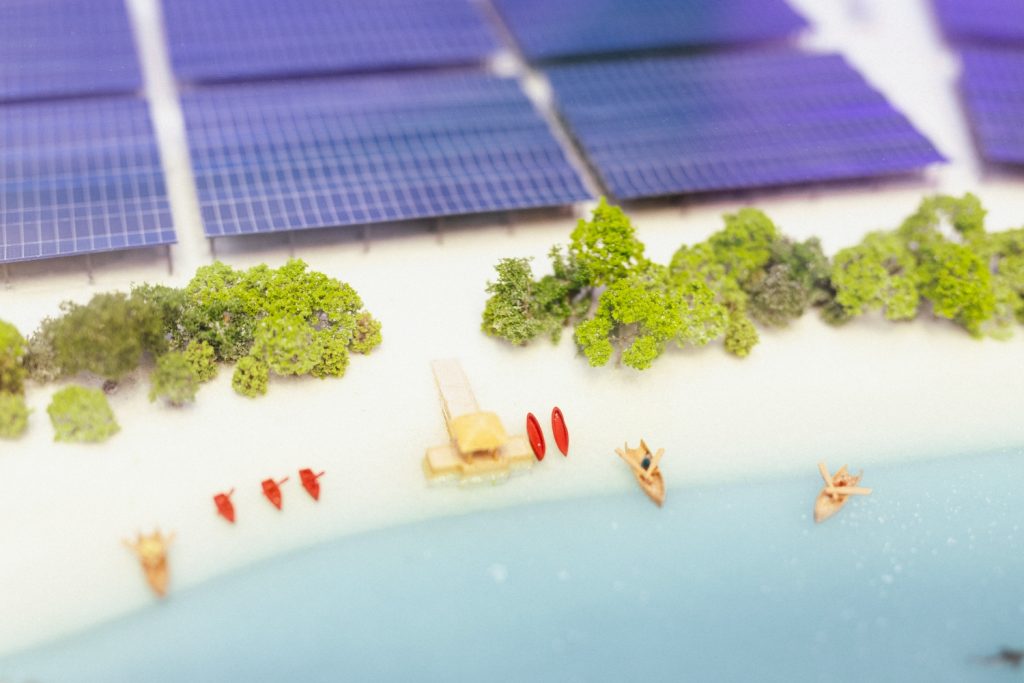
For Maldivian resorts considering floating solar, the lagoon presents both an opportunity and a difficult decision. It offers space to generate power without occupying more of the island, while remaining part of the landscape guests have travelled to enjoy.
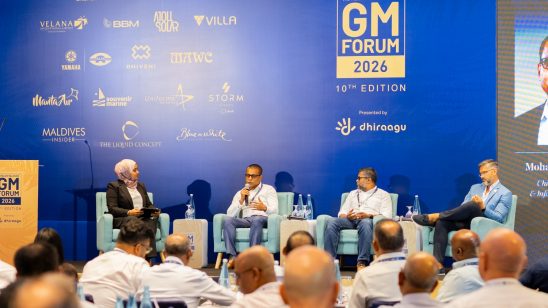
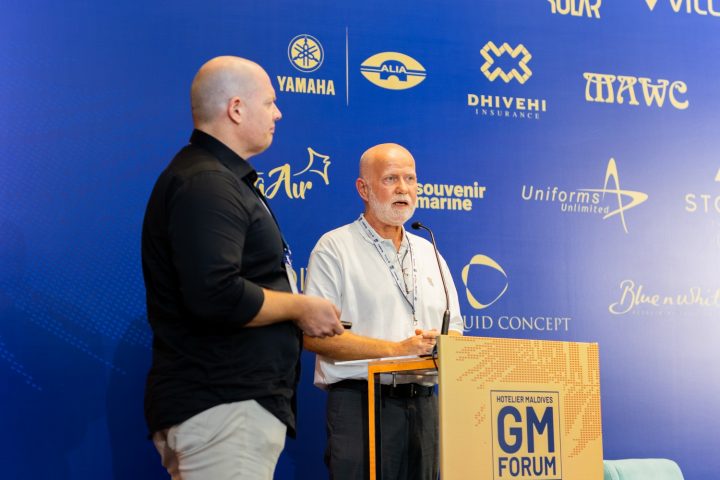
That tension ran through “Introduction to Atoll Solar and Lagoon Floating Solar”, a joint presentation at the Hotelier Maldives General Managers (GM) Forum 2026 by Bjorn Ove Aastsjo, Hospitality Relations at Atoll Solar, and Are Gloersen, Director of South East Asia at Ocean Sun.
Their discussion connected the engineering of renewable energy with the decisions resort operators make about architecture, investment and the guest experience. The objective was to reduce diesel use through systems that could work within the physical and commercial realities of an island property.
“Atoll Solar doesn’t think only about kilowatts and megawatts,” Aastsjo said.
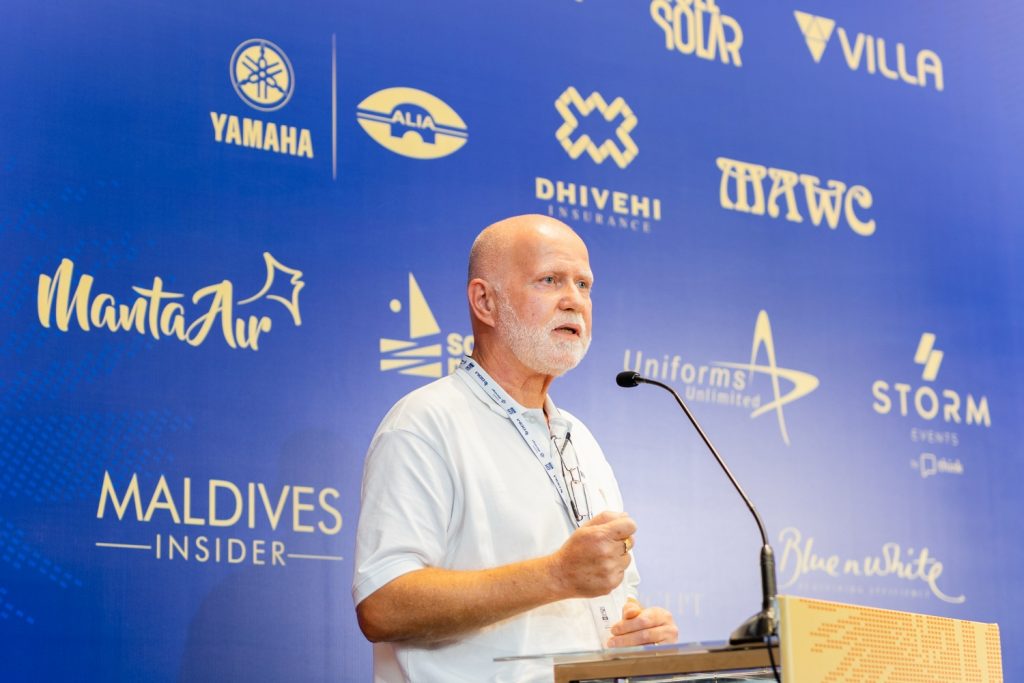
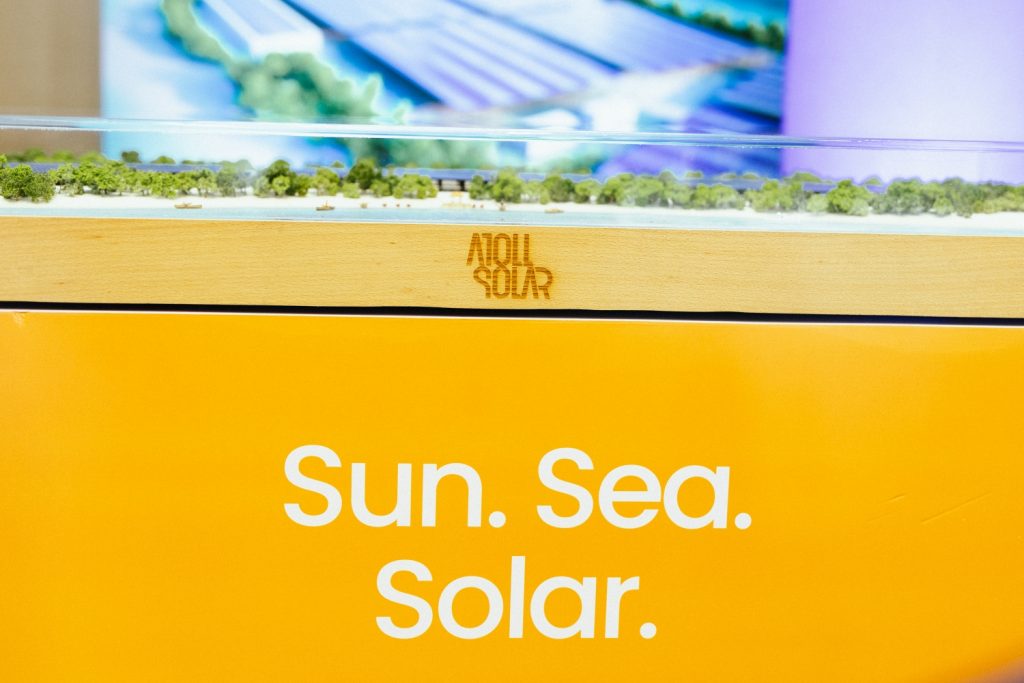
He introduced Atoll Solar as a Maldivian renewable energy engineering and construction company within Octopus Technology Group, drawing on experience in hospitality engineering. At the time of the forum, he said, the company was nearing completion of a resort microgrid incorporating approximately 4MW of peak solar generation alongside battery storage.
For a luxury resort, he explained, an installation also needs to respect what makes the property distinctive. That means considering how it appears from the air, how guests perceive it and how it fits the architecture, alongside its contribution to energy efficiency.
His examples ranged from solar roof shingles and façades to floating systems and Atoll Solar’s Bird Island concept. The choice of technology, in this account, begins with the property and the space available.
Gloersen developed the argument for moving some generation onto the water. Limited land constrains how much solar can be installed on an island, he said, making suitable lagoon areas an option for resorts seeking to reduce diesel consumption. He acknowledged the choice involved in placing infrastructure within a setting valued for its open views.
The technology he described draws on Norwegian maritime engineering, particularly the circular floating pipe structures used in salmon farming. Ocean Sun adapts that geometry for solar generation, using an outer floating collar around either internal buoyant structures or a flexible membrane carrying the panels.
Gloersen said the circular form helps distribute forces from moorings, while the membrane moves with waves to manage repeated mechanical stresses. He also highlighted the cooling effect of the water beneath the membrane, which he said improves panel performance. Ocean Sun’s published description similarly identifies direct water cooling as a feature of its membrane system.
Aastsjo noted that the technology had already been deployed in the Maldives. Ocean Sun’s project record identifies a completed floating solar installation at Soneva Secret, providing a local reference for the approach.
To illustrate the potential scale, Gloersen described a platform approximately 75 metres across. He estimated that a single platform of that size could generate around one gigawatt-hour of electricity annually in Maldivian conditions and displace approximately 300 tonnes of diesel a year.
Those figures formed part of a discussion in which location repeatedly mattered. Gloersen explained that wind, waves, currents and the protection provided by the reef influence the engineering. A sheltered site and a more exposed lagoon require different solutions, with consequences for cost.
“The more wind, the more waves, the higher the price of the platform,” he said.
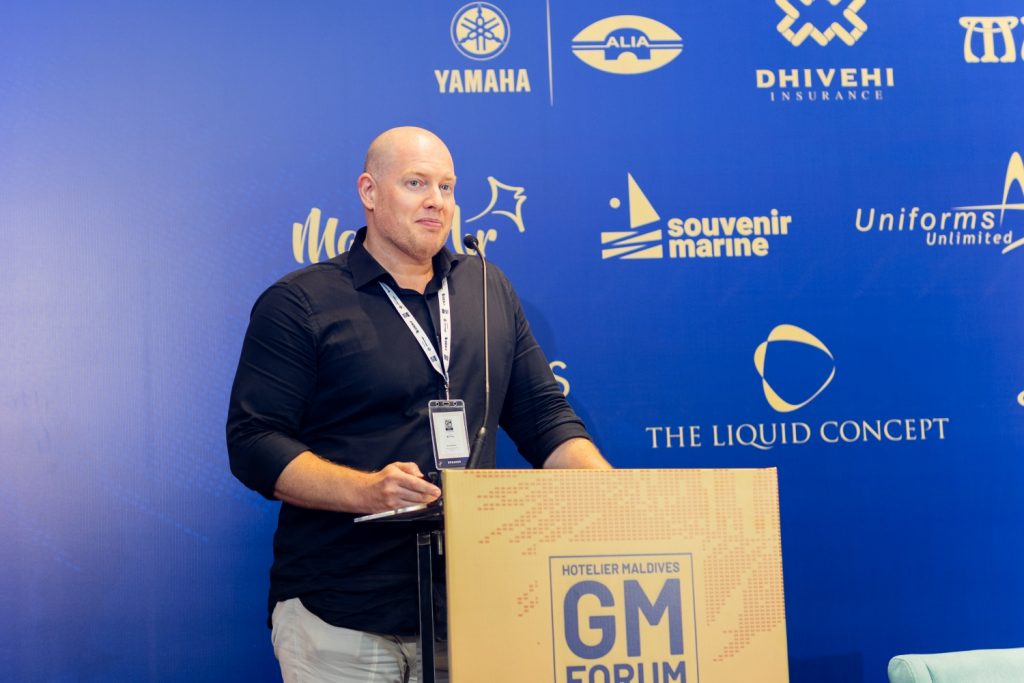
Lagoons can offer a more defined range of wave conditions than the open ocean, he explained, although they still present construction challenges. Shallow water may allow excavators to work while restricting access for vessels carrying heavy equipment. Moving components into place can require pontoons and careful planning.
The partnership’s proposed division of work reflected those demands: Atoll Solar would bring local construction capability and knowledge of operating in lagoons, while Ocean Sun would contribute the floating system engineering. Atoll Solar’s published guidance also identifies lagoon ecology, marine navigation, maintenance access and environmental assessments among the considerations for an installation.
During audience questions, Gloersen put indicative payback for the solutions at around four years or more. He argued that experience from the first project and greater deployment volumes could bring costs down, with a two- to three-year payback as a target.
That shorter period was presented as an ambition for improving the economics. He linked the investment case to construction costs, financing and assumptions about diesel prices, all of which would shape the calculation for an individual resort.
Gloersen also acknowledged that diesel generators would very likely continue operating at night. He suggested that a well-engineered system could typically reduce diesel consumption by about 60%, presenting solar as a means of substantially reducing fuel use within a resort’s wider power system.
The audience discussion also returned to appearance. One delegate asked whether local islands or government projects with available lagoon space might be more suitable, expressing concern about preserving the surroundings that resorts offer their guests.
“That may not be the best look we want to display for our guests,” the delegate said.
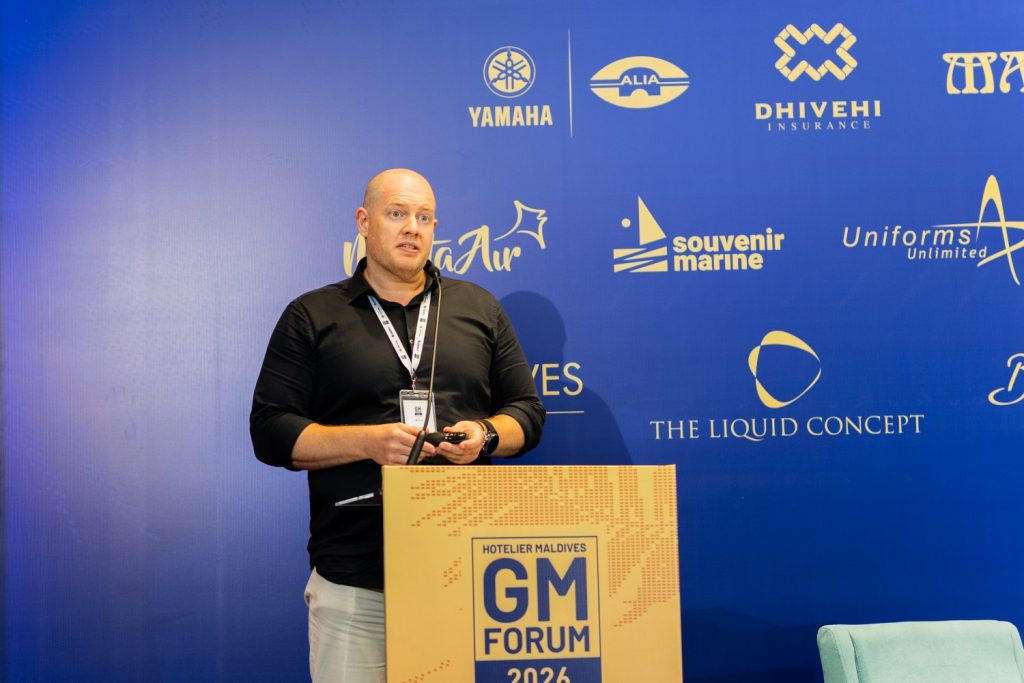
Gloersen responded that some resorts could position platforms away from prominent views or against existing infrastructure. Earlier, he had described their profile as roughly one metre above sea level, suggesting that distance and placement could lessen their visual presence. He nevertheless acknowledged that a trade-off remained.
On potential government projects, he said cost expectations had been a challenge, with a gap between the prices sought and those achievable for the systems. The exchange broadened the discussion from technical feasibility to the places where floating solar would be commercially and visually acceptable.
The two companies’ invitation was to begin with a particular lagoon: study its conditions, develop drawings showing how a system could sit within it and build the business case around that site.
For resort owners and general managers, the presentation placed floating solar within a wider design and investment decision. Its appeal rests on reducing fuel dependence, while its place in a lagoon depends on how well it fits the character and operation of the island.
Established in 2016, the Hotelier Maldives GM Forum provides an annual platform for hospitality leaders and businesses serving the tourism sector to exchange perspectives on operational and strategic issues. The 2026 gathering marked the forum’s 10th edition.
A range of companies supporting different areas of the tourism industry partnered with GM Forum 2026.
Dhiraagu was the Premier Sponsor, while STO Energy was the Platinum Sponsor. Bank of Maldives (BML) was the Banking Partner, Dhivehi Insurance was the Insurance Partner, and Male’ Aerated Water Company (MAWC) was the Beverage Partner.
The Silver Sponsors were Maldives Airports Company Limited (MACL), Villa Hakatha, Bestbuy Maldives (BBM) and Atoll Solar.
ALIA, Uniforms Unlimited, The Liquid Concept, Maldives Insider and Blue N White supported the forum as Associate Sponsors.
Souvenir Marine was the Transport Partner, Manta Air was the Aviation Partner, and Storm Events was the Organising Partner.
Through its 2026 programme and partnerships, the GM Forum brought together resort leadership and the businesses supporting hospitality operations to examine how the sector can strengthen resilience while adapting its people, technology and operating models.