



From daily operations to reef: Making marine conservation part of guest experience at OBLU SELECT Sangeli
At OBLU SELECT Sangeli, marine conservation connects two areas of resort life that are often discussed separately: the work taking place on the reef and the decisions made across daily operations.
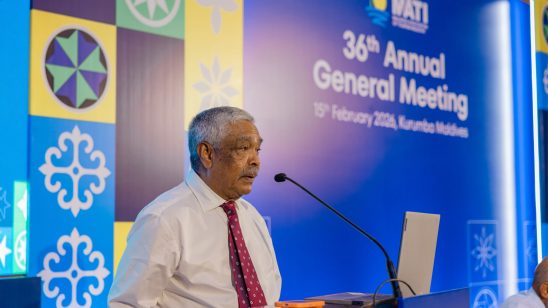
For Marine Biologist Giorgia Maggioni, that work involves coral nurseries, reef monitoring, data collection, partnerships and guest education through the Muraka Marine Conservation Centre. For General Manager Brett Craig Castleman, it also involves electricity, water, food waste, chemicals, fuel, staff training and communication with guests.
Together, their roles show how conservation can move from a specialist programme into the operating structure of an island resort. One part takes place beneath the water, where coral fragments are given a stable surface on which to grow. The other takes place in meetings, kitchens, guest rooms, engineering facilities and boats, where the use of resources is reviewed each day.
Muraka brings these strands together. It provides a base for coral restoration and scientific monitoring while giving guests and employees ways to take part. The centre also connects the resort’s environmental work with the reef and lagoon on which much of the guest experience depends.
A first encounter with the Maldivian reef
Maggioni’s path to Sangeli began in 2013, when she arrived in the Maldives as a university student and saw a coral reef for the first time. The experience changed the direction of her career.
“My passion for the ocean began in my childhood, but then it strengthened during my first time in Maldives, which was in 2013 when I came as a university student,” she recalls. “The time I came here, it was actually the first time I was seeing the reef. And I didn’t see just the beauty of it, but also the complexity and how fragile it is.”
She saw an ecosystem in which coral, fish and other marine life depend on relationships that can be disrupted by environmental change and human activity. That understanding led her towards marine science and, in time, back to the Maldives.
“I understood that this ecosystem requires somebody who is willing to dedicate their career to helping protect it,” she says. “So that’s why I decided to go for a career in marine science, and eventually I came back to Maldives. Now I have the privilege to actually save the corals on a daily basis.”
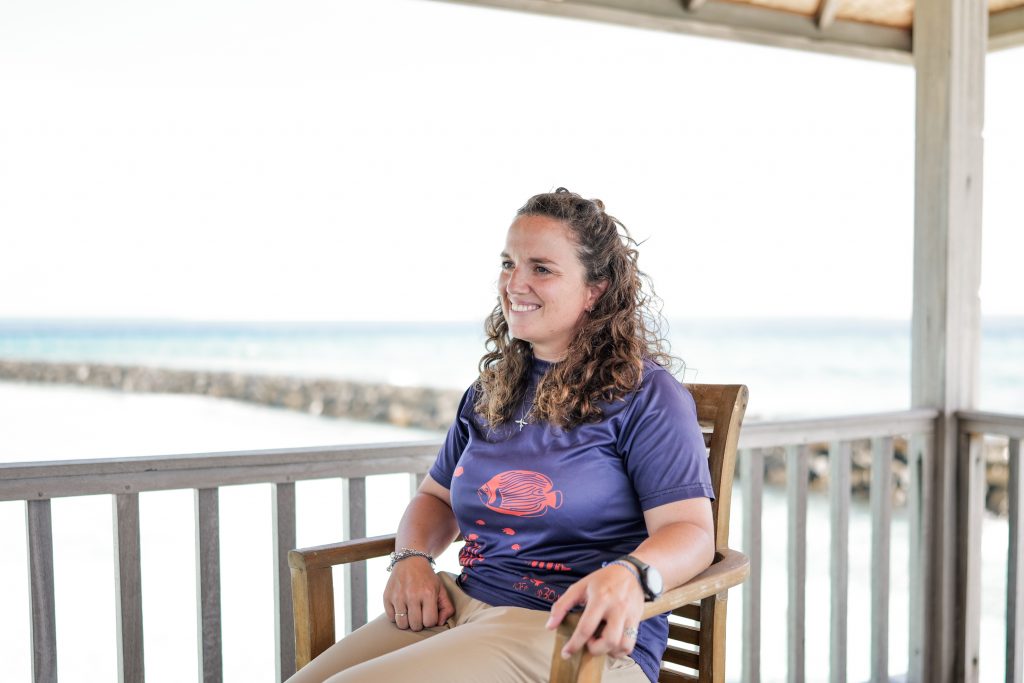
Maggioni has spent the past five years at OBLU SELECT Sangeli, helping to establish and develop Muraka. When she joined the resort, the centre did not exist. The work began with coral restoration and awareness, then expanded through the support of colleagues, management and ownership.
“When I first joined five years ago, actually Muraka did not exist,” she says. “Over the years, we were able to create and develop the programme, thanks to the help of my colleagues that I had and I am having along the way, and also, of course, through the support of ownership and management.”
The team increased the number of restoration structures, introduced guest programmes, expanded sessions for adults and children, and formed partnerships with research and environmental organisations.
“Thanks to the help and support of the team, we were able to actually develop Muraka into a very comprehensive programme,” Maggioni says.
Building a conservation programme around the reef
Muraka’s work now covers coral growth monitoring, restoration of degraded reef areas, marine education and cooperation with environmental bodies. Guests can learn about this work and participate in it rather than observe it from a distance.
“Muraka is actually the Marine Conservation Centre, and when it started, it was like having an individual approach through coral restoration and guest awareness,” Maggioni explains.
“But now that it’s developing, it has a more comprehensive vision, meaning that we are monitoring the coral growth, we are helping recovery of degraded reefs, and also we are launching guest education activities.”
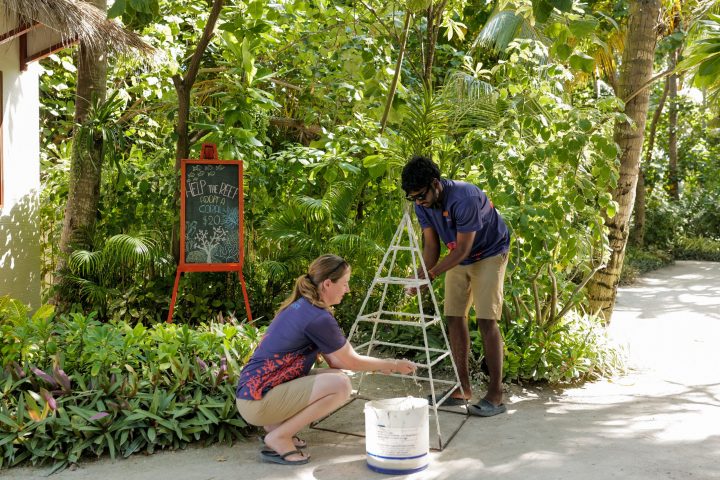
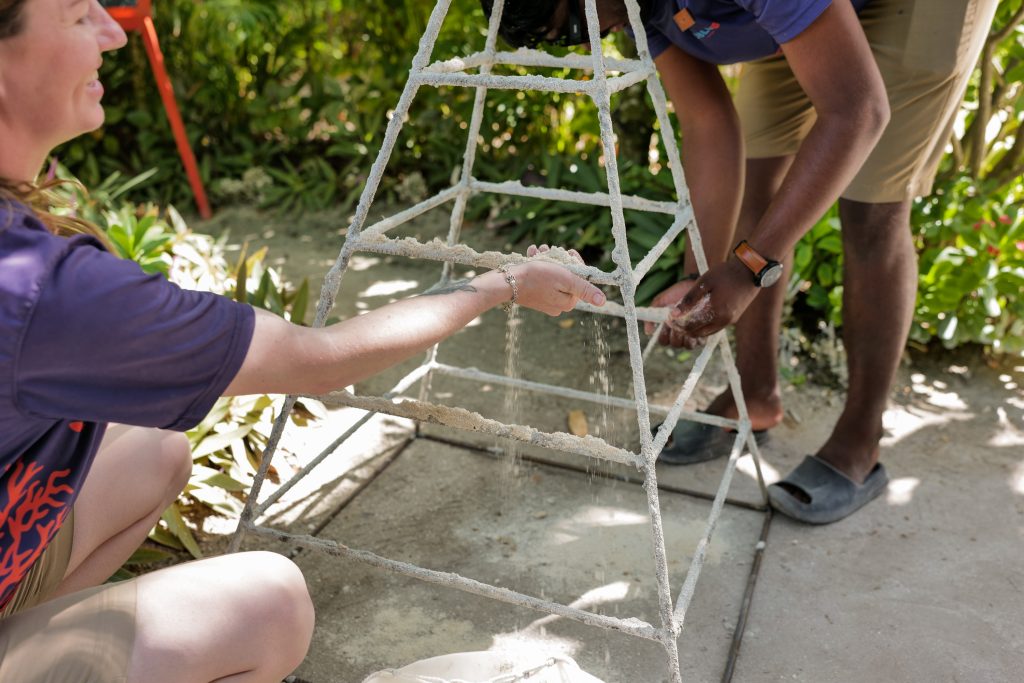
Much of the work takes place in coral nurseries. Fragments are grown in a managed environment before being transplanted to parts of the reef where restoration is required. In the Muraka Coral Garden, fragments are attached to permanent structures. As they grow, the structures provide habitat for fish and other organisms.
“In our coral nursery, we are growing small coral fragments in a protected environment before then actually transplanting them to degraded parts of the reef,” she says.
“The corals that are in the Muraka Garden are solidly attached to the structure itself. So once those small fragments grow and they reach a decent size, they actually offer a three-dimensional structure for the marine life to be in there.”
The purpose is not limited to increasing coral cover. Coral formations provide places where marine organisms can feed, settle and shelter, which can support biodiversity in the area.
“Basically, we are just increasing the marine biodiversity of the area and we are offering shelter for thousands of marine creatures that just choose to come and live in our Muraka Garden,” Maggioni says.
Giving coral fragments a stable place to grow
One restoration method uses what marine biologists call “fragments of opportunity”. These are pieces of coral that have broken away from a colony because of waves or storms, or through human activity such as people stepping on the reef.
Once detached, a fragment’s prospects depend in part on where it lands. A piece left on sand or another unstable surface may be unable to establish itself. The Muraka team collects suitable fragments and attaches them to restoration structures.
“We take them and we attach them to our structures. In this way, we are offering them a stable substrate to grow on. And from that onwards, they start developing and growing into a healthy coral structure,” Maggioni says.
Restoration does not end when a fragment is attached. The team carries out dives to photograph corals, record growth, assess condition and look for signs of stress, including bleaching.
“We believe that monitoring is one of the main parts of our work,” she says. “It’s very important to monitor the coral growth in order to understand how to develop the project.”
The information helps the team compare techniques and decide which methods suit conditions around Sangeli.
“We monitor them on a daily basis. We go for dives and we monitor the growth. We take pictures, we assess the health of the reef, the development, and then we also look for bleaching episodes as well,” Maggioni says.
“Through the continuous data and analysis that we do, we are able to understand which technique works better for the environment in which we are located. So we can also choose what to do in the future.”
This approach shifts attention from the number of fragments planted to what happens after planting: whether the corals survive, grow and reach reproductive maturity.
Spawning, monitoring and partnerships
In November 2025, the Muraka team witnessed coral spawning. It was the first time Maggioni and her colleagues had seen the event, and it gave them another measure of the progress of corals in the nursery.
“The coral spawning that we witnessed in 2025 was a very emotional time because it was the first time that both me and my colleagues have seen it,” she says.
Spawning forms part of the coral reproductive cycle. When restored coral reaches that stage, it can indicate that the coral has matured within its environment.
“The coral spawning itself is a very good sign of reef restoration because if a coral grows to a certain stage and reaches the maturity to actually reproduce, it means that it’s healthy and it’s happy where it is,” Maggioni explains.
“Being able to witness corals having eggs in our nursery is just a sign that we are moving in the right direction.”
Partnerships have added equipment and methods to the programme. Muraka works with the Environmental Regulatory Authority, which has helped the team introduce suspended coral trees and supplied temperature loggers.
The loggers allow the team to record changes in sea temperature. Because changes in water temperature are linked to coral stress, these records can be used when the team assesses reef condition and possible bleaching events.
“They also gifted us with temperature loggers, so we are able now to actually monitor the temperature changes in the water, which is, of course, very important in terms of monitoring for future bleaching events as well,” Maggioni says.
“Thanks to the partnership with them, we are having a stronger scientific background in our project.”
Conservation as a management responsibility
While Muraka provides the scientific centre of the programme, Castleman sees the resort’s responsibility as extending across departments. For him, protecting the marine environment cannot sit apart from the management of an island property.
“Every day we talk about it during the meeting, our morning meeting,” he says. “We discuss water, electricity, wastage. So it gets mentioned every day.”
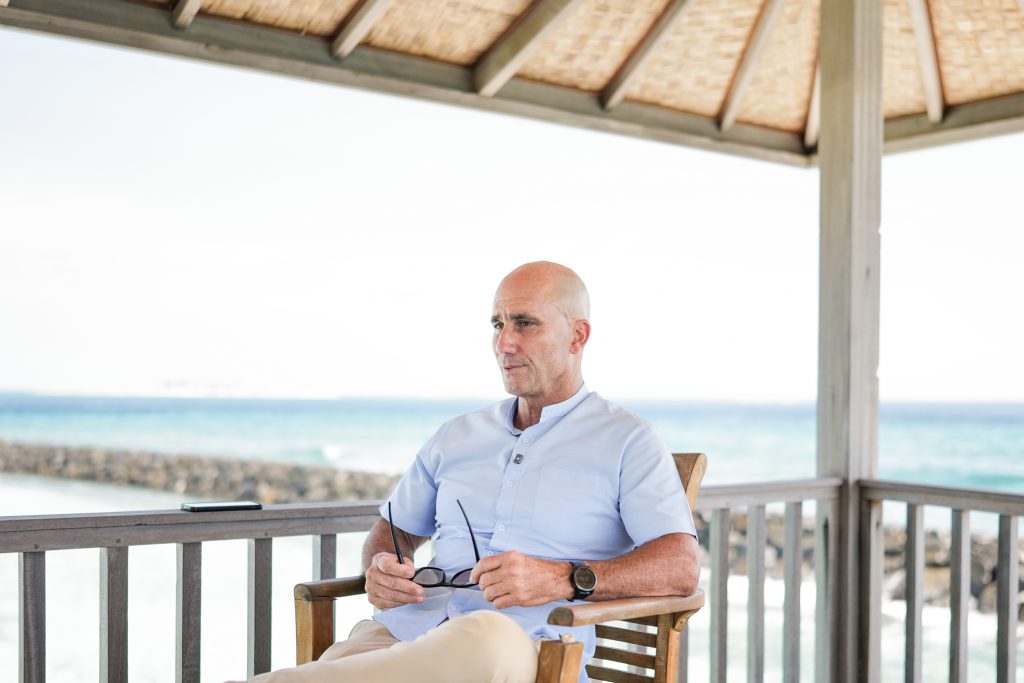
The routine keeps resource use within the resort’s operating conversation. Electricity, water, food production, chemicals, diesel, boat fuel and waste all form part of the system that supports the property.
“We try obviously to reduce the water usage, the actual electricity usage and the wastage of food,” Castleman says.
Each department has a role. Housekeeping teams consider chemical use, lighting and air-conditioning. Food and beverage teams monitor food waste. Engineering teams manage generator operations and diesel consumption, while transport teams consider fuel use by boats.
“It’s in all the departments, basically. Every department is involved,” he says.
This matters because the reef cannot be separated from what happens on land. Work below the surface may be the most visible expression of marine conservation, but the resort’s environmental impact is also shaped by decisions made in kitchens, rooms, plant facilities and transport operations.
Castleman links this responsibility to the relationship between employees and guests. He says the guest experience depends on a team that understands its work and feels supported in carrying it out.
“If our staff aren’t happy, there’s no ways our guests would be happy,” he says. “So for me, it’s very important that my team is very happy and they’re enjoying their work, and it comes across to the guests.”
The same reliance on the team applies to sustainability. Environmental responsibility cannot remain with the marine biologist or one department; it has to be understood by people working across the resort.
Giving employees and guests a role
Training is one way Sangeli establishes that shared responsibility. Environmental practices are reinforced through departmental instruction and activities that connect employees with the lagoon and island.
“Training is a big part in every field of the resort,” Castleman says. “And sustainability is one of our biggest.”
Team members take part in lagoon and island clean-ups, and guests are sometimes invited to join them. These activities make environmental management a task in which people can participate and give employees and guests a direct view of the areas the resort is seeking to protect.
Communication also matters when guests enter the reef. Walking or standing on coral can cause damage, including to the colonies from which fragments may later become part of restoration work.
“We actually try to advise them about little things like walking on the coral and asking them not to, obviously explaining why, we would break down the coral,” Castleman says.
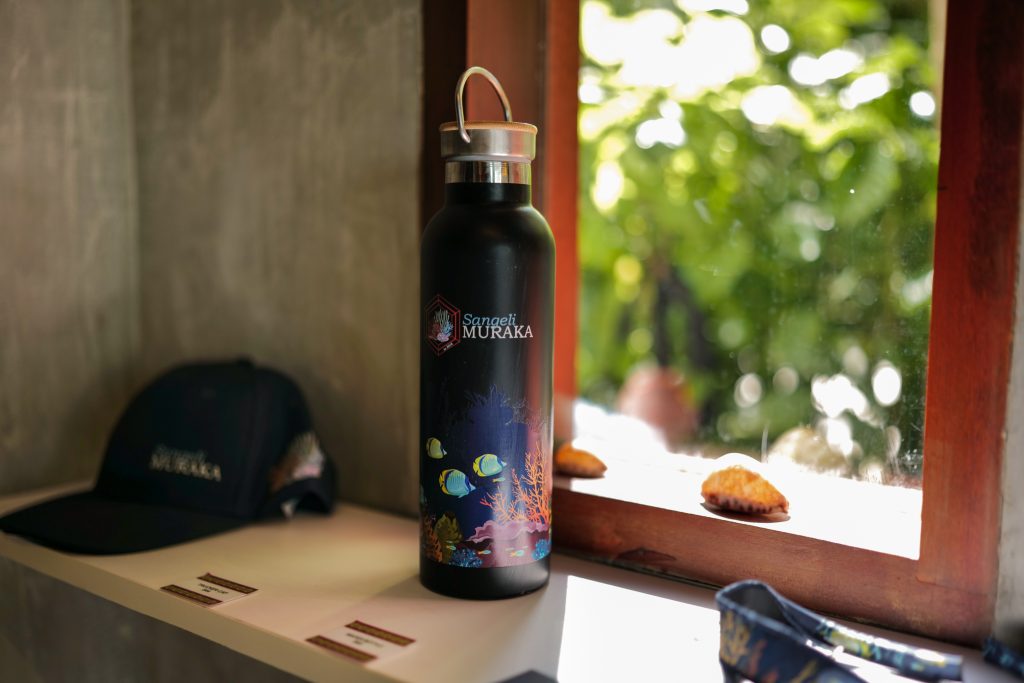
The message is supported by information in guest rooms and by the work of Muraka. Rather than presenting reef etiquette as a restriction, the resort can explain why the behaviour matters and show guests the work required to restore damaged coral.
Castleman describes Muraka as the scientific part of the resort’s marine programme and says it receives support from management and ownership.
“Muraka is a scientific part of it, which helps us regrow corals and things like that and make the ocean better,” he says.
“We have to talk to our guests about it and explain how we do it, and the growing of the corals and so forth. And that’s why it’s very, very important to us.”
Turning the guest experience into participation
Muraka gives guests several ways to move from learning about conservation to taking part in it. Through coral adoption, a guest can support one fragment and receive updates on its growth after leaving the island.
“Through the coral adoption, guests have the opportunity to adopt a single coral fragment, and also they have the opportunity to monitor the growth of the coral itself because we are sending updates to them,” Maggioni says.
“It’s also a good way to be connected to the island itself.”
Guests seeking a hands-on activity can adopt a coral frame and attach more than 40 fragments to it, with guidance from the team. They then receive updates on the corals’ development.
“They also have the chance, if they want to do a coral restoration activity, to do it by themselves with the adoption of a full coral frame,” Maggioni explains. “They will have the chance to attach more than 40 small coral fragments, and in that case they will get updates on the growth of the coral itself.”
The programme also offers symbolic sea turtle adoption. Guests do not take ownership of an animal. Instead, the adoption supports monitoring, and the guest receives an update when the same turtle is sighted again. Repeated sightings help the team build a record of how individual turtles use the waters around the island.
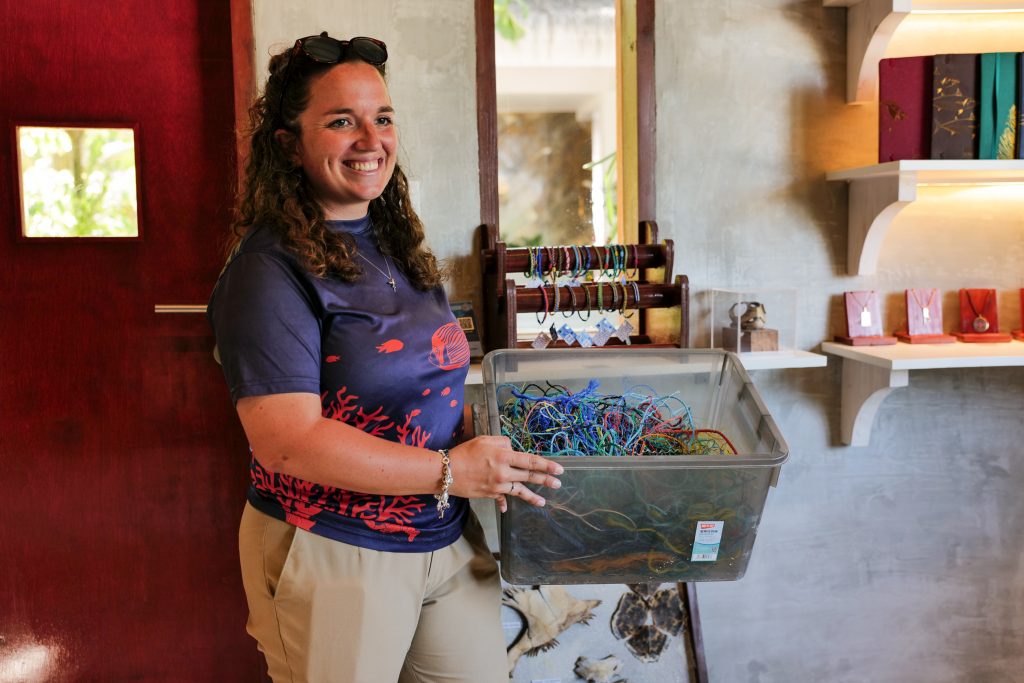
Another initiative uses discarded fishing nets to make bracelets sold to guests, with proceeds helping to fund Muraka. For Castleman, this gives marine waste another use while offering guests another way to contribute.
“We also make bracelets out of nets from fishing and we sell it to the guests to obviously sort of help fund our centre, Muraka Centre,” he says. “So we get them very involved, and it’s good.”
Coral adoption, frame building, turtle monitoring, clean-ups, reef education and fishing-net bracelets provide different points of entry into the same programme. A guest may join a restoration activity, support data collection, contribute funding or change how they behave around coral. Each action connects the visitor with work that continues after the stay.
Bringing hospitality and conservation into one framework
Resort operations can frame sustainability and guest service as competing demands. One seeks to reduce consumption and environmental impact; the other seeks to provide access to services and experiences. Castleman sees them as responsibilities that have to be managed together.
“They both are very important and you’ve got to get the right balance between them,” he says. “There’s certain times when it has to be operational and other times just making sure that everything is going smoothly.”
At Sangeli, conservation has become part of how guests encounter the destination. A visitor who is asked not to step on coral learns about the effect of contact on a colony. Someone joining a lagoon clean-up sees the waste that can enter the water. A guest who attaches coral fragments to a frame gains a connection to the restoration process and can follow its progress.
This relationship also has a business dimension for resort management in the Maldives. The reef, lagoon and marine life form part of the experience offered to guests, but they are ecosystems affected by decisions made above and below the waterline.
Muraka can carry out restoration, monitoring and education, but it cannot manage the resort’s use of water, electricity, food, chemicals and fuel. That requires the participation of other departments. In the same way, operational controls alone cannot restore a coral fragment or measure its response to changes in sea temperature. That requires marine science.
The two areas meet through management support, staff training, guest communication and routine review. Marine conservation becomes part of resort management, while the guest experience becomes a channel for awareness and participation.
Continuing the work
Neither Maggioni nor Castleman describes the programme as complete. Coral restoration requires monitoring over time. Resource use has to remain part of daily discussion. Training must continue as employees join the resort or take on different responsibilities, and guest education has to be repeated with each arrival.
Maggioni wants Muraka to keep developing both its work in the water and its engagement with guests.
“I hope that Muraka will keep on growing throughout the years, not only as ocean conservation in terms of activities that we do in the water, coral restoration and so on, but also in terms of guest engagement,” she says.
For Castleman, the principle is continued development across the resort.
“I think you just got to keep on moving in this world right now, and that’s what we have in our mind for it,” he says.
At OBLU SELECT Sangeli, Muraka gives that approach a focus. Coral fragments are secured to structures, photographed and assessed. Temperature changes are recorded. Employees review resource use and take part in clean-ups. Guests are asked to protect the reef and are offered ways to support its restoration.
The result is a conservation programme that depends on several groups rather than one specialist. Marine biologists provide the methods and monitoring. Management keeps environmental issues within resort operations. Employees apply the practices across departments. Partners contribute equipment and knowledge. Guests learn why the reef requires protection and can take part in the work.
For Maggioni, the process began with seeing a Maldivian reef for the first time in 2013. It has developed into a career spent giving coral fragments a place to grow, recording their progress and explaining the ecosystem to others. For Castleman, the same objective is reinforced through meetings, training, resource management and guest communication.
Their work meets at the point where an island resort’s operating choices affect the environment around it. At Sangeli, the reef is part of the guest experience, but it is also part of the responsibility of running the resort. Muraka turns that responsibility into a structure for research, restoration, education and participation—one coral fragment, one operational decision and one guest interaction at a time.