


How tourism began in the Maldives: The pioneers behind the first resorts
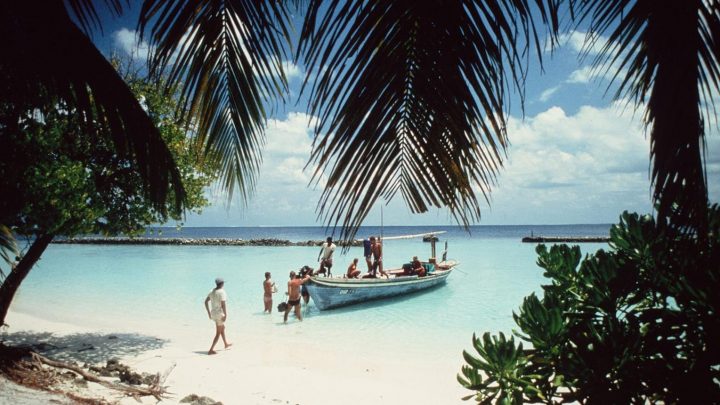
In 1972, reaching the Maldives’ first resort meant travelling by dhoni or motorboat before stepping into the water and wading ashore. Kurumba Village (now Kurumba Maldives), located on the island of Vihamanaafushi, had no jetty when it first welcomed guests, making even the final stage of their arrival a challenge. This simple journey reflected the realities faced by the pioneers of Maldivian tourism, who had to establish accommodation, arrange transportation and develop guest services with limited infrastructure and resources. What began as a modest island resort would eventually help lay the foundations for one of the country’s most important industries.
Kurumba officially opened on 3 October 1972, marking the beginning of island-resort tourism in the Maldives. However, the story behind its establishment began earlier. At the time, limited air connections and visitor accommodation presented considerable challenges for those hoping to develop international tourism. According to Kurumba’s historical account, the idea emerged from a meeting in Colombo between Ahmed Naseem, a Maldivian embassy employee, and George Corbin, an Italian travel agent interested in organising holidays for travellers seeking swimming and fishing experiences. In 1971, Corbin travelled with Naseem to the Maldives aboard a cargo ship to explore its potential as a holiday destination.
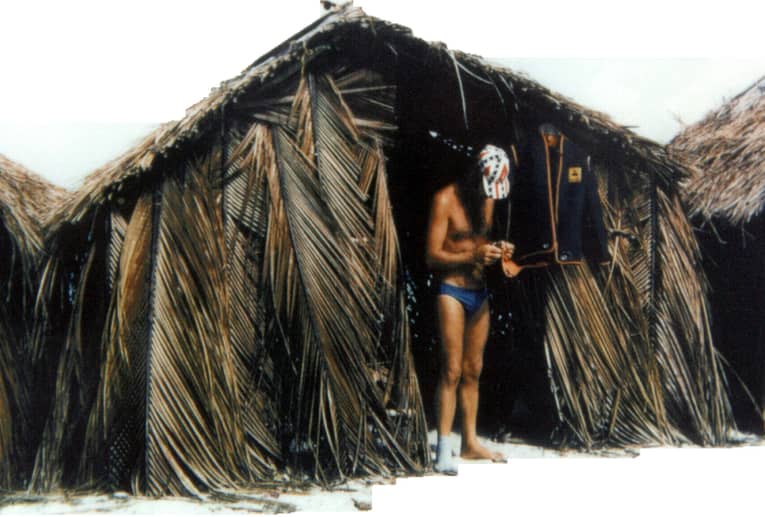
Maintaining contact with Corbin after his visit proved to be another challenge. In a 2016 interview with Hotelier Maldives, the late Mohamed Umar Maniku (MU Maniku) recalled that communication relied on Morse code, with messages passing through Colombo. This unusual arrangement shows how even basic communication required considerable effort at a time when the Maldives had limited international communication infrastructure.
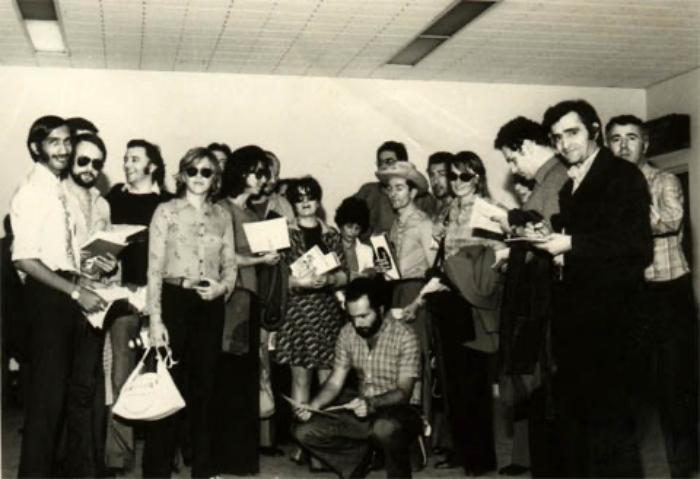
Corbin returned in February 1972 with a group that included journalists and photographers. With no established island resort available, the visitors stayed in modest accommodation in Malé. MU Maniku and his associates, including Hussain Afeef, helped accommodate the group. According to Kurumba’s account, Corbin subsequently offered to bring more visitors if suitable accommodation could be arranged.
MU Maniku, a former agricultural officer, and Afeef collaborated with the leaseholder of Vihamanaafushi, an uninhabited coconut plantation near Malé and the airport. Its location offered relatively convenient access, an important consideration when transportation depended on boats. With financial assistance from Corbin and their own resources, MU Maniku and his fellow Maldivians constructed 30 guest rooms using coral stone, coconut timber and palm thatch.
The accommodation was simple, reflecting the materials and facilities available at the time. Rooms were equipped with basic furniture, toilets and showers supplied with brackish water, while meals were served in a communal canteen or prepared as beach barbecues. Compared with the extensive facilities associated with modern resorts, Kurumba offered a much more modest island experience. Hussain Afeef became the resort’s first manager when Kurumba Village officially opened on 3 October 1972.
Establishing the resort also meant learning unfamiliar hospitality responsibilities. In recollections published on Kurumba’s official website, MU Maniku described translating an English recipe book into Dhivehi to help staff prepare meals for international visitors. He also recalled taking on several roles himself, including cooking, gardening and room service. These experiences show how early resort teams had to develop new skills while managing multiple responsibilities with limited staff. Food preparation, accommodation services and guest assistance all had to be organised without the specialised departments commonly found in larger resorts today.
Kurumba was soon followed by Bandos Maldives, which officially opened on 10 December 1972 with 28 rooms, becoming the country’s second resort. Its development brought similar operational challenges. In a 2017 interview with Hotelier Maldives, pioneering resort developer Ahmed Adam recalled the difficulties of preparing Bandos to receive visitors. With too few employees to handle each task separately, he took on responsibilities ranging from airport reception and boat transportation to resort management.
Adam’s recollections highlight how closely transportation and guest services were connected during the industry’s early years. Resort operators needed suitable boats, staff capable of navigating between islands and arrangements for receiving visitors at the airport. As more properties opened, these responsibilities expanded to include the movement of guests, employees and supplies across the archipelago.
Tourism grew considerably over the following decade. Research published in the International Review of Environmental History records that the number of resorts increased from two in 1972 to 44 in 1982, while registered accommodation capacity rose from 280 to 3,984 beds. This expansion allowed more visitors to stay across different islands, but it also placed greater importance on transportation, infrastructure and the organisation of services needed to operate resorts separated by stretches of ocean.
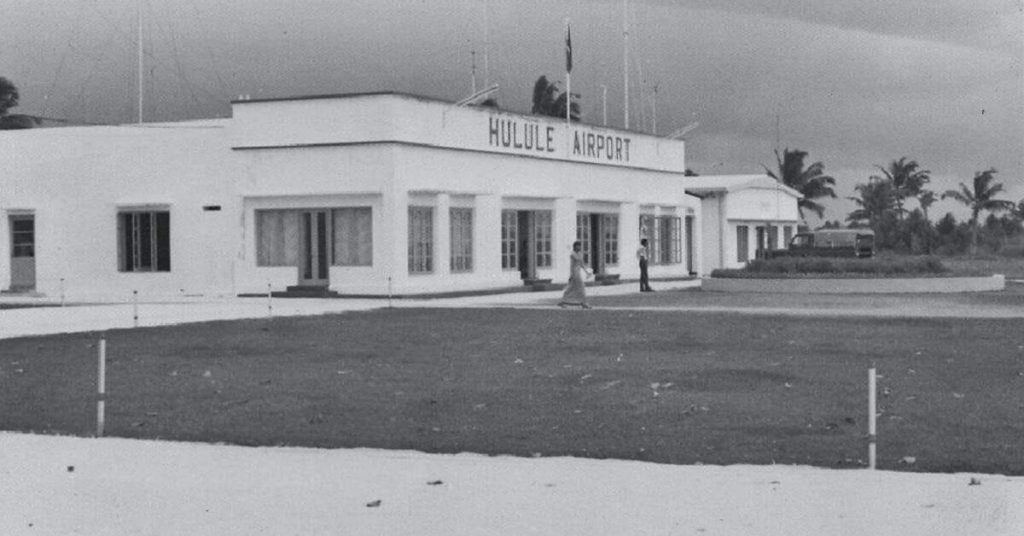
International accessibility developed alongside the growing resort industry. Hulhulé Airport had already undergone improvements before tourism began, including the inauguration of an asphalt runway in April 1966. As visitor numbers increased, further airport development became increasingly important. According to the United Nations Development Programme (UNDP), it supported government efforts to upgrade the airport during the late 1970s. On 11 November 1981, the upgraded facility was inaugurated as Malé International Airport. These improvements provided better infrastructure for international travel and supported the continued growth of the country’s resort industry.
The increase in resort accommodation also highlighted the need for more structured tourism planning. In 1983, the Maldives introduced its First Tourism Master Plan, following preparatory work commissioned by the government in 1980. The plan considered the economic, social, environmental and infrastructure needs of the developing industry, addressing areas such as resort development, transportation, water supply, waste management and environmental protection. A later review by the Ministry of Tourism highlighted the plan’s focus on limiting built-up areas, protecting coral reefs and considering future tourism development beyond the locations of the earliest resorts.
The early development of Maldivian tourism was shaped as much by practical problem-solving as it was by the opening of new resorts. From finding ways to bring guests ashore at Kurumba to managing cooking, transportation and accommodation with limited staff, the pioneers had to adapt to challenges with the resources available to them. Their experiences offer a valuable reminder to today’s hospitality professionals that delivering a memorable guest experience depends not only on facilities, but also on the people behind them and their ability to find solutions to everyday operational challenges.