



The Barefoot Eco Hotel & Villas: A more rooted interpretation of Maldivian hospitality
In a destination often defined by private island seclusion, overwater architecture and high-gloss spectacle, The Barefoot Eco Hotel & Villas in Hanimaadhoo offers a different proposition. It does not attempt to compete through scale, excess or visual drama. Instead, it builds its identity around something quieter and more layered: a closer relationship with island life, environmental responsibility and the cultural memory of the Maldives.
Located within an almost pristine forest on the local island of Hanimaadhoo in Haa Dhaalu Atoll, The Barefoot occupies a distinctive position in the Maldivian hospitality landscape. Its significance lies less in category and more in philosophy. The property sits on an inhabited island, allowing guests to experience the Maldives not as an isolated resort world, but as a living place with community, history and everyday rhythm.
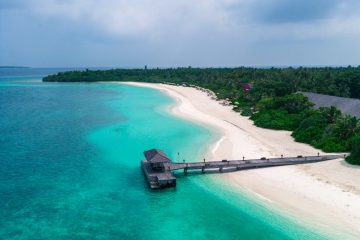
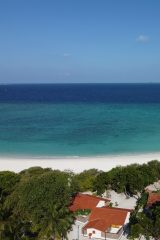
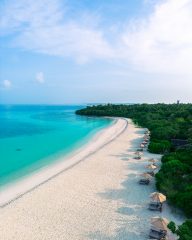
Connected to Malé by regular domestic flights of around 40 to 45 minutes, the property balances remoteness with relative ease of travel. Its setting reinforces that balance. A private half-mile stretch of sandy beach, a turquoise lagoon and dense tropical vegetation frame the property, creating a sense of privacy without removing it from the island around it. This is not seclusion as separation. It is seclusion that remains connected to place.
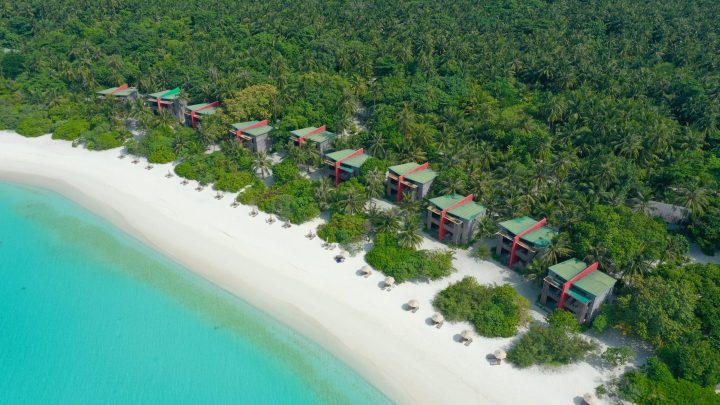
The property comprises 64 rooms arranged across low-rise two-storey buildings, allowing the architecture to remain modest within the landscape. Accommodation categories include Beach Front and Ocean View rooms of approximately 50 square metres, along with Beachside and Seaside rooms positioned slightly further inland. Family configurations are also available, accommodating up to six guests.
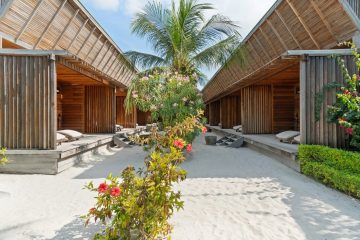
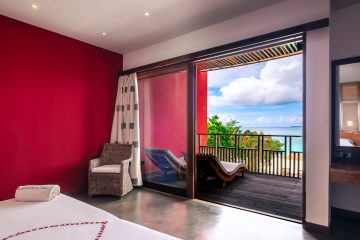
Across these categories, the design language is intentionally restrained. Interiors combine natural materials with essential modern comforts with private verandas or terraces. The result is not a manufactured rusticity, but a form of simplicity that supports the environment rather than overwhelming it. Surrounded by vegetation, the built environment feels embedded within the island, allowing natural light, airflow and greenery to become part of the guest experience.
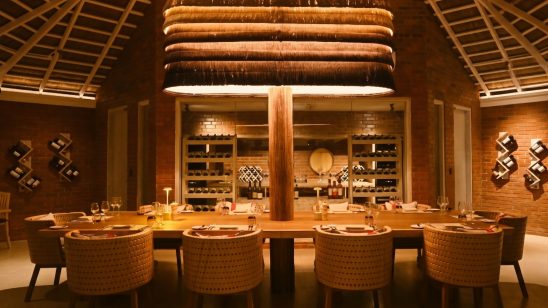
That same sense of balance extends to the property’s food and beverage offering. The Barefoot Restaurant reflects its Mediterranean roots while drawing on freshness and local sourcing. Buffet breakfast, lunch and dinner are served in the main sea-view restaurant, with water included during meals. For guests seeking a more intimate setting, private seafood dinners and beach barbecues can also be arranged.
The panoramic Juice Bar, positioned between the restaurant and swimming pool, offers fresh juices and non-alcoholic beverages overlooking the lagoon. Nearby, the Raan’ee Snack Bar introduces guests to Maldivian bites close to the beach, adding a local flavour to the property’s dining rhythm. A floating lagoon bar, accessible by complimentary speedboat transfer from sunset onwards, offers wines, beers and spirits, creating a social counterpoint to the property’s otherwise tranquil atmosphere.
Yet The Barefoot’s identity is not defined by facilities alone. Its strongest distinction lies in the way it uses hospitality as a bridge between the guest, the island and the environment. A resident marine biologist conducts regular biology lectures and, together with the dive centre, helps organise beach and underwater clean-up activities, encouraging guests to understand the ecosystem rather than simply enjoy it. Marine excursions are structured around responsible observation, including turtle, manta ray and dolphin experiences that contribute to biodiversity monitoring.
On land, the property encourages a different form of engagement. Guided bicycle tours through the village, visits to Utheemu Palace and cultural encounters with the local community allow travellers to move beyond the standard beach-holiday frame. For a property operating on a local island, this integration is not a side activity. It is central to its sense of place.
The recreational offering remains comprehensive, but it is shaped by the same low-impact philosophy. Facilities include a saltwater swimming pool, a spa offering Ayurvedic and holistic treatments, a well-equipped gym, daily yoga sessions led by an in-house Yoga Master, a diving centre offering PADI and SSI certifications, and non-motorised water sports. These experiences support the property’s lifestyle proposition without detaching it from its natural and cultural setting.
Sustainability is treated not as an accessory to the brand, but as an operational foundation. The Barefoot Eco Hotel received Global Sustainable Tourism Council certification in 2021, reflecting a commitment to responsible hospitality practice. Initiatives include the use of wood sourced from responsibly managed forests, reusable glass water bottles to reduce plastic consumption, renewable energy systems for water heating and bio-pest control methods that avoid chemical fogging.
The property also maintains a zero-kilometre garden that supplies fresh fruits and vegetables, complemented by sourcing from Hanimaadhoo and nearby islands wherever possible. Environmental education extends into the local school, while internship opportunities reinforce the property’s social connection to the community. In this sense, The Barefoot’s sustainability model is both ecological and social. It is concerned not only with reducing impact, but with strengthening the relationship between tourism and the island that hosts it.
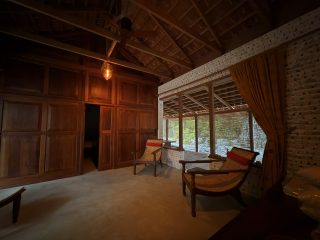
The recent introduction of six Maldivian Heritage Villas adds a new and deeply symbolic dimension to this philosophy. Located on a secluded northern stretch of the property, the villas are inspired by traditional coral houses once common across the Maldives. Built using natural coral stone and wood, and informed by traditional Maldivian construction techniques, they revisit an architectural language once shaped by climate, material availability and the rhythms of island life.
Each villa measures approximately 100 square metres and accommodates two guests. Designed with indoor and outdoor showers, a separate kitchen and a spacious veranda set within a private tropical garden, the villas offer privacy while remaining fully connected to the wider property. Their atmosphere is more introspective than conventional luxury accommodation. They invite guests to slow down, listen, cook, rest and inhabit space differently.
What makes the Heritage Villas especially important is that they are not presented as nostalgic replicas. They are working examples of how traditional Maldivian building intelligence can be reintroduced into contemporary hospitality. Coral stone, wood, period furnishings and naturally responsive spatial arrangements reflect a deliberate return to older methods, while modern services ensure the experience remains comfortable for today’s traveller.
The project therefore operates on several levels. Architecturally, it restores visibility to a form of Maldivian house that has largely disappeared. Culturally, it reconnects guests with a way of living shaped by climate, materials and community. Environmentally, it asks whether older building practices may still hold lessons for a tourism industry increasingly dependent on imported materials, sealed interiors and mechanical cooling.
Rather than functioning as a large-scale commercial expansion, the Heritage Villas feel more like a pilot concept. Their importance lies not in volume, but in the conversation they open. They suggest that the future of Maldivian hospitality does not have to be defined only by newness, height, speed or standardisation. It can also be shaped by memory, restraint and a more careful reading of place.
Within the wider story of The Barefoot, the villas are not an isolated addition. They are a natural extension of the property’s existing character. The property has always positioned itself between comfort and local island life, between ecological awareness and guest experience, between simplicity and purpose. The Heritage Villas make that philosophy architectural. They give physical form to the idea that hospitality can be both contemporary and rooted.
At its core, The Barefoot Eco Hotel & Villas challenges a familiar assumption in the Maldives: that luxury must be synonymous with spectacle. Its version of luxury is quieter. It is found in space, shade, natural sound, meaningful encounters and the freedom to experience an inhabited island with respect. It is found in a property that does not close itself off from its surroundings, but draws strength from them.
In an increasingly competitive hospitality landscape, that distinction matters. The Barefoot does not offer the Maldives as an abstract image. It offers the Maldives as a place with ecology, community, memory and continuity. With the addition of the Heritage Villas, that proposition becomes even clearer. The property stands as an alternative narrative for Maldivian tourism, one where sustainability is not only measured through systems, and heritage is not reduced to decoration.
It is a reminder that tranquillity and authenticity are not manufactured through design language alone. They emerge when a property understands where it stands, what it is connected to and what it chooses to preserve. For The Barefoot Eco Hotel & Villas, that understanding is the foundation of its identity, and perhaps its most meaningful form of hospitality.