



Tourism growth and telecom development closely linked, Dhiraagu CEO says
Before he arrived to lead Dhiraagu, Valdemar Ferradaz knew the Maldives through the enthusiasm of others. His children had urged him to visit. In different parts of the world, people asked whether he had been, then told him he should go.
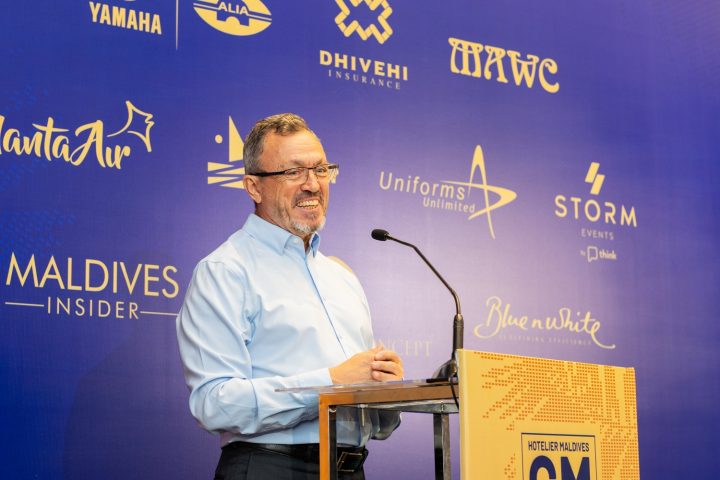
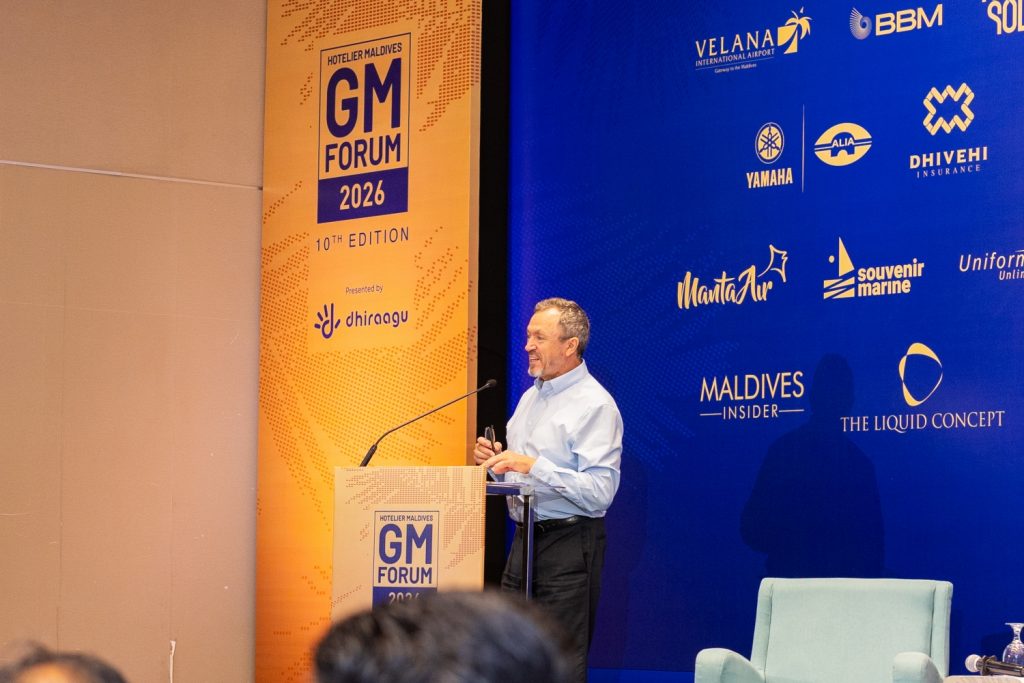
Standing before hospitality leaders at the Hotelier Maldives General Managers (GM) Forum 2026, the company’s new Chief Executive Officer brought a different perspective to those conversations. The destination he had heard so much about was now home to the business he led, and its tourism industry was central to the responsibility he had taken on.
In his first speech at a public event outside the company, Ferradaz used his special address to explore the relationship between hospitality, digital infrastructure and the Maldivian economy. His message combined an ambition to invest in technology with an insistence that people would become more important as that technology advanced.
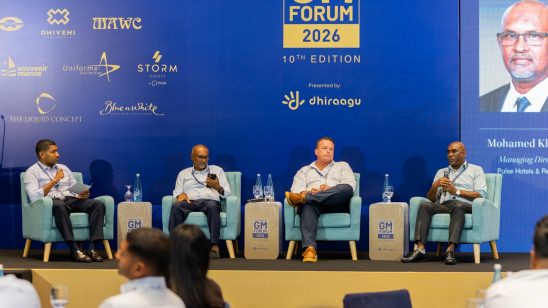
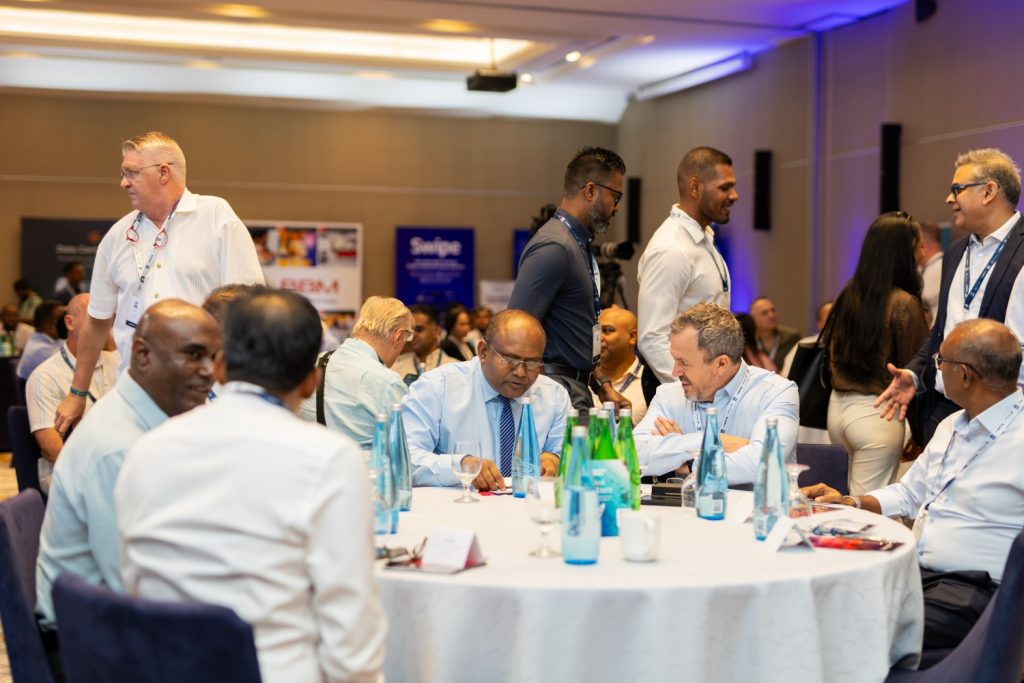
The setting reflected an established relationship. Dhiraagu was the Premier Sponsor of GM Forum 2026, extending its support for Hotelier Maldives’ industry platforms. The company was also the Platinum Partner of the Hotelier Maldives Awards in 2025 and 2026, linking its participation in discussions about the sector’s future with recognition of the people working within it.
For Ferradaz, the starting point was the scale of the competition facing the resort leaders in the room.
“This industry is competing on a global platform,” he said.
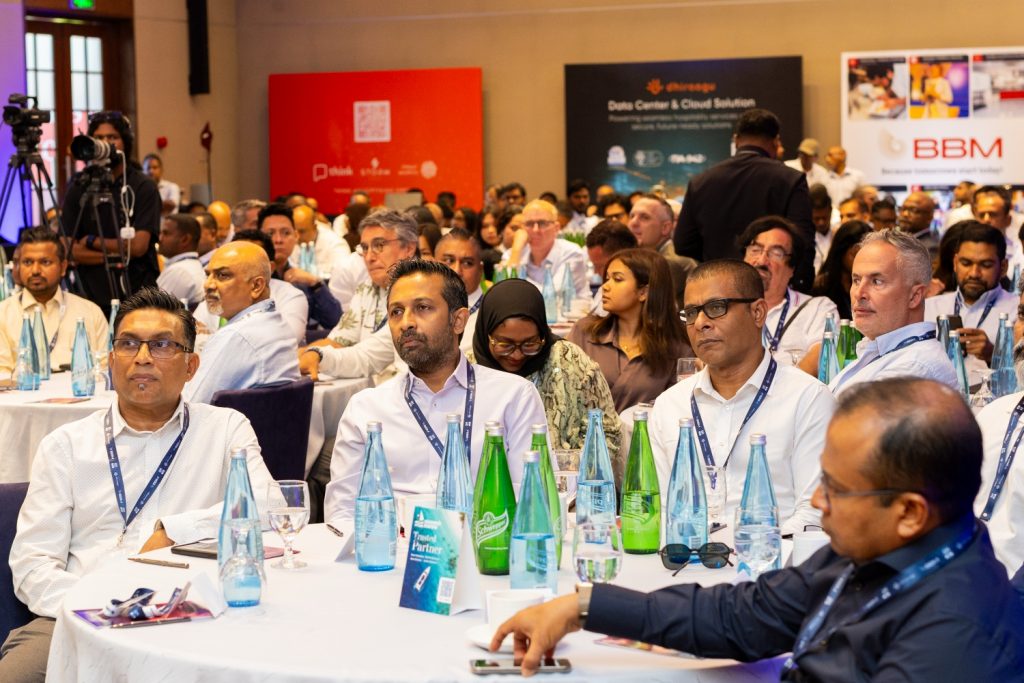
The Maldives had established an international reputation for the experiences it offered. Maintaining that position, he argued, required access to technology and innovation capable of keeping pace with changing expectations. The difficulty was the speed at which those expectations, and the systems supporting them, were evolving.
“You can’t do it on your own. We can’t do it on our own.”
That acknowledgement ran through the address. Ferradaz presented partnership as a practical requirement for both the hotel industry and Dhiraagu: each needed capabilities and investment that extended beyond its own organisation.
He traced the company’s development from fixed and mobile services to domestic submarine connectivity and international networks. He also pointed to its investment in the SEA-ME-WE 6 submarine cable system and its partnership with Google as part of the effort to strengthen connections between the Maldives and the wider world.
For hospitality businesses, the importance of those connections extended beyond the speed displayed on a device. Ferradaz highlighted the need for capacity, low latency and resilience as businesses handled more data and relied increasingly on services hosted in the cloud.
He encouraged hoteliers to look beyond Dhiraagu’s mobile network to its enterprise capabilities. Data centres and cloud services, he said, were central to the strategy his team had prepared for presentation to the group.
The infrastructure already in place included Dhiraagu’s Tier IV-certified data centre in Hulhumalé. Ferradaz invited industry colleagues to see the company’s facilities and understand the scale of the investment behind the services they used.
His invitation also ran in the other direction: Dhiraagu needed to understand what hospitality businesses were doing and what they would require next.
“Come and see what we’re doing. And we want to learn what you’re doing,” he said.
The case for keeping that conversation open emerged in a story from his time at Vodafone. Ferradaz recalled early dealings with Apple and the demand generated by the iPhone. In his account, hesitation over a new commercial model left the operator trying to persuade customers to stay while they sought the device and the experience it offered elsewhere.
The lesson he drew was about the limits of established customer loyalty. People could move quickly towards a service that gave them greater convenience and control, regardless of a provider’s size or previous relationship with them.
“Technology has to be embraced,” he said.
For the resort leaders listening, the story offered a way of thinking about changes in guest expectations. A business could be confident in its existing offer while customers were already discovering a different way to book, communicate or manage their experience.
Ferradaz applied the same argument to Dhiraagu. He spoke of satellite communications as a technology the company would embrace through partnerships as networks evolved. His broader point was that a telecommunications provider also had to adapt its own business to remain useful to the industries it served.
Artificial intelligence was central to that adaptation. Ferradaz described three priorities for AI within Dhiraagu: improving efficiency, enhancing customer experience and creating value.
Efficiency offered the most immediate opportunities. The more ambitious changes involved giving customers greater control over the services they bought and how they used them. He envisaged people tailoring packages, choosing how to transact and accessing services in ways that reflected their own preferences and needs.
“They’re in control, they know what they need to spend,” he said.
The third priority, value creation, brought the discussion close to the travel experience. Ferradaz described the potential for AI to help book tickets, initiate workflows, provide flight-delay notifications, share locations and select network connections. Together, these functions could make a journey easier to manage from a mobile device.
He presented these as possibilities that businesses needed to understand and develop. Their usefulness would depend on how effectively individual functions worked together around the customer.
Yet his enthusiasm for AI was accompanied by repeated attention to the people expected to introduce, manage and use it.
“People will be more important in the future than they’ve ever been,” he said.
Ferradaz acknowledged that Dhiraagu faced talent challenges familiar to the hospitality sector. The company needed to attract new skills while developing talent within the Maldives, including through students and colleges. Investment in AI and agentic technologies brought a corresponding need to prepare the organisation’s people.
He also addressed the emotional consequences of an increasingly digital world. As more interactions took place through screens, relationships with staff and customers required deliberate care. Employees who felt unsupported could become fearful of change or resist the technology being introduced.
In that sense, his discussion of emotional intelligence belonged alongside the plans for networks, cloud services and AI. Leaders needed to help people understand the changes and feel able to participate in them.
The address placed Dhiraagu and hospitality within a shared national responsibility. Ferradaz’s interest in tourism was tied to the sector’s role in the economy and to the infrastructure needed to sustain its international standing.
Closing his first public address outside the company, he returned to the relationships he hoped to build with the industry.
“I look forward to meeting you. I look forward to working with you. I look forward to serving the nation and serving this economy.”
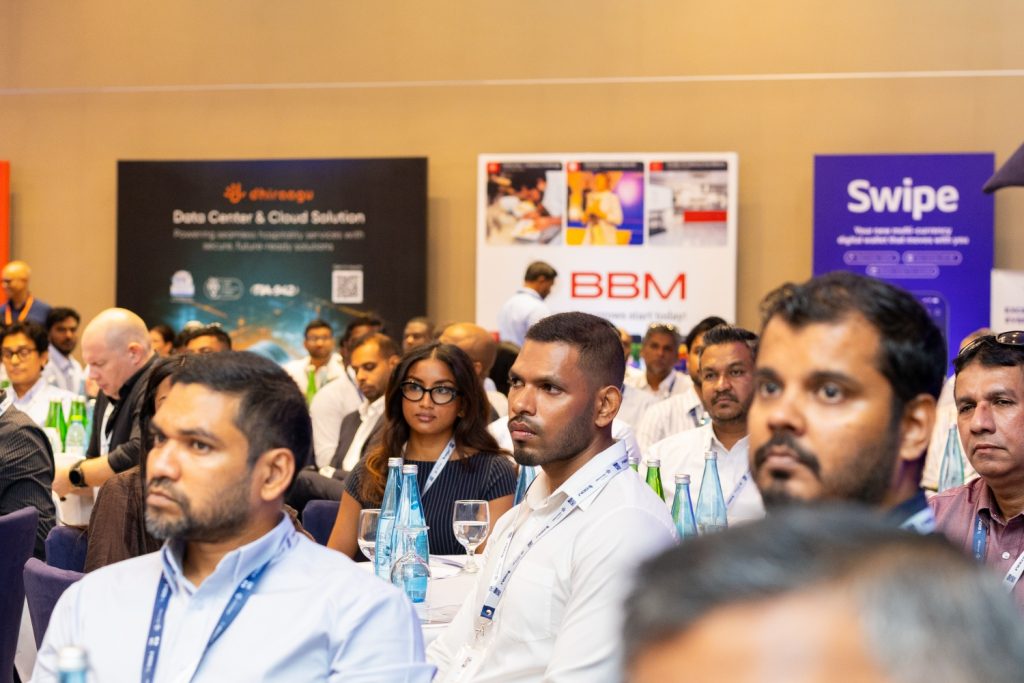
Established in 2016, the Hotelier Maldives GM Forum provides an annual platform for hospitality leaders and businesses serving the tourism sector to exchange perspectives on operational and strategic issues. The 2026 gathering marked the forum’s 10th edition.
A range of companies supporting different areas of the tourism industry partnered with GM Forum 2026.
Dhiraagu was the Premier Sponsor, while STO Energy was the Platinum Sponsor. Bank of Maldives (BML) was the Banking Partner, Dhivehi Insurance was the Insurance Partner, and Male’ Aerated Water Company (MAWC) was the Beverage Partner.
The Silver Sponsors were Maldives Airports Company Limited (MACL), Villa Hakatha, Bestbuy Maldives (BBM) and Atoll Solar.
ALIA, Uniforms Unlimited, The Liquid Concept, Maldives Insider and Blue N White supported the forum as Associate Sponsors.
Souvenir Marine was the Transport Partner, Manta Air was the Aviation Partner, and Storm Events was the Organising Partner.
Through its 2026 programme and partnerships, the GM Forum brought together resort leadership and the businesses supporting hospitality operations to examine how the sector can strengthen resilience while adapting its people, technology and operating models.