




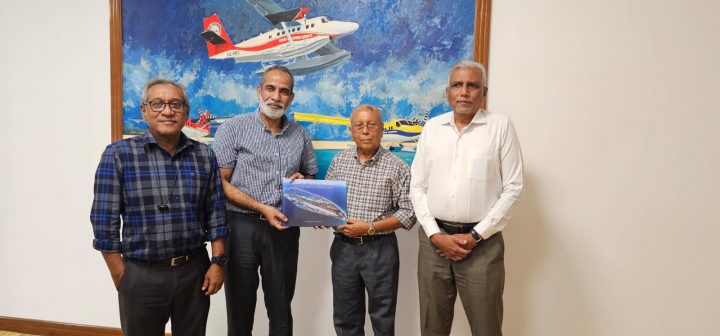
Chronicling the skies: Ahmed Mohamed’s definitive history of Maldivian aviation
For a nation of over a thousand islands scattered across the vast Indian Ocean, the story of the Maldives is inextricably linked to the story of its connection with the world. While the sea has been its lifeblood for centuries, it is the sky that has truly shaped its modern identity. The roar of a jet engine, the sight of a seaplane skipping across a turquoise lagoon—these are the sounds and sights of the contemporary Maldives. Yet, the turbulent, inspiring, and often precarious history of how the nation took to the air has, until now, remained a fragmented tale. That is, until the publication of “Aviation in the Maldives,” a landmark book by industry veteran Ahmed Mohamed.
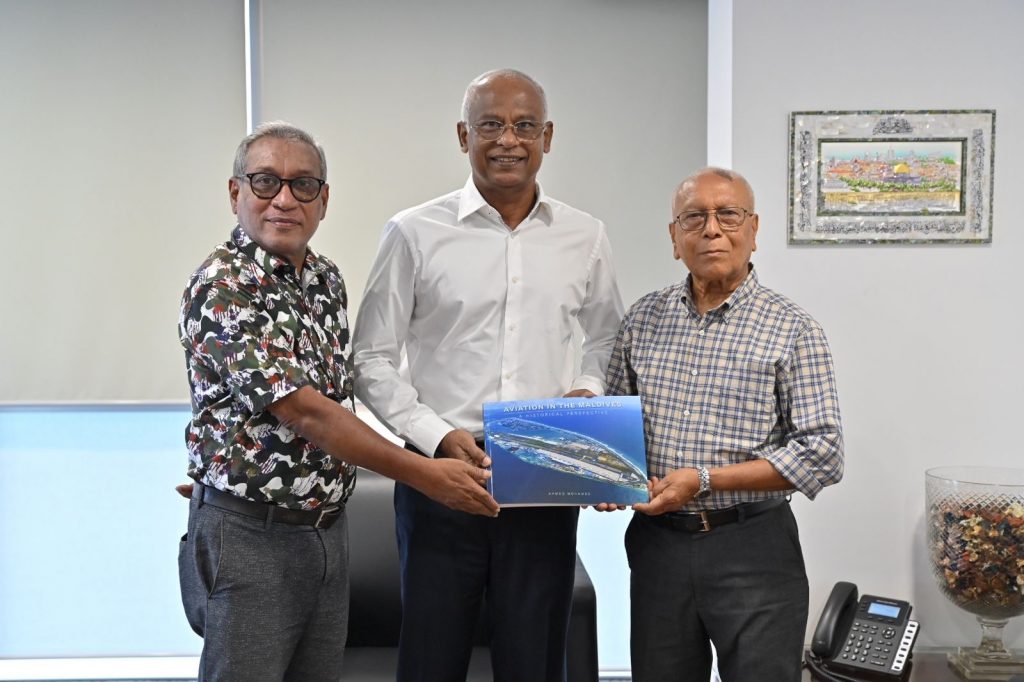
Launched in April 2024, this comprehensive work is the culmination of a three-year effort by a man who not only witnessed but actively participated in a significant chapter of the country’s aviation saga. Ahmed Mohamed, who served for 15 years at Air Maldives and a total of 38 years in government civil service, has poured his vast insight and passion into creating a definitive chronicle of the nation’s journey into the skies. The book, spanning 12 chapters, meticulously details the evolution of aviation from the establishment of the first aerodrome in Gan during the Second World War to the complex operations of the present day.
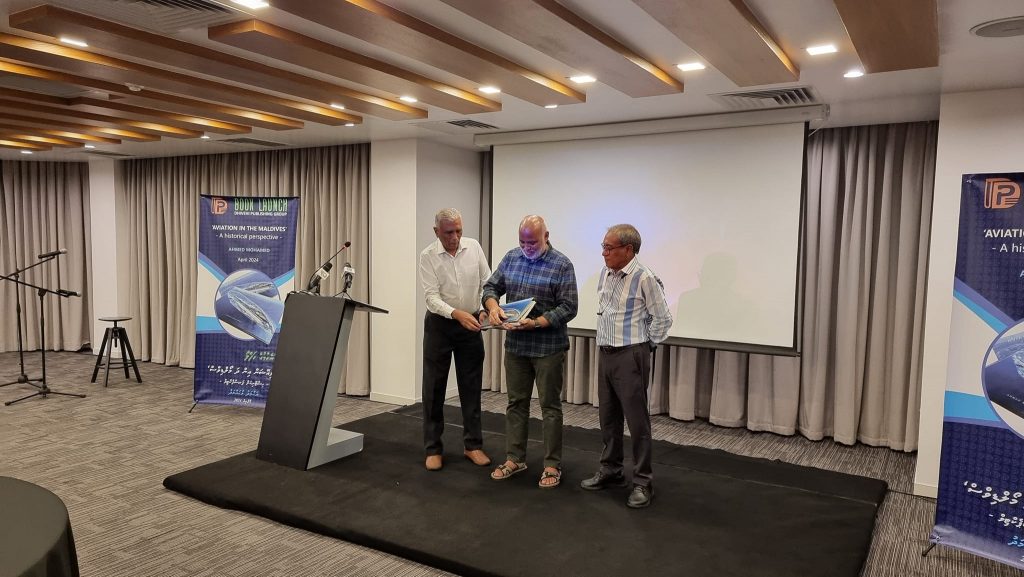
For Mohamed, this book was a mission to preserve a vital part of the national heritage. “For years, I’ve seen the history of Maldivian aviation misrepresented and distorted online and in social media,” he shares. “I felt a profound need to set the record straight. This book is my attempt to place our aviation story in its proper historical context, for the benefit of our aviation community and for the general public who may not know the struggles and triumphs that brought us here.”
The Author’s Journey: A Lifelong Passion
Ahmed Mohamed’s connection to aviation is deeply personal and predates his professional career. It began, as he recounts, during his school days with a flight that would cement a lifelong fascination. “My fascination with aviation began when I was just a student, flying from Malé to Gan on a British Royal Air Force transport plane,” he recalls. “That experience never left me. It has been a lifelong dream to write about the rich aviation history of my country. It’s a story that is deeply reflective of my own personal experiences and the incredible journey of our nation.”
This passion, combined with his extensive professional background—which includes roles as Director of External Resources at the Ministry of Finance, Financial Controller at the President’s Office, and later as the Chairperson and Board Member at the Maldives Inland Revenue Authority (MIRA)—gave him a unique vantage point. He was privy to the high-level decisions, the financial intricacies, and the operational challenges that defined the nation’s airlines. It is this insider’s perspective, balanced with meticulous research, that makes “Aviation in the Maldives” so compelling. “Compiling this history was a three-year journey. It involved not just my own memories from 15 years at Air Maldives, but also reaching out to pioneers and veterans of the industry,” Mohamed explains. “Their invaluable information helped to support and shape the narrative, ensuring the story is told authentically.”
The Birth of a National Carrier: Air Maldives
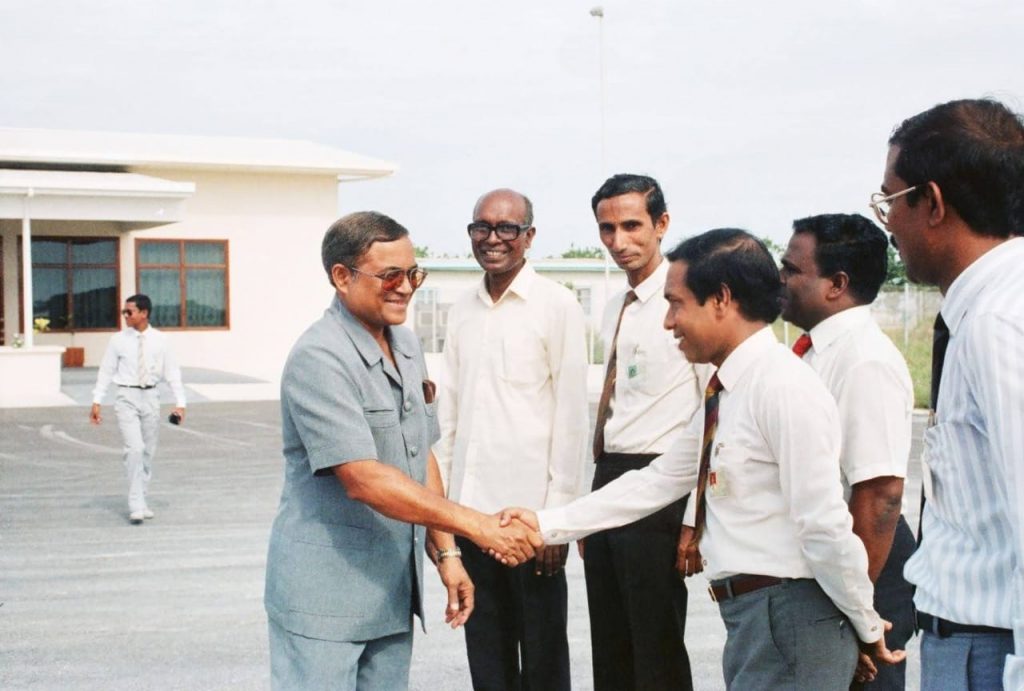
The book vividly documents the ambitious, and ultimately fraught, story of the first national carrier, Air Maldives Limited. Established by the government on 1st October 1974, the airline was born out of necessity. The fledgling tourism industry, launched just two years prior, was suffering from severe capacity constraints. The only operators flying into the country from the sole transit hub of Colombo were Air Ceylon and the Sri Lanka Air Force’s Helitours. Transiting passengers often had to wait for days to secure a seat to Malé, a daunting challenge for an industry in its infancy.
President Ibrahim Nasir’s government decided to take matters into its own hands. Following advice from the Commander of the Sri Lanka Air Force, the government purchased two tried-and-tested Convair 440 aircraft. The book details the acquisition of these aging planes from Caribbean United Airlines in Trinidad and Tobago. It even recounts their epic ferry flight to the region, a journey of approximately 62 flying hours that spanned from Trinidad to Florida, Boston, Gander, the Azores, Gibraltar, Cyprus, and Oman, piloted by Sri Lanka Air Force crew.
Upon arrival, the two aircraft were painted in a new livery and given names that evoked their island home: Flying Fish I and Flying Fish II. Air Maldives began scheduled operations between Malé and Colombo on 9th October 1974, bringing immediate relief to the capacity crunch. For the first time, Maldivian women were recruited as cabin crew, undergoing training in Colombo. However, the airline had no Maldivian pilots at the time; all cockpit and technical crew were provided by the Sri Lanka Air Force under a contractual arrangement.
Despite its initial success, the carrier faced significant headwinds. The two Convair 440s were “fuel guzzling” and encountered “serious reliability issues” due to their age and sometimes inadequate maintenance. A pivotal moment came in 1976 when ICAO experts advised the government to replace the military cockpit crew with qualified civilian pilots. The airline complied, but soon entered into an ill-fated joint venture with a Singapore-based company, Tri-9 Corporation, for maintenance and operational services. The effort to revive the ailing airline proved unsuccessful, and it flew into “further financial turbulence and mismanagement”. On 3rd May 1977, Air Maldives declared bankruptcy, bringing the short, dramatic episode of the first national carrier to an end.
A Brand Reimagined: The Domestic Era
The story of Air Maldives did not end with its bankruptcy. In a strategic move, the government decided to retain the brand name for its ticketing and ground handling services. For four years, Air Maldives existed as an airline with no aircraft.
The brand took to the skies again in 1981, this time as a domestic operator. The government purchased a brand-new 18-seat Short SC.7 Skyvan from Belfast. This aircraft, fondly nicknamed “gonu” (puffer fish) by locals, began operations between Malé and Gan on 3rd August 1981. It marked a new chapter for the airline, focusing on connecting the atolls and supporting the decentralisation of the country.
The domestic fleet expanded in the early 1990s with the acquisition of two Dornier 228-212 aircraft, a decision driven by a pressing national security need. Following the 3rd November 1988 terrorist attack on Malé, the government sought multi-purpose aircraft capable of both passenger transport and aerial surveillance of the country’s vast territorial waters. One of the Dorniers was specially fitted with a 360-degree maritime search radar and bubble windows, and was used extensively for detecting illegal fishing activities in coordination with the National Security Service.
Turbulent Skies: Joint Ventures and Missed Opportunities
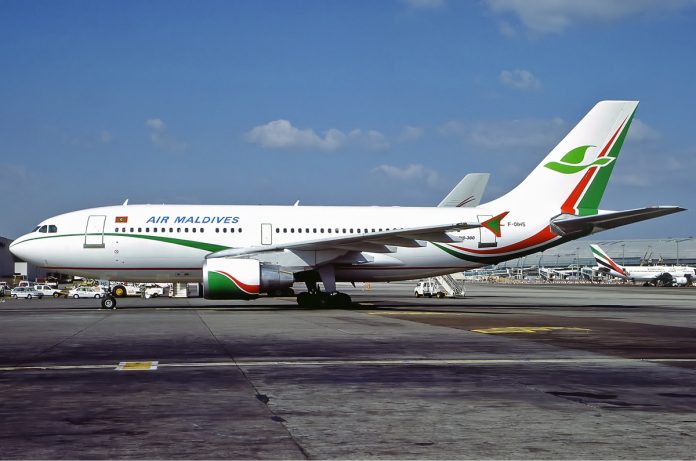
The 1990s were a period of dramatic change and instability, which Mohamed’s book captures in detail. In 1994, Air Maldives once again became an international carrier through a joint venture with Malaysian Helicopter Services (MHS). This partnership, however, led to the airline losing its lucrative 22-year monopoly on the general sales agency (GSA) business, a key source of its revenue.
The book also reveals a crucial missed opportunity that could have altered the course of Maldivian aviation. In the early 1990s, Kit Chambers, the CEO of Hummingbird Island Airways, offered to sell his business, which at the time was a strictly helicopter fleet of aircraft, to Air Maldives or enter into a joint venture. The domestic airline, which had the resources and infrastructure, rejected the offer. Chambers later sold his business to investors, and it eventually became the foundation of Trans Maldivian Airways, now the world’s largest seaplane operator. It was a golden opportunity lost.
Another ambitious plan that failed to materialise was the attempt to launch regional flights to India and Sri Lanka in 1991. The airline entered into negotiations with British Aerospace to lease a BAE-146 regional jet and even paid a non-refundable deposit of £100,000 to have the aircraft painted in Air Maldives livery. However, the government abruptly instructed the airline not to proceed, without providing a reason, leaving the project grounded.
The joint venture with MHS was itself plagued with challenges, mismanagement, and financial troubles, ultimately leading to the airline’s final demise in 2000.
A Legacy of National Ambition
“Aviation in the Maldives” goes beyond the story of Air Maldives, covering the entire saga of the nation’s carriers. It details the short-lived third national carrier, Maldives International Airline (1978-1979), a low-risk tripartite joint venture with Indian Airlines. It also sheds light on Maldives Airways (1984-1987), the fourth national carrier, which was a collaboration with the Palestine Liberation Organisation (PLO). These stories of ambition, international partnerships, and frequent failure paint a vivid picture of a young nation striving to establish its place on the world map.
Ultimately, Ahmed Mohamed’s book is more than a historical record; it is a tribute to the pioneers and a lesson for the future. It underscores the critical role aviation has played in the nation’s economic and social development, particularly in underpinning its world-class tourism industry.
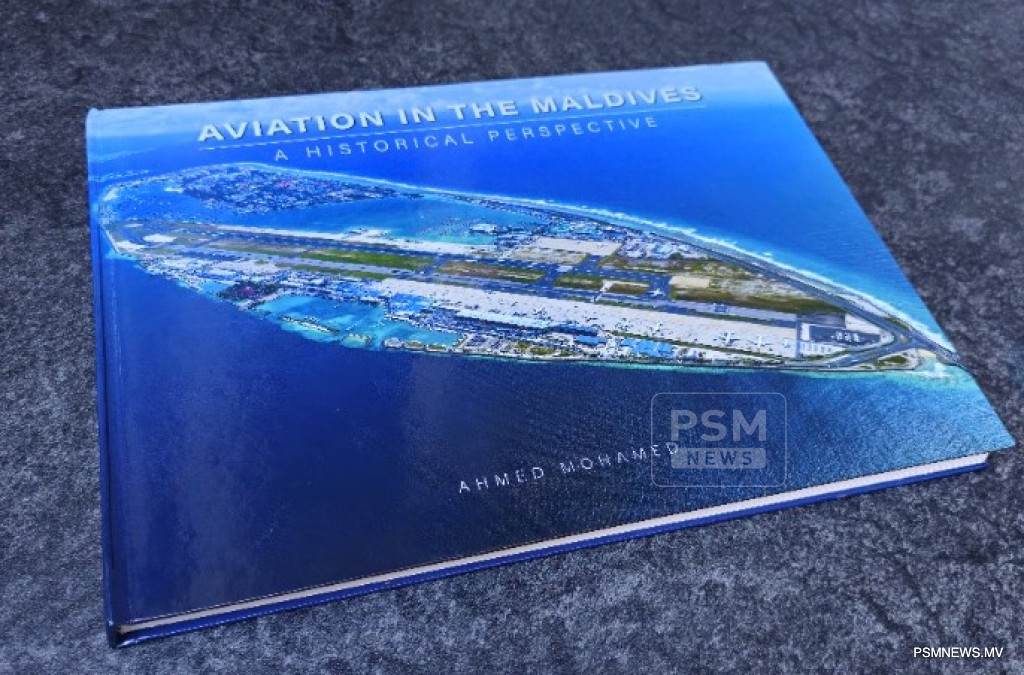
“Aviation has profoundly altered the lives of Maldivians,” Mohamed reflects. “We are a nation of scattered islands, and for centuries, the sea was our only connection. Today, most visitors arrive by air, and flying over our coral atolls is a unique experience that defines the modern Maldives. This book aims to capture those realities from an aviation perspective.”
With its rich detail, rare photographs, and authoritative narrative, “Aviation in the Maldives” succeeds in its mission. Ahmed Mohamed has not only set the record straight but has also gifted his country an invaluable piece of its own story, ensuring that the legacy of those who built the nation’s wings will never be forgotten.