




Legacy in Laamu: Marteyne van Well on building culture of care, continuity, commitment
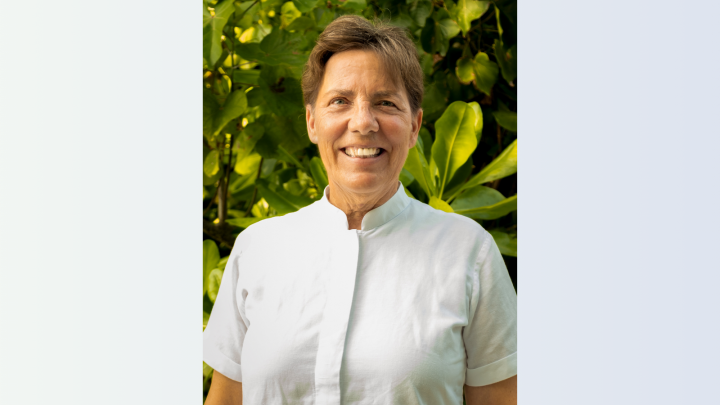
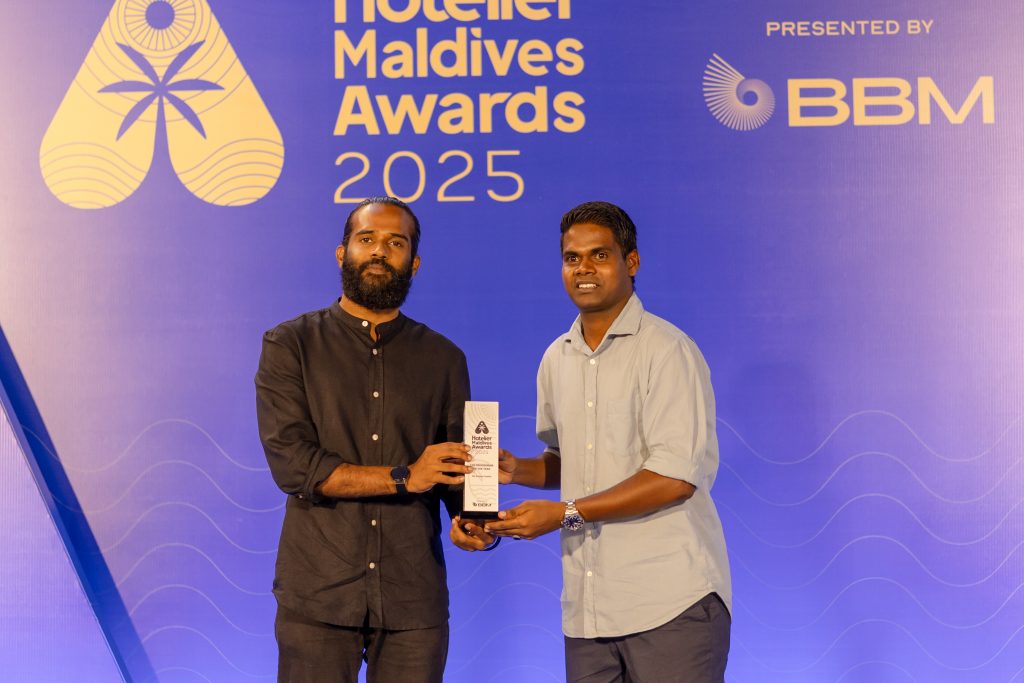
When Six Senses Laamu was named “CSR Programme of the Year” at the 2025 Hotelier Maldives Awards, it was more than just an industry accolade. For Regional General Manager Marteyne van Well, who has been at the helm since the resort’s opening week in 2011, the recognition affirmed over a decade of purpose-driven leadership grounded in community, sustainability, and continuity.
“I felt that the team would merit being recognised for their efforts,” Marteyne said in an interview with Hotelier Maldives. “Everything we do is so authentic and such an integral part of how we operate that when the award category was there, I felt we fit that category.”
Over the years, Six Senses Laamu has earned a number of international awards for its sustainability practices. However, Marteyne noted that a local honour carried added significance: “This is a Maldivian award, which means even more to all of us because we operate in the Maldives. It highlights our work compared to other Maldivian properties, which is important because the context matters.”
Fourteen years is an unusually long tenure for a general manager in the Maldives, where turnover is often the norm. But Marteyne’s staying power has had tangible benefits—not only for the resort’s operational consistency, but for embedding values into the fabric of the team. “There used to be a belief that a good general manager would move every two years,” she recalled. “But it takes at least two years just to understand the lay of the land. The real improvements—seeing people grow, seeing people care—happen over time. That doesn’t come from a five-day guest audit. It’s a long-term process.”
That long view has helped shape Laamu into a resort that balances hospitality with environmental stewardship and local engagement. “You can’t do sustainability without CSR, and you can’t do CSR without sustainability,” Marteyne said. “They are completely intertwined. At the core, people need to care—about the local community, the environment, the team. It only works if that care is genuine.”
One initiative that exemplifies this approach is the resort’s sustainable fishing programme. The project, which partners directly with local fishermen, ensures only responsibly sourced seafood reaches guests’ plates. It has not been without its challenges. “We’ve seen fishermen casting lines in protected areas like manta points,” Marteyne said. “Initially, we said we wouldn’t buy from them again. But that’s not always the answer. The real solution is working together and finding a way forward.”
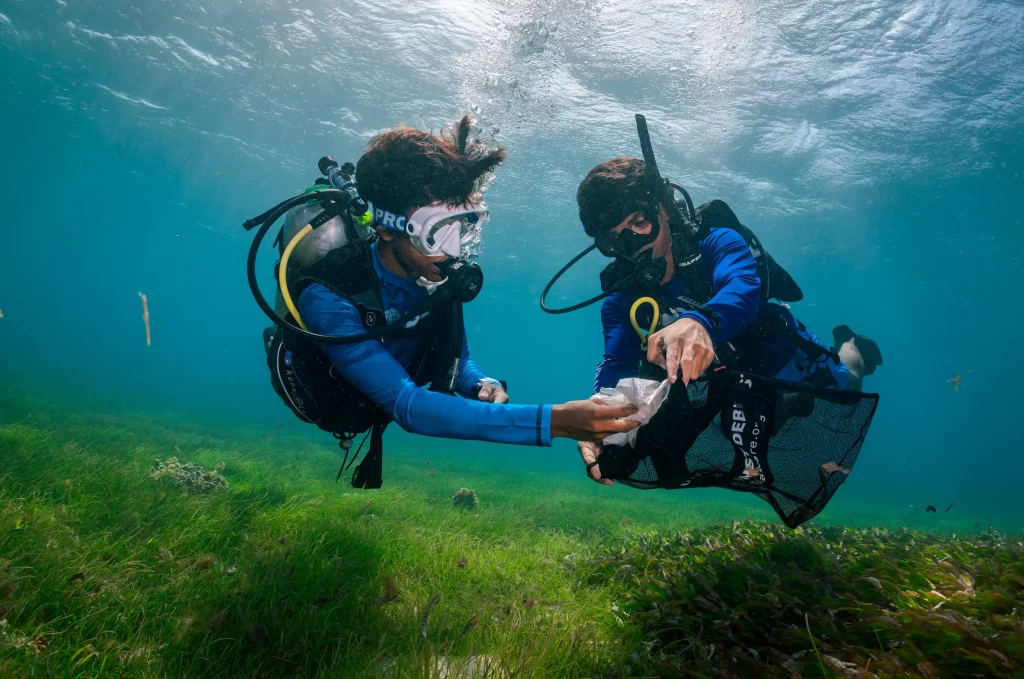
This same spirit underpins the resort’s protection of seagrass meadows—an initiative once met with scepticism from guests. “We had guests asking to book villas with no seagrass,” she said. “So we had to educate. We left a note in villas encouraging guests to take part in citizen science. If they saw a turtle or a ray, they could record it. That changed how they viewed the ocean.”
These shifts in guest perspective are subtle but powerful. They demonstrate that sustainability in hospitality isn’t just about behind-the-scenes operations, but also about influencing perceptions and behaviours. “People want to feel good about doing good,” Marteyne noted. “And guests today are increasingly conscious of where they spend their money. If we can offer a meaningful experience that aligns with those values, it builds long-term loyalty.”
This long-term thinking has also informed the resort’s internal culture. With an average length of service exceeding six years, Laamu’s team benefits from continuity, peer learning, and strong alignment with the brand’s ethos. “I believe we attract people because of our sustainability and CSR work,” Marteyne said. “It gives people a sense of purpose. Over time, that creates a culture where expectations are shared and upheld by the team themselves.”
She shared how this culture of care now shapes behaviour from within. “When someone new arrives and doesn’t follow the norms—say, smoking in host housing—other hosts will say, ‘We don’t do that here.’ You don’t need to manage people out. They self-select. That takes time.”
More recently, Marteyne has taken on oversight of Six Senses Kanuhura, marking the brand’s expansion within the Maldives. The transition has been a learning experience. “Kanuhura was an existing property. We inherited 250 team members from another operator, with a different culture and systems. That’s very different from building a culture from scratch.”
The experience has reinforced the importance of values-led leadership. “At Laamu, we didn’t have to think about culture anymore—it was just there. At Kanuhura, we need to build that from the ground up. And it’s going to take time. But we’re committed to bringing the same standards and mindset to the new property.”
That mindset includes prioritising local employment. “Certain roles at Six Senses Laamu can only be held by Maldivians,” Marteyne said. “If you want to be a waiter or a housekeeper, those are local-only positions. That’s not exclusionary—it’s a statement that we believe local talent can do these jobs and do them well.”
However, she is candid about broader challenges facing the Maldivian tourism industry. “There’s a lot of growth in many directions—budget resorts, homestays, Airbnbs—and I’m not sure all of it is compatible with high-end luxury,” she said. “If guests are paying thousands of dollars a night, they expect a certain atmosphere. That becomes difficult if the overall destination brand starts to shift.”
Her concern is not rooted in competition, but in coherence. “I’ve travelled extensively—Solomon Islands, Caribbean, Fiji—and I can’t think of a destination that has successfully combined true luxury and budget homestay in the same brand identity, other than perhaps big cities. The Maldives is unique. The one-island, one-resort model is a strength. I’d like to see the country lean into that high-end positioning.”
She also worries about the impact of over-expansion on local employment and income. “Ten years ago, people didn’t talk about salary; they talked about service charge. But if more properties open and occupancy drops, that service charge shrinks. That affects local staff directly. Growth needs to be considered at all levels—from guest experience to team livelihood.”
At the heart of Marteyne’s leadership philosophy is commitment. “If you want to join a place like Six Senses, you have to be all in,” she said. “Be part of a greater team. Show up. Engage. Even if you’re on a split shift, come for the beach clean. If you see a problem, don’t just say something—do something.”
She sees her role not just as a manager, but as a steward of the environment, of team development, and of the guest experience. “Operations, CSR, sustainability—they are not separate. They are linked. The guest experience is better when the team is proud of what they do. The team is better when they’re part of something meaningful.”
Reflecting on her journey so far, Marteyne remains focused on the future: “We’re not the biggest or the flashiest resort. But we’re consistent. We care. And we try to do the right thing—even when it’s not the easiest path. That, I think, is what makes the difference.”