






Hospitality, heritage and place: How Raffaella Colleoni sees the Heritage Villas as a model for a more rooted Maldives
For many hotels, identity is built through design language, service standards or location. At The Barefoot in Hanimaadhoo, identity has long been tied to something more layered: the attempt to create a tourism experience that remains in conversation with the island around it. The opening of the Heritage Villas adds a new dimension to that effort, and for General Manager Raffaella Colleoni, the project is not just an accommodation concept. It is a statement about what tourism in the Maldives can still choose to become.
Colleoni has been in the tourism industry since she was 21, beginning in Italy before travelling widely and eventually arriving in the Maldives in 2009. She first worked at Gangehi Island Resort, another property under the same owner, starting in sales before moving through human resources into operations. When the decision was made to build a new hotel on the local island of Hanimaadhoo, she became part of the project from its early stages and has remained central to its development since.
That trajectory helps explain the perspective she brings to Barefoot. Her leadership is not framed around distance from place, but immersion in it. In her interview, she says one of the things she values most about operating on a local island is that staff and management are not sealed off from everyday life beyond the property.
“I prefer to be on a local island,” she says. “The idea that staff and myself can go out of the hotel, meet people, and see how people live is very important.”
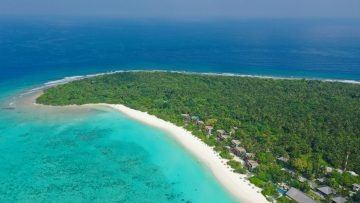
That preference is fundamental to how she describes Barefoot’s DNA. The hotel, she says, is an eco-resort, but sustainability for Barefoot is not limited to technical systems or certification checklists. It begins with architecture and extends into community, culture and behaviour. Guests are not only encouraged to enjoy the property; they are invited to explore the village, drink coffee outside the hotel, meet local people and engage with a social setting larger than the resort itself.
“For us, it’s not only a hotel where guests come and spend a holiday,” she says. “We also have in our hearts the local community.”
That framing is important for understanding the Heritage Villas. According to the project page, the villas are built with coral stone walls and coconut wood frames and are intended to offer “a rare chance to step into the past”, while still giving guests access to hotel services and curated experiences such as guided bike tours, yoga, snorkelling and cultural activities. But for Colleoni, their significance lies less in novelty than in coherence. They fit the existing philosophy of the property.
“I think the Heritage Villas is a really unique project,” she says. “It is something very authentic and traditional.”
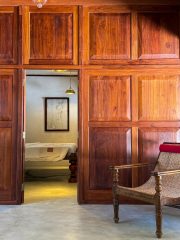
She sees the villas as a continuation of Barefoot’s broader attempt to offer guests an experience of the Maldives that is not abstracted from local life. “We want that tourists who come here experience 100% and feel 100% the Maldives,” she says, contrasting the villas with standard rooms that could exist almost anywhere in the destination. What makes the project stand out, in her view, is that it draws from how Maldivians used to live, and makes that knowledge tangible again.
That sense of tangibility matters. Heritage can often become a visual language emptied of practice. At the Heritage Villas, Colleoni points to a more lived form of engagement. Guests can stay in a secluded part of the hotel, cook for themselves if they choose, go into the village to buy fish or other ingredients, and still access the wider services of the property. The project page similarly highlights a fully equipped kitchen, bicycles, cooking workshops and local-home visits as part of the offer.
These details may seem small, but together they produce a different tourism rhythm. The guest is not simply looked after; the guest is invited to participate. This distinction is at the heart of how Colleoni understands the future of hospitality on local islands. She wants visitors to become more than passive observers of scenery. They should, in her words, travel rather than merely tour.
This philosophy becomes especially visible in the way she talks about Hanimadhoo itself. Asked about the challenges and advantages of operating on a remote local island, Colleoni acknowledges logistics and cost as the main operational difficulty. The island is far from Malé, procurement is complex, and imported supplies add pressure. But beyond that, she resists the idea that remoteness is a disadvantage.
“To be honest, I don’t see cons. I only see advantages,” she says.
That is not a casual remark. It reflects a conviction that local-island tourism can create a more informed, respectful and meaningful kind of visitor. Guests need to understand dress codes, religion and social norms when they leave the hotel. But for Colleoni, that is part of the value of the experience. Respect is not a barrier to enjoyment; it is what deepens it.
“I am proud when I tell the guests: look, you are in a beautiful island and you have the experience to explore, but you have to respect where you are. For me, this means to be a traveller, not a tourist.”
This idea of rootedness, of hospitality that remains accountable to place, is also evident in Barefoot’s community engagement. Colleoni describes a relationship with Hanimadhoo that is deliberately open rather than symbolic. The hotel supports reef clean-ups and beach clean-ups, participates in community activities after Ramadan, sponsors football tournaments, supports school events and provides internships for students. It prioritises local employment, including women from the island, and works with village-based partners such as a local guide who leads bike tours and visits to homes for tea.
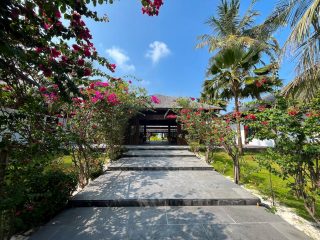
Perhaps most tellingly, the hotel’s entrance is open. “We don’t have a gate,” Colleoni says. “We want to say everybody is welcome, not only tourists, but also people from the village.”
In the Maldivian context, where tourism infrastructure has historically often depended on separation, that openness is a meaningful choice. It suggests a model in which tourism does not need to stand apart from island life in order to function. Instead, it can draw strength from proximity and mutual familiarity.
The Heritage Villas extend that logic into architecture. Colleoni repeatedly returns to the words authenticity and tradition, but she does so without treating them as branding language. For her, authenticity is linked to material, setting and guest understanding. The villas are “very sustainable”, she says, beginning with the materials used and the way they sit within the landscape. They are also educational. If guests can feel how Maldivians once lived, they may leave with a fuller understanding of the country than a conventional holiday allows.
That educational dimension is central to how Colleoni thinks about sustainability more broadly. She describes Barefoot’s eco-conscious guest as someone who believes in the need to protect the environment and preserve the place they are visiting. The hotel supports this with evening biology lectures, reef and beach clean-ups, school sessions, internships and the work of a marine biologist who explains the ecosystem and responsible behaviour in the water.
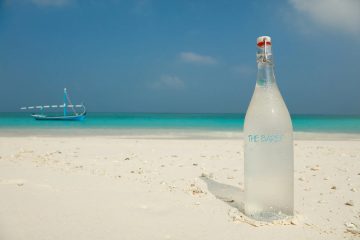
There are also operational measures: avoiding plastic, providing water in reusable glass bottles, using paper straws, growing produce through a farm-to-table approach, and replacing fogging with mosquito traps that rely on heat and sugar rather than chemicals. Colleoni notes that after ending fogging, the property began to see more biodiversity, including the return of butterflies. She also points to the hotel’s certification by the Global Sustainable Tourism Council, which sets annual goals for improvement.
What is notable, however, is that she never speaks about sustainability as a separate department or a side initiative. It is woven into architecture, guest education, food, biodiversity, community participation and management ethos. That is precisely why the Heritage Villas matter within Barefoot’s story. They embody sustainability not only through efficient systems, but through an older logic of building and living that already assumed closeness to climate and resource limits.
The villas also arrived at a moment when guest expectations are changing. Colleoni says the first responses since the units opened have been “really, really positive”. That early feedback points to a growing appetite for travel experiences that are more specific, less generic and more tied to the character of place. In a destination where global demand remains strong, the real differentiator may increasingly be not excess, but credibility.
Colleoni’s future vision for Barefoot reflects that. She observes that there are now many resorts and hotels in the Maldives, but argues that too many look artificial. Her hope is to keep Barefoot green, sustainable and genuine, and to continue protecting a style of hospitality that feels personal rather than manufactured.
“What guests feel is that the staff is a team,” she says. “We work with a smile, and we are genuine in our hospitality. It is like family management.”
That idea of genuineness is easy to overuse in hospitality writing, but in this context it carries weight. Colleoni links it directly to staff wellbeing, teamwork and the atmosphere guests encounter. “If staff is happy, guests are happy,” she says. In other words, authenticity is not only about built heritage or cultural programming. It is also about how a place is run, who feels included in it, and whether the experience remains recognisably human.
If the Heritage Villas succeed in the longer term, Colleoni hopes they will help more people see the Maldives not only as a beautiful place to visit, but as a place with a lived history worth understanding. That aspiration aligns closely with the larger editorial proposition outlined in her email: that heritage-based construction can coexist with contemporary expectations, and that culturally rooted, environmentally responsible development still has a place in the country’s future.
The importance of the project, then, lies not only in its design. It lies in the alternative it presents. At a time when tourism development often moves toward uniformity, the Heritage Villas suggest that progress does not have to come at the expense of memory. A hotel can still make room for local knowledge, community presence and older building intelligence without abandoning comfort or relevance.
For Colleoni, that is not an abstract lesson. It is the daily work of keeping a place open, grounded and honest about where it stands. And in the Heritage Villas, that philosophy has found one of its clearest forms: a hospitality experience that does not turn away from the Maldives it inhabits, but invites guests to meet it more closely.