




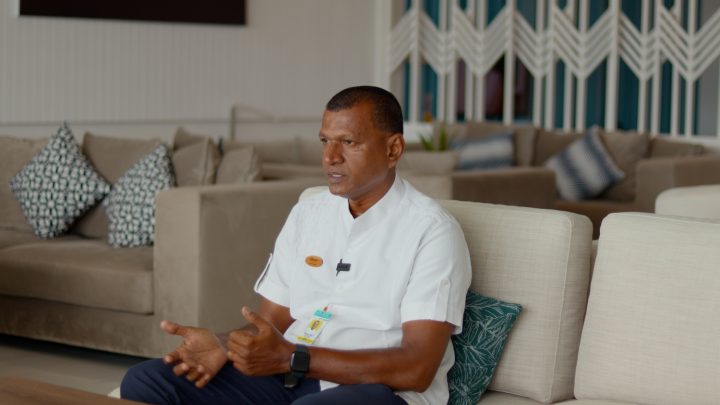
Amilla Maldives’ Mohamed Mihad: Building an award-winning career around service, training and teamwork
A missed international flight can extend a resort’s responsibilities beyond check-out. For Mohamed Mihad, Airport Manager at Amilla Maldives, the response is to stay with the guest, help arrange accommodation in Malé or Hulhumalé, and ensure someone is there to assist with check-in when they are due to fly again.
“Even if they miss their international flight, we don’t let them go,” he says. “We will be with them.”
That commitment helps explain how Mihad approaches a role that places him between the resort and the airport, responsible for guests during the transfers that begin and end their stay. The winner of Airport Representative of the Year at the Hotelier Maldives Awards 2026, he speaks about the recognition through the people who helped him achieve it. Amilla’s management and his airport team, he says, share in the award.
“It is really great to achieve this award,” he says, adding that both management and his colleagues worked towards it.
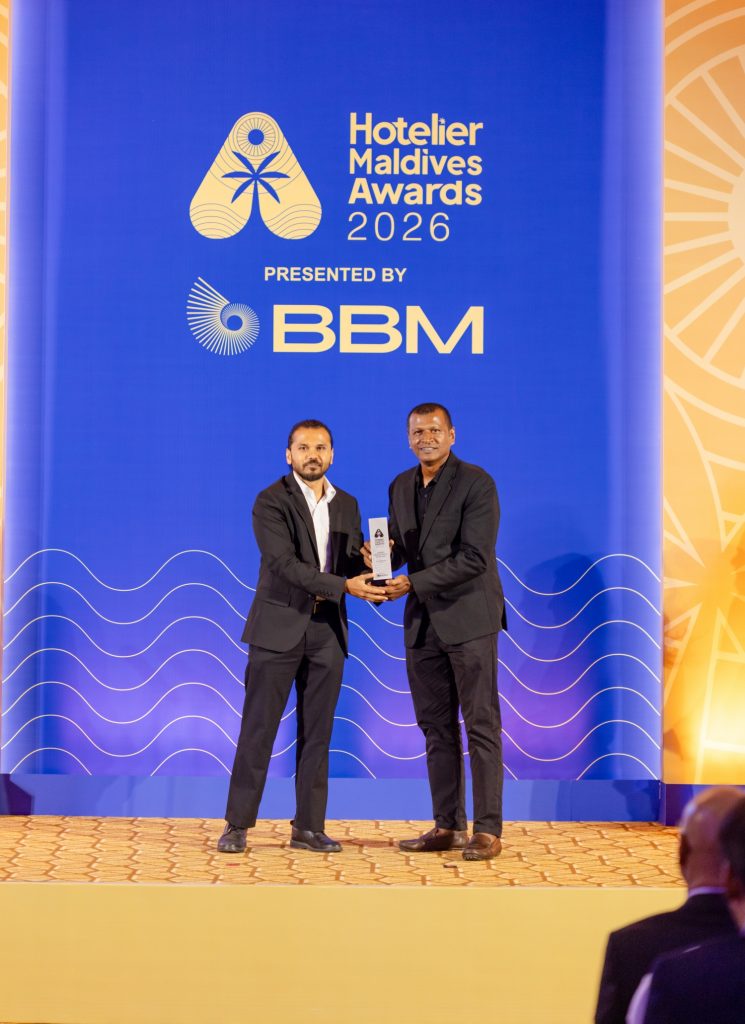
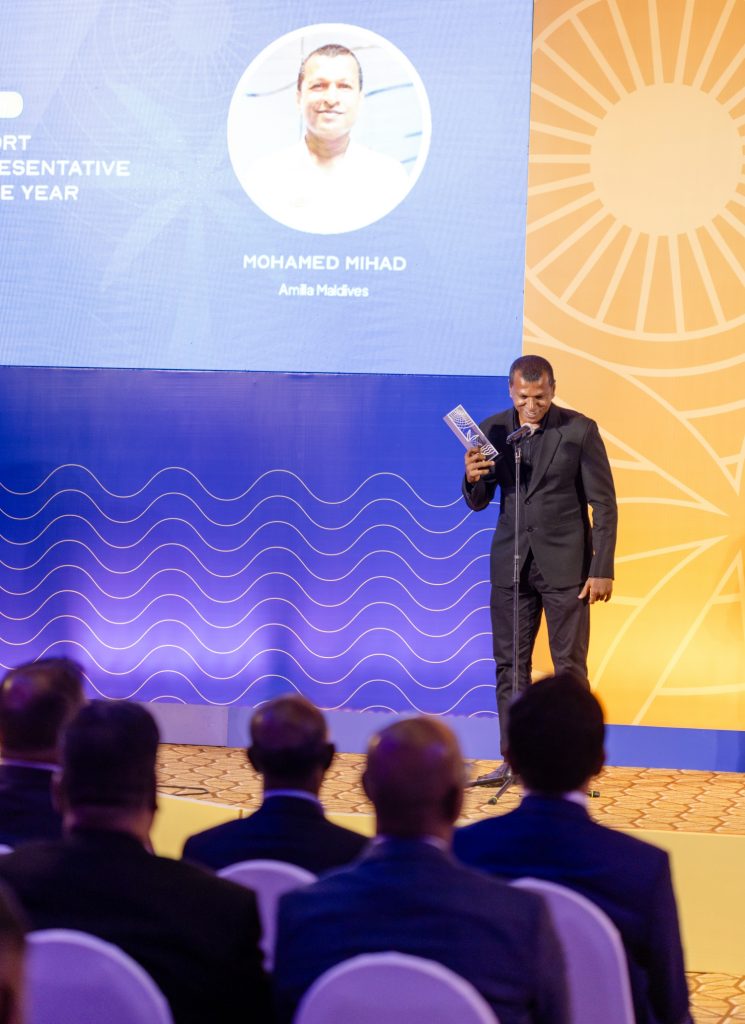
His career has included airport operations at Four Seasons, front office management at Kuda Huraa and Malé office management with Cheval Blanc Randheli. These roles have placed him at different points in the guest journey, from the resort itself to the operations supporting arrivals and departures.
When asked which experience most shaped his leadership, Mihad returns to training. He credits Four Seasons with helping to develop the skills of Maldivians working in hospitality, including airport managers and representatives now employed across the sector. He sees his own development as part of that contribution.
“They uplift the standard of Maldivians to the next level,” he says.
Training continues to inform his work at Amilla, where preparation begins several days before an arriving guest meets a representative. The team reviews profiles to establish whether visitors are returning guests, honeymooners or travelling to the Maldives for the first time. They then prepare around the preferences and requirements recorded in those profiles.
“We actually start working a few days in advance,” Mihad says. “We look into their profiles and we prepare according to their needs.”
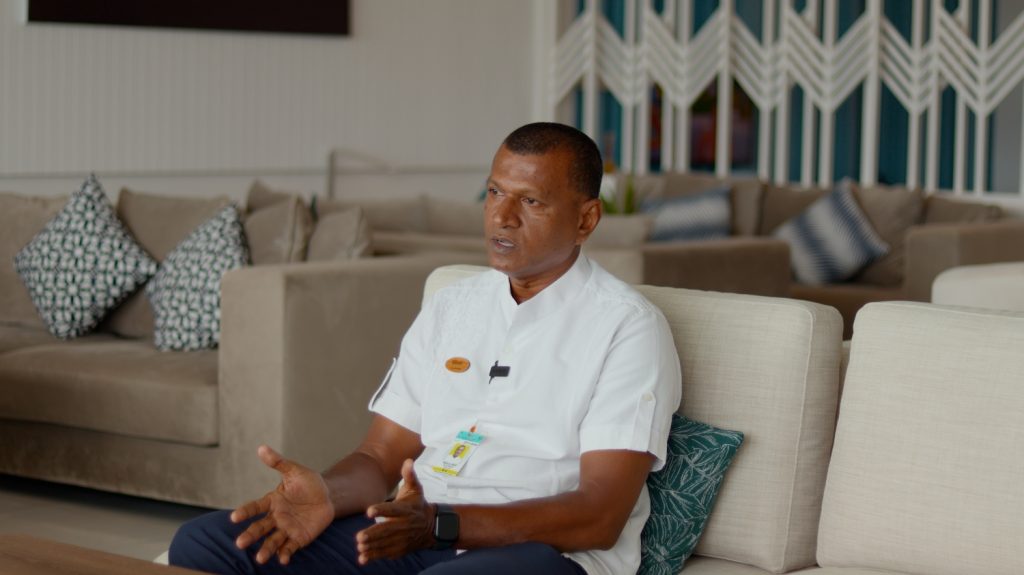
For guests who use wheelchairs, this involves coordination across the airport, the airline and the resort. Mihad explains that Amilla has received guests with accessibility requirements and that the airport team must communicate those requirements to airport operations and Manta Air. Where necessary, the team requests an aircraft suited to the transfer and ensures colleagues at the resort are prepared to receive the guest.
Mihad says the team is “well trained” to handle these situations.
The arrangements must reach everyone involved before the transfer takes place. A requirement recorded in a guest profile only becomes useful when the people responsible for each stage can act on it. Mihad repeatedly stresses “proper communication” as the basis for coordinating these movements.
He applies the same principle when arranging transfers for guests who require privacy, including celebrities. Such movements may need to take place without attracting attention, which requires coordination with the seaplane operator as well as the people receiving and accompanying the guest. The airport team depends on its partners understanding what is required.
Within his own department, Mihad also has to account for the distance from the resort. When an island operation becomes busy, colleagues from other departments may be available to help. An airport team has less scope to call on that support when several movements overlap.
“When we are working at the airport, it’s difficult to get that,” he says.
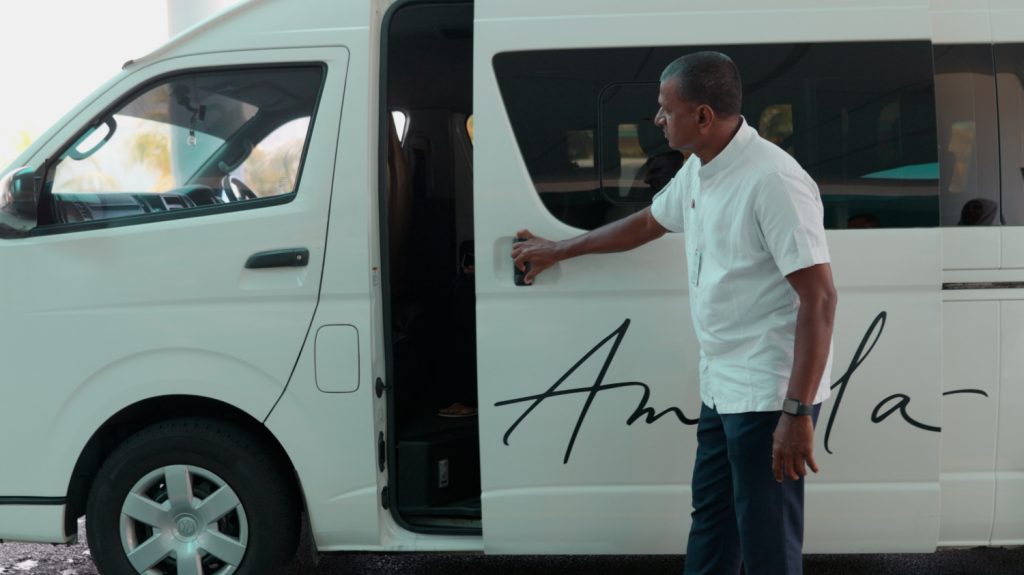
His response is to prepare with the team and discuss the work ahead. The ability to handle pressure begins before the airport becomes busy, with colleagues understanding the demands they may face and being ready to manage them together.
The lounge service improvements he introduced in 2025 focused on maintaining contact between guests and the staff assisting them. At Amilla, the representatives who receive guests and help with seaplane check-in also provide service in the airport lounge.
“Until their departure to the resort we are the same people who are handling the guests and interacting with the guests,” Mihad explains.
This gives guests continuity as they move through the airport and wait for their transfer. The staff accompanying them can continue the interaction that began on arrival. On the return journey, the team tries to assign the same representatives to greet guests and assist with check-in for their international flights. A guest may therefore encounter someone they already know when their stay comes to an end.
Keeping that service consistent becomes more demanding when weather interrupts travel. Asked about the challenges of his role, Mihad identifies weather as the main constraint, particularly for seaplane operations.
“Weather is the biggest challenge in the Maldives, especially during the seaplane operations,” he says.
Amilla has a domestic flight alternative through Dharavandhoo Airport. That option gives the team another route to consider, although Mihad acknowledges that weather can still prevent arrivals from reaching the resort or put departing guests at risk of missing international flights. Guests can become frustrated when their journey is interrupted, and the airport team has to respond while working within conditions it cannot control.
“We will have to be calm and be professional,” he says.
His account of disruption also shows the extent of the follow-up involved. If a guest misses an international flight, the team helps ensure accommodation in Malé or Hulhumalé has been arranged. If the guest is travelling the following day, a representative meets them again to assist with check-in. The responsibility continues across the additional stay and the next attempt to depart.
Mihad regards that continued involvement as a feature of airport service in the Maldives. In describing it, he focuses on the reassurance of having someone remain available after a guest has left the island. Check-out does not, in his account, bring the relationship to an immediate end.
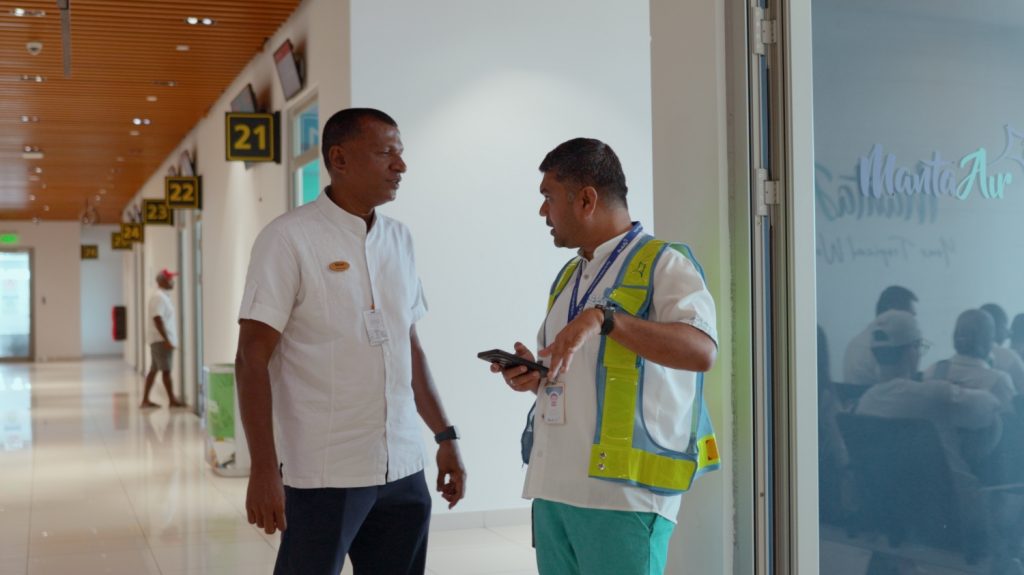
Maintaining that level of involvement depends on the department as a whole. When asked about consistency, Mihad returns to his colleagues and their ability to handle situations at the airport.
“This standard cannot be maintained only by me,” he says.
He credits the team’s approach with bringing the department to its present level. His emphasis on shared responsibility also explains why developing colleagues forms part of his work as a manager. The airport needs staff who can act when a guest requires help, including when their manager is occupied elsewhere.
Mihad combines training with opportunities for team members to work independently. He describes giving colleagues responsibility for “handling the guest on their own”, allowing them to put their training into practice. For an operation with limited access to support from other resort departments, that confidence and judgement matter during the working day.
His assessment of the wider airport experience includes room for improvement. Asked where resorts and airport partners could make progress, he points to CIP service. He says the amount being paid has increased considerably compared with before and believes the service could improve. His comments reflect the airport manager’s reliance on arrangements beyond his own department, where the performance of partners also affects the guest’s experience.
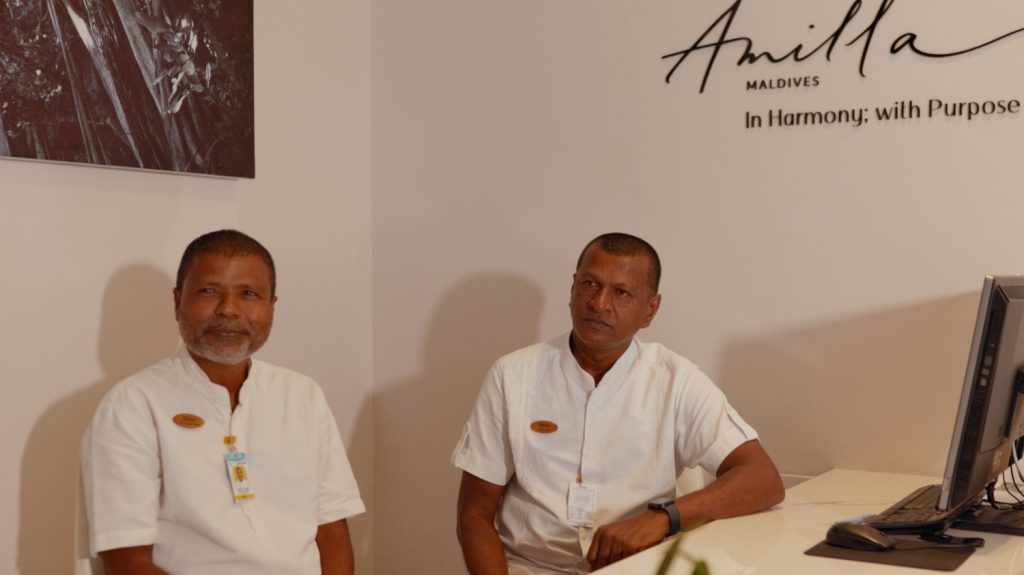
Following the 2026 award, Mihad has set himself another goal.
“Hopefully I would like to get the manager of the year award for the coming year,” he says. “That’s my target.”
He closes by thanking Amilla’s management, particularly the marketing and front office teams, and the airport colleagues who helped him achieve this year’s recognition. Throughout the interview, his ambitions remain connected to the people alongside him and the guests in their care.
For those guests, he describes a point of departure that comes after the resort farewell: “We will be with the guests until it is confirmed that they have got the boarding pass and they are ready to fly to their home country.”