

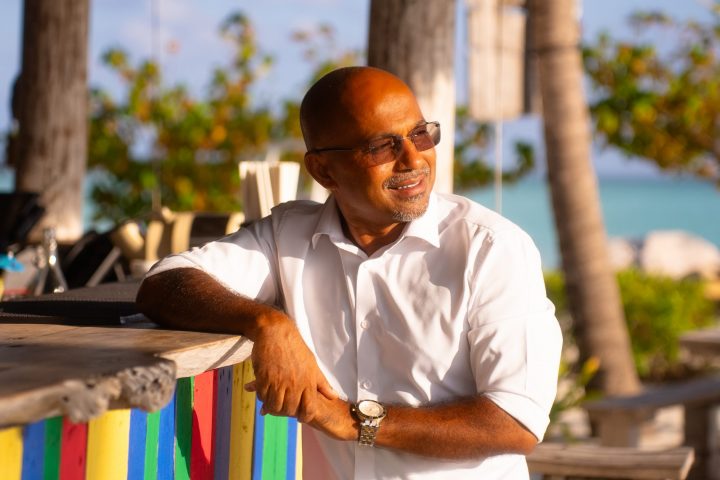
Abdulla Fathhey: Making a big island feel effortless at Villa Park
By Maaish Mohamed and Mariyam Saliya Mohamed
On an island with the scale and recognisability of Sun Island, change is never simply cosmetic. The renaming of a Maldivian mainstay to Villa Park is a high-visibility move, but for Abdulla Fathhey, General Manager of Villa Park, the point is not novelty. It is clarity.
Villa Resorts has a long memory in Maldivian tourism, and Fathhey is part of it. In his telling, Villa Nautica, formerly Paradise Island, “set the benchmark for water villas and became a trendsetter”, while Sun Island was built to combine “mass-market appeal together with luxury service”, proving that large, far-from-Malé islands could still deliver dependable logistics and guest comfort. That history matters, he says, because the new chapter is designed to protect the “soul of the place” while making the experience easier to live with day-to-day.
What Villa Park is trying to solve is familiar to anyone who has managed or stayed at a large resort: breadth can become friction. The bigger the island, the easier it is for choice to turn into decision fatigue, for a wide programme to feel like a to-do list, and for a guest to spend too much time figuring out what happens where. The rebrand, Fathhey explains, is meant to keep the abundance but remove the strain. “Practically, that means simplifying choices, aligning experiences with how guests move around the island, and removing small pain points that add up over a stay,” he says. “The goal is for a big resort to feel effortless.”
A new rhythm, not just a new name
Ask Fathhey what is tangibly different beyond signage, and he points to a concept Villa Park calls the “Lagoon Pleasureground”. In simple terms, it is an organising idea that maps the island to a natural rhythm: energy and calm. “It splits the island day into two natural modes of pace and calm, so guests find what they want without effort,” he says.
It is a deceptively operational idea. Resorts often talk about lifestyle and mood, but Villa Park is applying it as a planning tool for wayfinding, programming, and the positioning of experiences across the island. The ambition is to deliver what Fathhey calls “big-island variety without big-island friction”, supported by “simple wayfinding”, “high-energy water and dive options in South Ari”, and “quieter pockets that let the island breathe”.
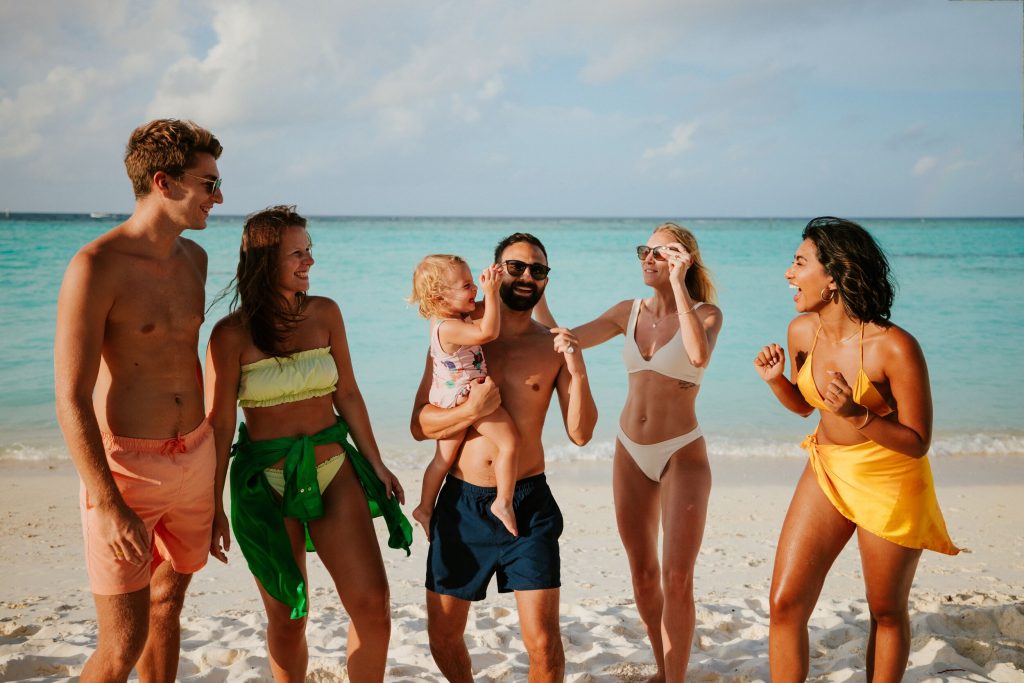
To make that variety feel intuitive for different travellers, Villa Park has also grouped its guest needs into five audience profiles it refers to as its “Fun Fanatics”. The language is playful, but the intent is precise: to design a programme that does not assume one universal guest. Families and couples do not want the same tempo, and groups travelling together often need options that allow people to split up and regroup without the island feeling confusing.
“Scale still means possibility at Villa Park, but the point now is intent,” Fathhey says. If the previous era was about providing everything, this one is about making those choices legible, and ensuring a guest can move from activity to quiet in a way that feels natural rather than engineered.
Signatures that connect guests to place
Villa Park’s renewed identity is also being built through a set of “signatures”, Fathhey says, that are designed to connect guests to “place and purpose”. That includes Green Finger, a tree-adoption and guided planting initiative, and ongoing coral work that brings the reef story closer to guests.
The focus on the tangible is deliberate. Villa Park is not trying to persuade guests with abstract claims. “At the heart of Villa Resorts is a simple idea: people and place living in harmony,” he says. “We want to make life easier by removing friction, not by adding more promises.” In his view, the modern traveller is surrounded by noise. In that context, the resort’s value proposition is relief: a sense that someone has already thought through the week so you do not have to. “In a world that feels crowded and stressful, Villa Park should feel like relief,” he says.
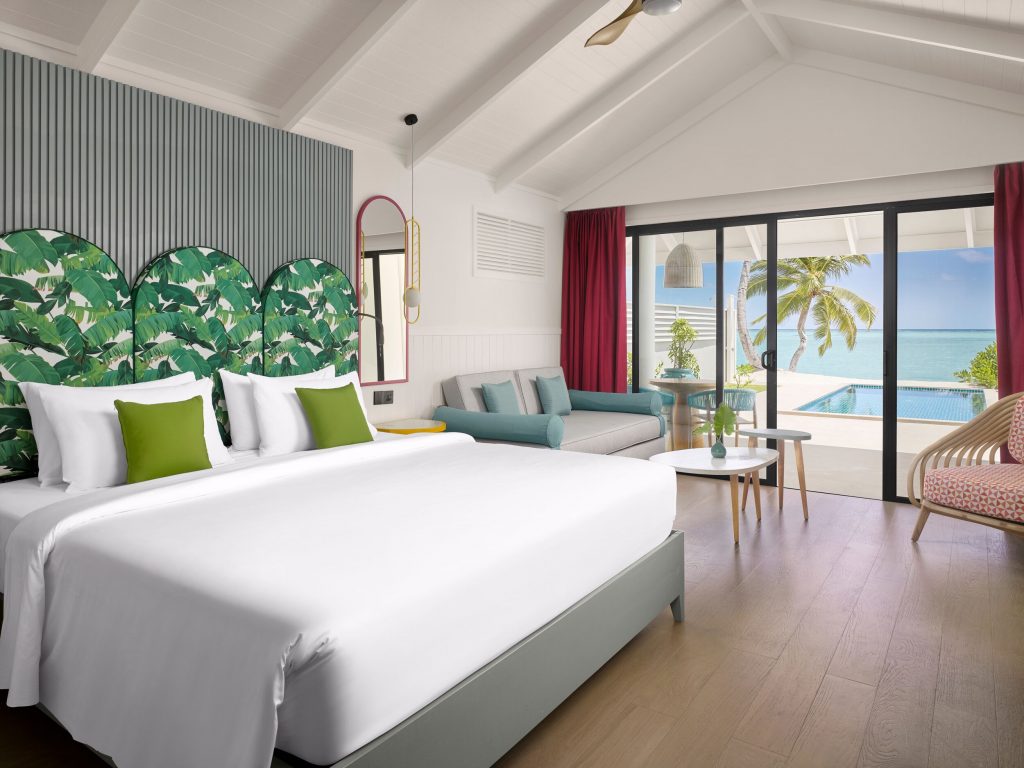
Accommodation is part of that equation. Villa Park retains the breadth of options that made Sun Island popular, while sharpening how those options relate to the island’s “pace” and “calm” zones. Fathhey points to the resort’s range across beach and overwater, including what he describes as “the widest varieties of beach pool villas in the Maldives”, giving travellers and trade partners room to match privacy, outlook, and proximity to activity areas.
The hidden work of a rebrand
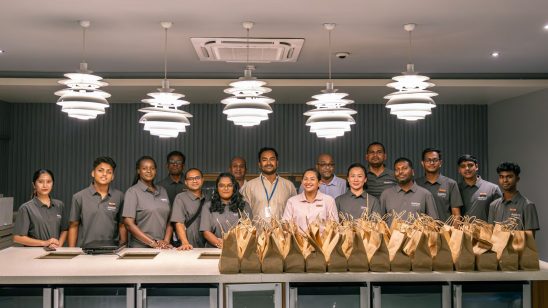
A rebrand at this scale, however, is not experienced only through guest-facing concepts. It lives in construction phasing, training, internal communications, and in how a team behaves when the resort is full and the pressure is on. Fathhey describes the transition as “a monumental task and a rewarding journey”, but he is clear about the main challenge: people. “The first and biggest challenge was mindset,” he says, describing a team with deep culture that needed time and care to align around a new idea.
There were also practical constraints. Renovations had to be sequenced “to brand guidelines while honoring future bookings”, and the operation needed “flawless daily communication” to improve rooms without disrupting the stay. Then there is the complexity of a large resort programme: “With so many services and activities, we set out to design different, better, and more purposeful experiences for our five target audiences,” he says.
The aim, in other words, was not just to relaunch a name. It was to re-engineer how the island works, and to do it while guests continued to arrive.
Winning over the loyalists
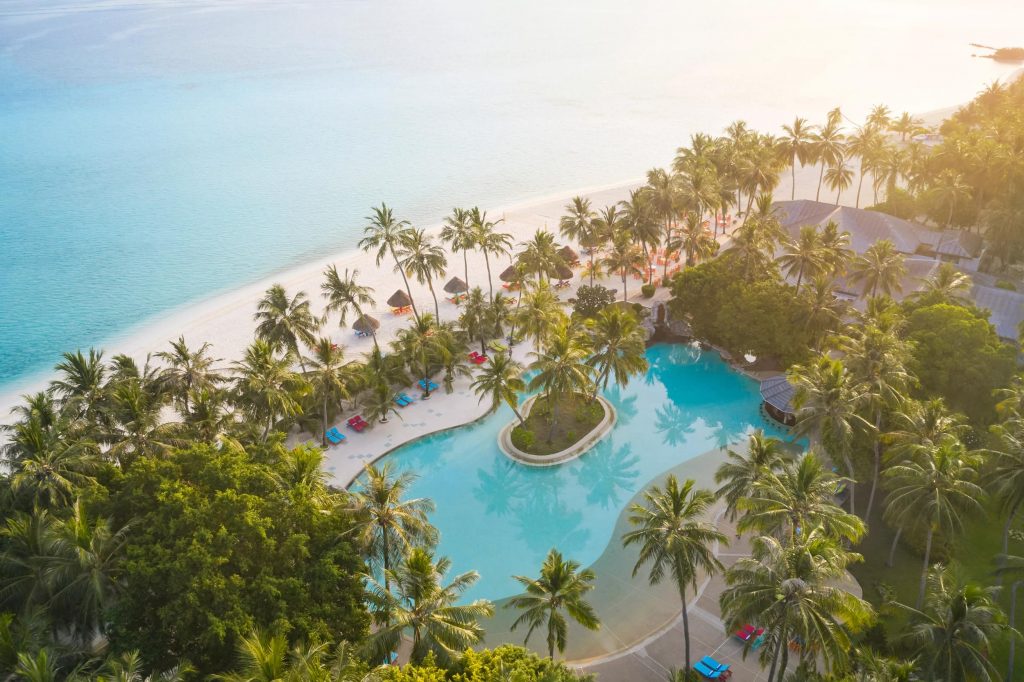
For any legacy property, the hardest audience can be repeat guests, particularly those who return precisely because they do not want the unfamiliar. Fathhey says the initial response from long-time Sun Island guests was “caution”. They valued the familiar, “from the island’s lush vegetation and wide lagoon to the beaches, food and service they trusted”.
What changed their minds was not marketing. It was lived experience. “After staying under the Villa Park identity, that caution eased,” he says. “Guests found the changes easier to live with than to imagine.” They noticed “a smoother flow through the island and fewer small pain points across the day”, and once that became apparent, the evolution made sense. For new markets, the message is similarly grounded: “We invite people to discover the island in person, because the difference becomes clearest when you feel it rather than read about it.”
A career built in the operation
Fathhey’s credibility in leading a change programme of this scale is rooted in a career built through the engine room of resort life. He began at Royal Island during construction, learning, as he puts it, “lessons you do not find in textbooks”. He moved through Housekeeping and Front Office, seeing “how backstage decisions shape guest moments”. After time away to gain experience and pursue studies, he returned to lead room divisions at Paradise Island, then moved up to Resort Manager and Deputy General Manager.
When asked about milestones, he resists the temptation to point at titles. He recalls a portfolio of moments that tested leadership in the most literal sense, including “the tsunami response”, “a fire incident at Paradise Island”, a state visit, complex operational periods, and leading through COVID-19. “Titles are not the milestone; the successes you create with your team are,” he says.
His description of the Villa Resorts culture is consistent with that emphasis on people. He credits founder Hon. Qasim Ibrahim with building a culture that feels “like family” but holds firm to high standards, where humility and contribution are reflected in daily decisions rather than slogans.
Leading at island scale
At Villa Park, where the operation is large and the guest mix diverse, Fathhey’s leadership philosophy is straightforward and operationally minded. “I hire for attitude first and build everything else around it,” he says. Skills can be taught, but the mindset someone brings to work determines consistency, especially when the resort is busy and there is no margin for delays.
He describes a “deliberately hands-on” style, spending time in the day-to-day operation “because that is where pace, pressure, and guest reality meet”. That visibility serves two ends: meeting performance expectations and safeguarding staff well-being. He is equally clear about the service imperative: “Hospitality demands that guest expectations are met quickly and with as little inconvenience as possible.”
The methods are practical: clear delegation, close oversight, and fast resolution when something goes wrong. He also rejects the notion of a single leadership template. “Effective leadership is rarely a single approach. It is a blend that adapts to context,” he says.
In talent retention, he frames the problem in terms of everyday behaviour, not annual appraisals. “We keep people by helping them grow and by making recognition part of everyday leadership, not a quarterly ceremony,” he says. Villa Park’s approach includes training and coaching, paired with a recognition system designed for real-time “kudos” and peer-to-peer appreciation, supported by simple mobile tools and flexible rewards. The objective is cultural: when people see a path forward and feel appreciated, performance and loyalty reinforce each other.
Embedding a new brand vision across an entire resort requires structure. Fathhey describes a process anchored in communication and action: onboarding, internal communications, pledge ceremonies, and visual storytelling that translates values into daily behaviours. Training goes beyond SOPs through role-play and real scenarios, while leaders model the standard and recognise the right behaviours. “Frontline colleagues are empowered to act in the moment,” he says, emphasising ownership at the point of service.
Lower footprint, richer stay
Fathhey describes Villa Park’s direction as “simple to describe and deliberate to deliver”: “keep lowering our footprint while raising the quality of the stay, season by season.” He points to a major solar project already in place and plans to expand it to reduce diesel reliance and make operations “cleaner and quieter” over time. The intended result is not just an environmental metric, but a felt benefit, a calmer island experience.
On land, the focus is renewal: annual tree planting and replacing ageing coconut trees with varieties meant to support the island for future generations. Green Finger gives guests a role, allowing them to adopt a tree, follow its growth, and “leave a living mark on the island”. In the water, Villa Park has completed phase one of its coral propagation programme and plans to begin phase two next year, alongside hands-on coral planting and learning sessions with the marine team.
Development is also continuing on the product side, with an additional “new addition to the family during the high season” and a planned Indian restaurant to broaden dining options. The line that connects it all, he says, is “Lighter footprint. Richer experiences.”
Advice for the next generation
For young Maldivians looking towards hospitality leadership, Fathhey’s guidance is rooted in the path he took: learn across departments, combine education with hands-on work, and use internships to understand how an operation fits together. He urges ambition that shows up as action: “Be proactive about taking on extra responsibility, because progress often comes to those who raise their hands.”
He also emphasises commercial fluency. “Learn the language of the business as well as the language of service,” he says, pointing to revenue management and the need to stay open to new technologies that reshape planning and communication. And then, the core: character. “Stay humble, be disciplined in the way you prepare for each day, and build a network by treating people well,” he says.
That humility is a recurring theme in how he frames leadership itself. “Stay humble, give credit freely, and celebrate the wins of others,” he says, adding that “patience matters as much as pace”. In an industry that rewards polish and presentation, Fathhey’s outlook is quietly operational: respect the craft, respect the people, and keep reducing friction for both guests and teams.
In many ways, that is also the story of Villa Park’s rebrand as he tells it. It is not a break from the past, but a refinement of what made the island iconic, guided by an insistence that abundance should feel effortless. “We want to make life easier by removing friction,” he says. On an island of this scale, that may be the most ambitious promise of all.