

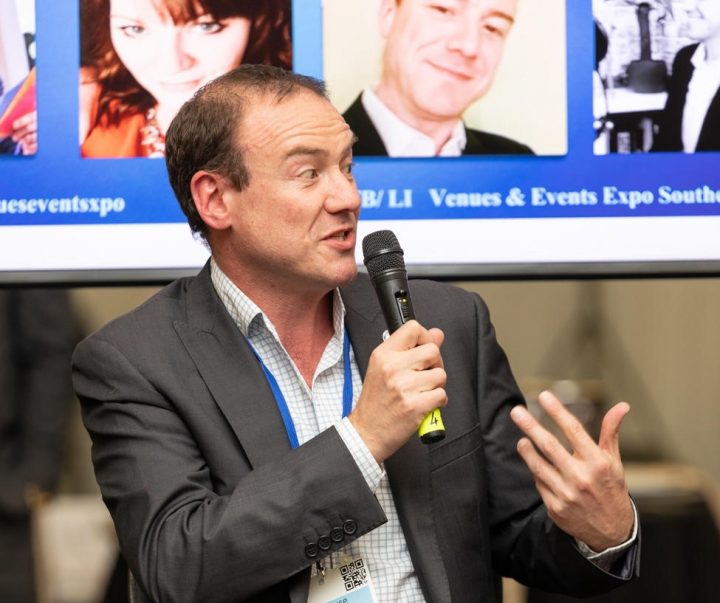
From ship to shore: Neil Shorthouse on Maldives, leadership, and training that changes behaviour
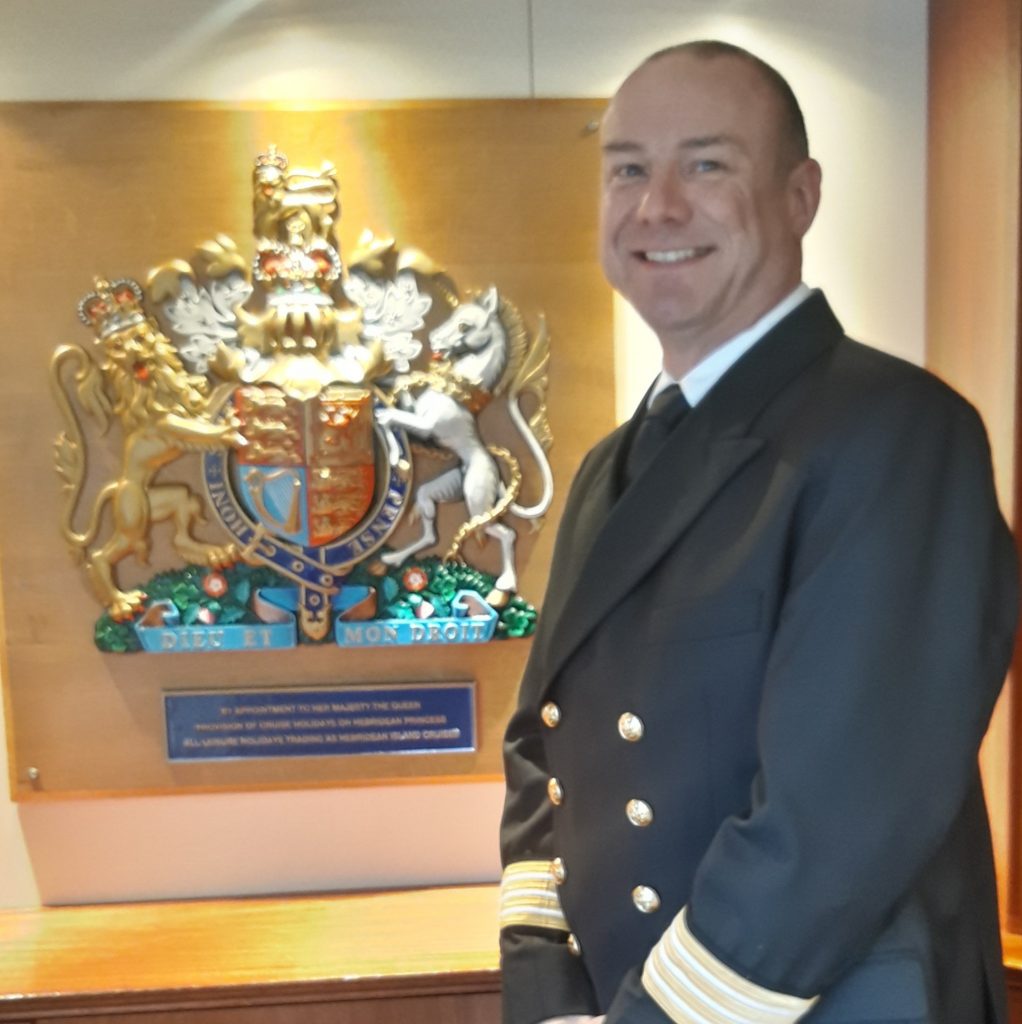
Neil Shorthouse arrived in the Maldives on 26 January 2008 with a career built in one of hospitality’s most demanding “remote” environments: cruise ships. For him, the comparison between shipboard life and island operations is not a metaphor — it is operational reality. “In many ways working at sea and on a remote island, are like for like, when you look at operations from engineering, supplies / provisioning, remote locations, as well as working with multi-national crew,” he says, before adding the detail that still makes him smile: “Well, one difference is that an island doesn’t move whilst a ship does!”
That perspective — practical, people-focused, and shaped by systems — has defined Shorthouse’s Maldives journey. Nearly two decades on from his first landing at what is now Velana International Airport (VIA), he continues to work across hospitality leadership, training, and advisory roles, while also serving on the judging panel of Hotelier Maldives Awards 2025.
A transferable skill set — and a fast transition into Maldivian resort life
Shorthouse’s career at sea began in 1998 as part of the launch crew for Disney Cruise Line, onboard Disney Magic. “After a number of years, with other luxury brands, I wanted to see if I could take what I had learnt onboard… and use this knowledge and experience in a land base role,” he explains. “The transition from working on a ship to working in the Maldives, was an easy one.”
His first Maldives role placed him immediately into the mechanics of a multi-resort organisation, as Cluster Director of HR at Anantara Maldives. The move made sense: ships and islands both demand resilient processes, fast problem-solving, and leaders who can harmonise teams from dozens of nationalities.
But the Maldives in 2008 also demanded something else — agility under legal and regulatory change.
The Maldives since 2008: rapid growth, shifting rules, and industry-wide learning
“The evolution of the industry in the Maldives, since 2008 has grown tremendously,” Shorthouse says. He remembers arriving “at a time of change within the government, and also that of an evolving employment law that would change overnight with little or no warning.”
For resort HR leaders, those developments were felt immediately. “As a resort, we worked closely with our Maldivian workforce, lawyers, resort management and owners to ensure that we followed the new employment act yet would also go further to ensure compliance,” he says.
The learning curve was steep — and sometimes public. “This wasn’t without its challenges, from being part of the initial group of resorts attending ‘employment tribunals’ to court hearings in ‘Dhivehi’ we got through,” he recalls.
Alongside compliance, Shorthouse highlights the industry’s collaborative growth: partnership between resorts, knowledge-sharing, and the gradual normalisation of practices that support both Maldivian and expatriate teams. He also points to the expansion of the accommodation landscape beyond resorts. “A lot has changed from the number of resorts to having little or no guest houses to it becoming a major part of the industry,” he notes.
Through COVID and the recovery period, he remained engaged with stakeholders. He references work “closely with local stakeholders whether the Ministry of Tourism in COVID,” and even the informal routines that build professional trust over time — “regular meetings with TEAM in the early days forming a working relationship (of course over a Lavazza milk or two).”
If his assessment of the Maldives can be reduced to one line, it is this: “The Maldives, is still evolving, growing, learning, and adapting even if a little reluctant at times.”
Training that works: fit the audience, fit the workplace, make it stick
Shorthouse’s current work includes advisory support, leadership courses and training programmes, and his views on learning are bluntly practical. He warns against assuming that structure alone guarantees effectiveness.
“Ultimately it is a balance on how the training is delivered,” he says, stressing that participants bring different skill levels, confidence, and learning speeds. “Having a structured programme doesn’t always necessarily work as you have to take into consideration the working environment the level of English and the level of understanding.”
He is equally direct about complexity. “It’s also important to ensure whatever programmes are delivered, that you are not delivering something that is too complex of nature for them to understand. That it actually fits the audience and resort’s own culture and DNA.”
And then comes a line that many trainers avoid because it sounds too simple — but is rarely implemented consistently in corporate environments: “Ultimately whatever training is done should always have an element of fun as this is where I find individuals learn more.”
For Shorthouse, training improves when it invites lived experience into the room. “Bringing into play their own personal experiences both within the resort and also within their home countries… can enhance the learning experience for all participants,” he says.
He also cautions the industry on language that becomes a catch-all. “We have to be careful when we talk about service excellence as we need to remember… every resort is different in how it operates,” he says, recognising that service can range from unintrusive to highly personal.
The more difficult issue, however, is not content — it is leadership readiness. “The challenge also comes when you are advising… resorts that not all leadership teams are ready or willing for change,” Shorthouse says, noting that resistance at the top filters directly into team behaviour and outcomes.
To help teams understand the psychology of change, he uses a well-known tool: “When focusing on change, I use a programme called ‘who moved my cheese’ which helps people understand that change does need to happen… everyone is slightly different on how they approach the subject.”
Then comes what he considers the defining difference between training that entertains and training that transforms: follow-through. “The follow up and check-ins with individuals following training is as important as the training itself,” he says. “When I deliver my leadership programme there is always a post programme evaluation three months of follow-up broken down into two six-week segments.”
He also continues to contribute to hospitality education directly. “I have also been fortunate enough to guest lecture at Clique College, and it is always a pleasure to meet individuals, who have a passion for learning but more importantly for the hospitality industry.”

International brands and Maldivian culture: standards are not the same as identity
Asked how resorts can balance international hospitality standards with local culture, Shorthouse’s answer begins with a reminder about position and privilege. “It’s so important for international hospitality brands coming to the Maldives, to remember that they are being allowed to develop their brands in such a truly remarkable location,” he says.
That comes with a responsibility. “They must ensure that the local culture and history are in balance, that they are also an invited ‘guest’ and should always respect this,” he continues.
For him, culture is not a brochure line. “Any brand can say that they have a culture however finding a true cultural DNA comes from its own employers on how they interact with each other, treat each other through to how this is delivered to their guests,” he says, adding a leadership warning in parentheses that reads like a checklist: “It must be led from the very top, if the top level does not follow the culture, then it is harder for a company to show this as a true reflection.”
He also acknowledges the practical expression of culture in resort operations — “traditional welcomes, Bodu Beru bands, local artisans” — and even the sensitivity required around guest experiences during Ramadan.
Some brands, he says, will struggle to express local context because “it is not within their own DNA,” but that does not remove the obligation to respect place. “It is important to respect that they are in the Maldives and not some other city location,” he says.
He believes this is one reason travellers continue to seek guesthouse experiences. “This is why, you will find more guests wanting that local experience and visiting smaller guests houses in those far to reach places… for a true Maldivian experience or that Robinson Crusoe Island get-away.”
Developing Maldivian leaders: mentorship, exposure, and the confidence to grow
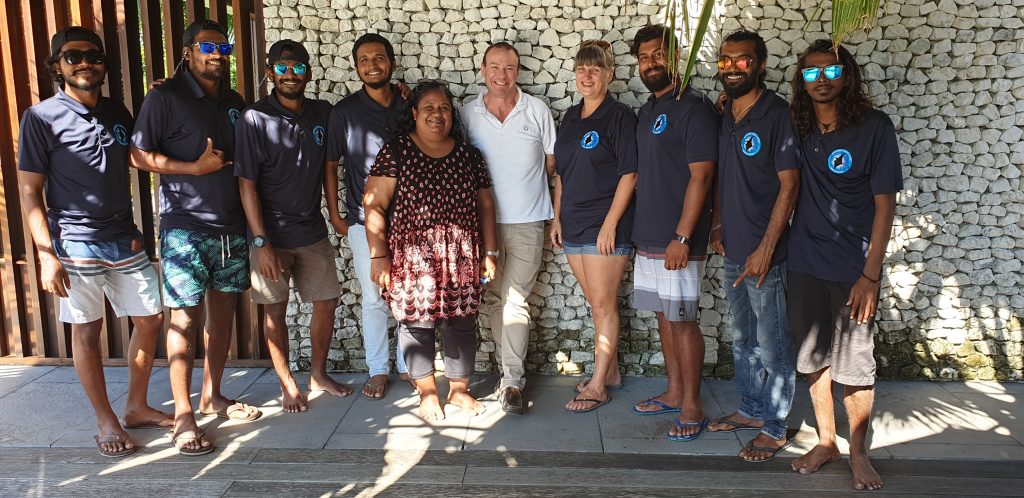
When the conversation turns to Maldivian professionals and global competitiveness, Shorthouse becomes personal — and firm. “I am a great believer in allowing your team to grow and develop, and learn from their mistakes, be able to ask questions freely. Yet always, be there to guide them back onto the right course.”
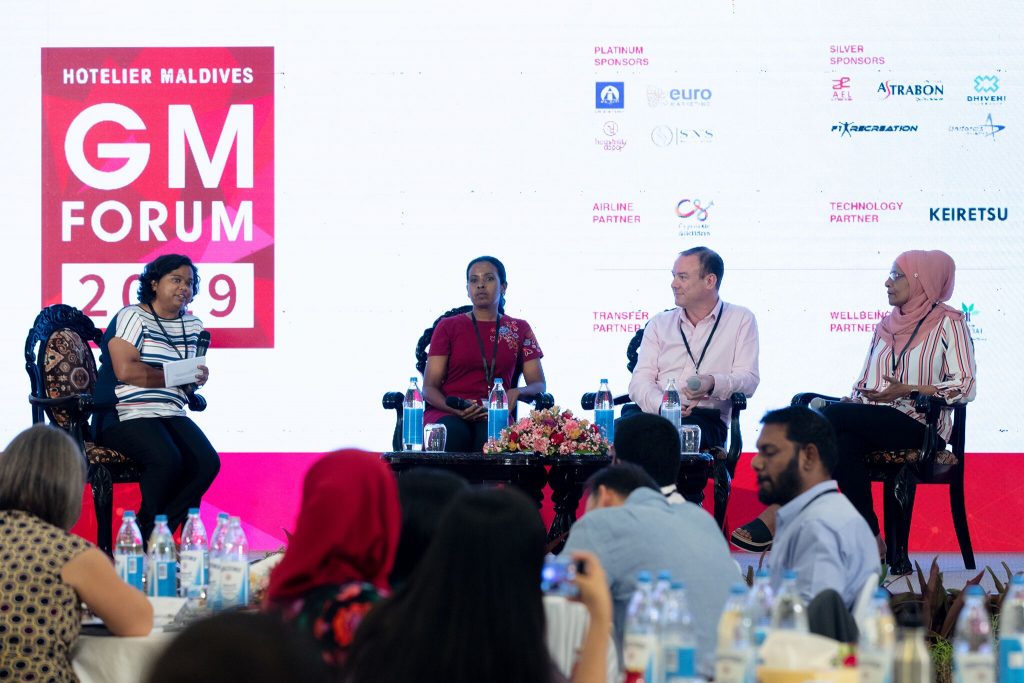
He is concerned by a persistent industry gap. “What struck, me then and still does to this day, is that some resorts still do not have Maldivians in key positions?” he says, referencing his experience speaking at GM Forum 2019.
For him, the fix is not complicated, but it requires sustained intent: “This should not be the case, just like anyone else the majority need that mentor figure to show them how it should be done, allow them to shine and prove they can deliver.”
He also cautions that leadership misalignment can work in both directions. “You end up with some expatriates, who lack an understanding of how the Maldivian culture works and plays such an integral part of any day-to-day operation.”
Why recognition matters — and what he looked for as an awards judge
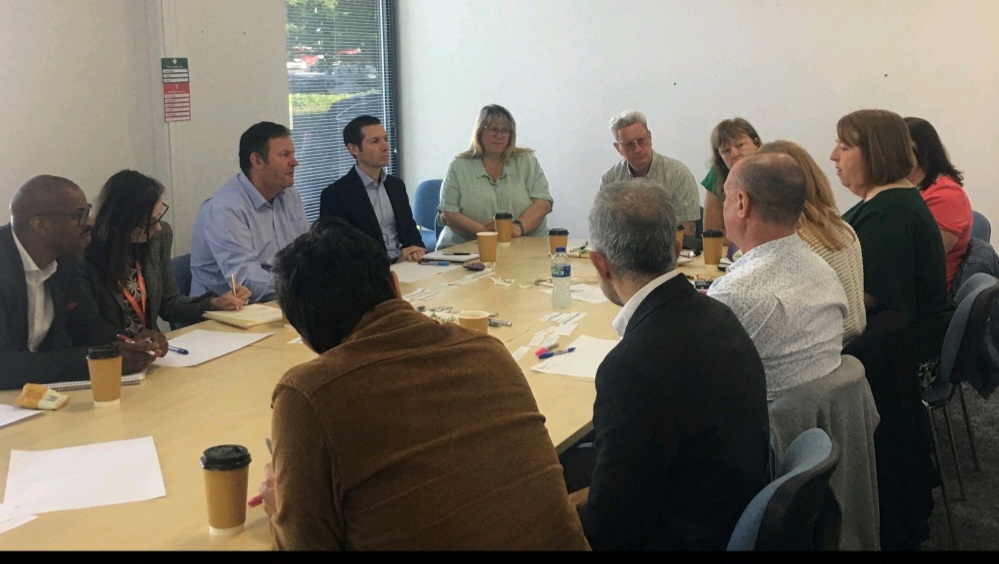
Shorthouse is an advocate of recognition systems that operate beyond annual ceremonies. “Recognition should be part of everyday within our industry,” he says, whether through peer-to-peer programmes or employee-of-the-month schemes that reflect real contribution rather than internal politics.
He is clear about the cost of empty messaging. “Saying one thing and not delivering or not doing, does nothing for morale and ultimately impacts the bottom line of any company,” he says. “Empowerment brings results, so long as it is explained and managed effectively.”
His motivation for joining Hotelier Maldives Awards 2025 sits within a wider context of judging and industry recognition. “Similar to the HHH Awards, the Hotelier Maldives Awards, recognise the great talent, and amazing work that individuals achieve here in the Maldives,” he says, adding that it creates space to acknowledge people who “may not always be or have had the opportunity in the past to be nominated, or to share their success.”
When reviewing nominations, he looked for more than performance against tasks. “I am looking for an individual that has done more than what their job description describes, someone that has gone above and beyond, takes initiative, ownership, and is recognised by their peers, colleagues or guests,” he says.
He also makes a point that nomination writers should remember: judges are not always looking for volume. “Sometimes, a nomination does not always have to complete the max number of words, in some cases it can be summed up in a couple of paragraphs that tell a story about this individual.”
What did the nominations reveal to him? “That the Maldives has such a great range of talent and that this is not always shared,” Shorthouse says. “Sometimes, it is important to share these amazing individuals with others.”
His advice to future nominees is to treat the process as a leadership act. “Taking the time to complete a nominee form, shows already the importance of the HMA to the resort,” he says. Then: “Think about the questions and put a response together that will make the judges stop and truly think about what has been achieved.”
And, in a line that reflects both his training style and his preference for memorable framing, he suggests a creative technique: “If this person / team was a superhero character what would they be and WHY.”
In the Maldives — an industry still “evolving, growing, learning, and adapting” — Shorthouse’s message is not about quick wins. It is about the habits that make excellence repeatable: training that fits the audience, leaders who are ready for change, cultures that are lived from the top, and recognition that is earned daily, not only celebrated annually.