


Jean-Louis Ripoche on Dusit’s fresh direction with dusitD2 Feydhoo Maldives
On July 27, 2025, amidst the turquoise expanse of the Baa Atoll, Dusit Hotels & Resorts marked a significant milestone with the soft opening of its second property in the Maldives, dusitD2 Feydhoo Maldives. The launch represents not just an expansion of the Thai hospitality group’s footprint but the introduction of its vibrant, lifestyle-focused ‘d2’ brand to the archipelago. This move signals a deliberate pivot, one designed to capture the attention of a new generation of travellers shaping the future of global tourism.
At the helm of this new chapter is Jean-Louis Ripoche, Area General Manager for Maldives, who oversees both the established Dusit Thani Maldives and the newly unveiled resort. In an exclusive interview with Hotelier Maldives on opening day, Ripoche detailed the strategy behind the new property, the challenges overcome during its seven-year development, and his perspective on the evolving Maldivian market. His insights reveal a project built on purpose, integrating local heritage with a forward-thinking approach to the guest experience.
A Strategic Evolution
The opening of dusitD2 Feydhoo Maldives is a key component of a broader, assertive growth strategy for its parent company. Dusit Hotels & Resorts is currently one of the fastest-growing hotel groups in the industry, and this new resort is its 58th property worldwide. For Ripoche, the introduction of the ‘d2’ brand is a calculated move to diversify the group’s portfolio beyond its traditional luxury origins.
“The D2 brand represents the evolution of Dusit — moving from our more traditional, luxury heritage into something more lifestyle-focused,” Ripoche explains. “It’s a newer, more vibrant vision of hospitality, and dusitD2 Maldives perfectly aligns with that growth trajectory.”
This evolution is a direct response to observable shifts in the market. The resort is positioned to meet the demands of a traveller who seeks more than serene isolation. It is a destination engineered for engagement, activity, and social connection, while retaining the core tenets of quality service that define the Dusit name.
A Foundation of Heritage and Community
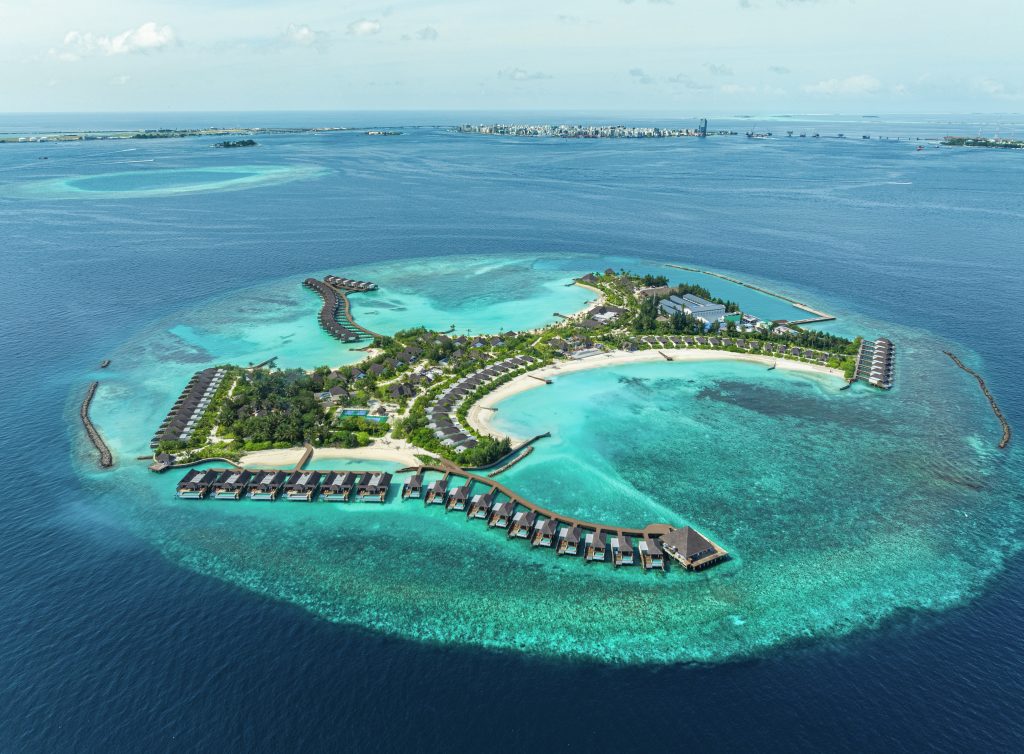
What sets dusitD2 Feydhoo Maldives apart within the group’s regional and global portfolio is its deep connection to its location. The resort is developed on what was formerly known as Picnic Island, a site that holds a place in the memory of many Maldivians. Rather than erasing this history, the development has sought to honour it.
“This resort stands out not just globally, but regionally too. It’s built on the former Picnic Island — a location with real heritage for Maldivians,” says Ripoche. “We’ve preserved elements of its legacy, such as the Cave diving spot.”
This commitment extends beyond geography and into the cultural fabric of the guest experience. A central pillar of the resort’s operational philosophy is the integration of local talent, particularly in its entertainment programme. This is not a token gesture but a core feature of the resort’s identity.
“Every two days, we’ll feature Maldivian bands, DJs, and artists — all local,” Ripoche states. “That community connection makes this property unique within our portfolio and essential in reflecting the true spirit of the Maldives.” This focus provides guests with an authentic connection to the destination and creates a sustainable platform for local artists, differentiating the resort in a competitive market.
Catering to the Modern Traveller
The Maldives is no longer exclusively the domain of honeymooners. According to Ripoche, the profile of the luxury traveller visiting the nation is broadening, a trend that dusitD2 is designed to accommodate.
“Tourism is changing,” he observes. “The Maldives, once seen purely as a luxury honeymoon destination, is now attracting a broader audience — including younger travelers and families. Today’s guests don’t just want to lie on a beach. They want entertainment, activities, and flexibility.”
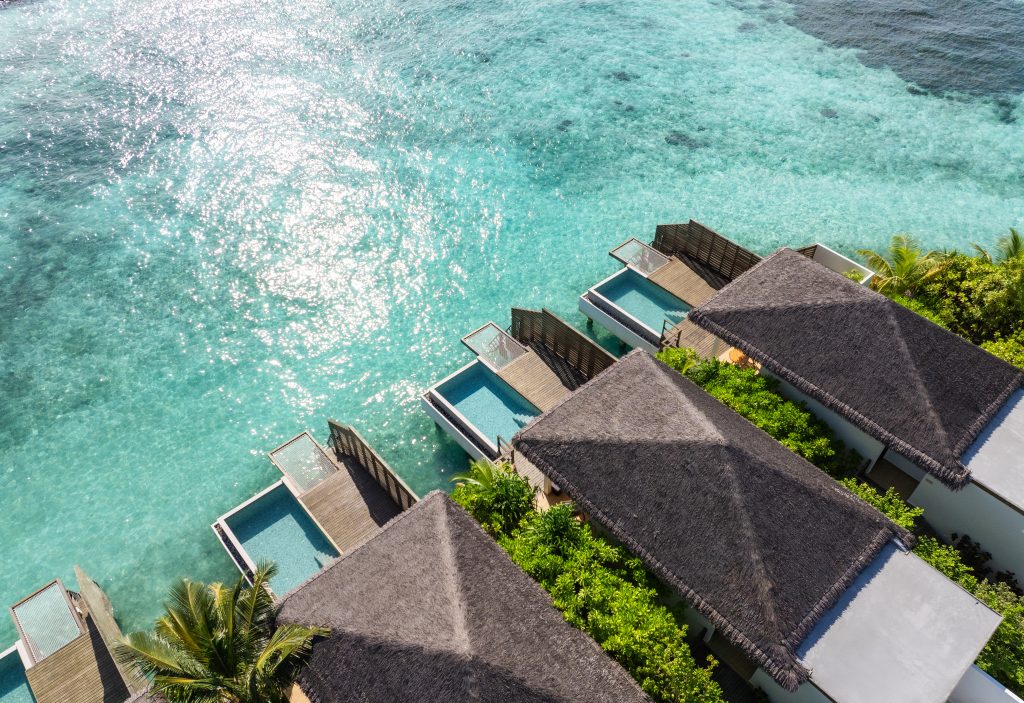
This is the need that dusitD2 aims to fill. The resort offers an all-inclusive model designed for ease and minimal friction, supported by technology that empowers guests to manage their own stay. “Guests can use apps to manage their stay, avoiding the need for constant face-to-face interaction,” Ripoche adds. “It’s hospitality for a new generation — relaxed, connected, and highly personalised.”
This approach acknowledges that modern luxury is often defined by choice and control. By providing a vibrant atmosphere with teen and kids clubs, diverse dining, and seamless digital integration, the resort caters to a demographic that values experiences and convenience in equal measure.
A Journey of Adaptation and Investment
The path to opening dusitD2 Feydhoo Maldives was not without significant obstacles. The project, which commenced over seven years ago, faced a major disruption with the global pandemic. The pause in construction provided an opportunity—and a necessity—to re-evaluate the entire concept.
“One of the biggest challenges was the pandemic,” Ripoche recounts. “Construction paused, and what was originally planned no longer matched today’s expectations. When we came on board about two years ago, we had to reimagine many elements — including the F&B concepts.”
This reimagining was substantial. For example, the resort’s signature Thai restaurant, Soi, which features live cooking in a street-food-inspired setting, was not part of the initial blueprint. Infrastructure also required a complete rethink. “Some earlier designs didn’t even account for Maldivian rainfall,” Ripoche notes, highlighting the practical challenges of adapting an older plan to current operational standards. He credits the owner for seeing the project through its necessary evolution. “It was a challenge for the owner, but to his credit, he invested in reworking and upgrading the vision. Today, we’re proud of the result.”
The Future of the Maldivian Market
With new resorts continually entering the market, questions about saturation and a potential shift towards mass tourism are common in the industry. Ripoche, however, offers a confident and reasoned perspective on the Maldives’ future trajectory.
“Some say the Maldives is shifting toward mass tourism — but I don’t believe that will happen the way it did in places like Phuket,” he asserts. “Even if we hit 7 million visitors a year, it will be spread out across many islands. The structure of the country simply doesn’t allow overcrowding. The Maldives will always maintain that sense of exclusivity and tranquility.”
He acknowledges that the market is undeniably evolving. “The traveler demographic is younger, and families are now coming more frequently, thanks to better infrastructure, medical access, and family-friendly amenities.” For Ripoche, this signifies growth and diversification, not a descent into a mass market model. The one-island, one-resort concept remains a fundamental structural advantage that preserves the destination’s unique appeal.
Innovation in Value and Talent
Beyond its lifestyle positioning, dusitD2 Feydhoo Maldives introduces a notable innovation to the all-inclusive concept. “Every guest receives a $20 credit per person, per day,” Ripoche reveals. “This can be used on things usually not included in all-inclusive packages — like spa treatments or motorised water sports. Guests can save up their credits across several days and use them however they like — to rent a jet ski, book a dive, enjoy the spa, or even shop.”
This credit system is designed to provide tangible, flexible value. “We’ve designed this with purpose — to add real value, not just convenience,” he emphasises. It is a strategic tool to enhance guest satisfaction and perceived value, directly addressing a common limitation of standard all-inclusive packages.
This commitment to adding value is mirrored in the group’s investment in human resources. Dusit’s growth in the Maldives is intertwined with a policy of nurturing local talent for leadership positions. “We’re proud to say our leadership team includes many Maldivians in key roles,” Ripoche says. “For example, our Executive Chef is Maldivian — the first in the country at this level for Dusit. Hashwan, our Executive Manager, is also Maldivian.”
This is a long-term vision. “We believe in nurturing local talent and creating a truly local experience, and that commitment will continue across future developments in the Maldives and Indian Ocean region,” he confirms.
Ultimately, the opening of dusitD2 Feydhoo Maldives is a statement of intent. It reflects a deep understanding of a changing market and a commitment to innovation, community, and people. As Ripoche concludes, success in today’s hospitality landscape is about more than just providing a service. “That’s how you succeed today — by making guests feel like they’ve made the right choice.”