

Rizan Afeef: Building ‘culture architecture’ from Maldives to the Americas
When Rizan Afeef began his career in the early 2000s, he was working in commercial roles and learning the mechanics of operations and revenue. But the turning point came when he found himself “more curious about people than processes”.
“I was fascinated by what made teams perform under pressure and how leadership energy influenced morale,” he says.
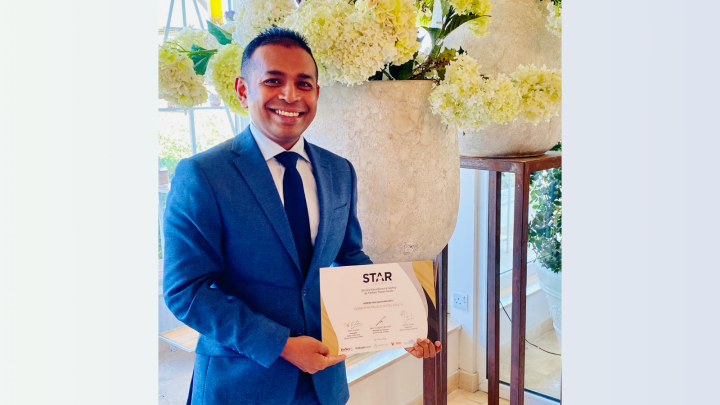
That curiosity became a career, and later a leadership mission. Today, Rizan serves as Director, Talent and Culture, Americas at Rosewood Hotel Group, based in Dallas, Texas, supporting Talent and Culture operations across the region.
From commercial roles to Human Resources leadership
Rizan’s entry into hospitality Human Resources came during a period of major transition in the Maldives.
“When I transitioned into Human Resources during the major post-tsunami reopening phase in 2005, while working with Four Seasons at Kuda Huraa in the Maldives, I witnessed something truly transformative. We were not simply hiring employees, we were restoring confidence, rebuilding capability, and reigniting belief,” he recalls. “That was the moment I realised HR could be far more than a function. It could be leadership.”
His framing of the profession is direct: “Businesses do not create experiences, people do. And if you influence people positively, you influence everything.”
Career jumps that shaped his trajectory
Looking back, Rizan points to the uncomfortable assignments that forced him to expand beyond a traditional HR playbook.
“My progression was accelerated not by chasing titles, but by consistently embracing discomfort and stepping into moments that stretched me beyond my comfort zone,” he says. “By doing so, I was able to create meaningful impact, not only within the organisation, but in the lives and careers of the people I had the privilege to support and develop.”
Pre-opening and task force assignments, he explains, moved him quickly into areas that many HR professionals only encounter much later: workforce planning, compensation philosophy, employer branding, compliance, and culture design. He describes task-force assignments as a different kind of pressure test, requiring “agility, humility, and rapid trust-building”.
Three decisions, in his view, most accelerated his journey from HR Officer to Director:
- “Saying yes to challenging assignments, even when they felt overwhelming.”
- “Learning the business deeply: finance, operations, guest experience, not just HR.”
- “Building credibility through fairness, consistency, and data-backed decisions.”
His conclusion is a reminder to anyone aiming for leadership in hospitality: “Leadership is earned long before it is given.”
Maldives foundations: “leadership must be visible”
Rizan’s senior HR and training roles in the Maldives included stints at Six Senses Laamu and multiple Anantara properties, among other flagship operations. Those years, he says, shaped the way he leads to this day.
“The Maldives shaped my leadership identity more than any other destination,” he says. “Island hospitality teaches you that leadership must be visible. Resorts are living communities, colleagues share space, culture, celebration, and hardship. Engagement is immediate and tangible.”
He argues that performance and culture are inseparable, particularly in resort environments where service standards are high and teams are diverse.
“Working at flagship properties like Four Seasons, Six Senses Laamu and multiple Anantara resorts taught me that culture is not accidental, it is designed,” he says. “When engagement scores rose, service excellence followed. When leaders were accessible, trust deepened.”
Those lessons, he adds, are still central to his work now, even with a wider corporate remit: “The Maldives taught me that fairness must be seen, not assumed. It taught me that listening is more powerful than directing. And it taught me that people remember how you made them feel long after they forget what you said.”
Global mobility: three adjustments HR leaders must make
Over the years, Rizan has worked across multiple markets including the Maldives, Seychelles, Malaysia, China, Malta, Qatar, the British Virgin Islands and the United States. That global mobility, he says, demands more than technical HR capability.
“Working across highly specialised and geographically diverse regions has reinforced three key adjustments HR leaders must make,” he explains.
First is what he calls legal intelligence. “Labour laws differ drastically. Respecting local legislation builds credibility and safeguards culture.”
Second is cultural sensitivity, grounded in emotional intelligence. “Communication styles vary. In some cultures, feedback is direct and assertive; in others, it is relational and layered. Leaders must have the emotional awareness to read the room, understand unspoken cues, and adapt their approach accordingly, without compromising their values.”
Third is the ability to balance global standards with local relevance. “Brand culture should unify, not override local identity.”
In short, he says, global exposure helps, but mindset keeps you effective: “Global exposure broadens perspective. But humility sustains success.”
Reality of pre-opening HR: “culture architecture”
Rizan has also undertaken international task force and pre-opening assignments, including Rosewood Doha and earlier task force engagements in China. One of the biggest misconceptions, he believes, is that pre-opening HR is primarily about recruitment.
“Pre-opening HR is often misunderstood as being primarily about recruitment. Pre-opening HR is not just recruitment, it is culture architecture,” he says.
His approach starts with foundations that allow an operation to scale without losing coherence:
- clear manning guides and salary philosophy
- structured recruitment and employer positioning
- cultural onboarding and brand immersion
- leadership alignment sessions
- compliance frameworks and payroll infrastructure
“If these foundations are unstable, the operation struggles long-term,” he says. “Pre-opening HR is intense. But it is also deeply purposeful, because you are shaping the DNA of the organisation.”
From HR to Talent and Culture
Rizan’s current role sits under the Talent and Culture umbrella, a shift he sees as more than rebranding.
“Traditional HR focused heavily on policies, processes, and compliance,” he says. “Modern Talent & Culture focuses on experience, engagement, leadership development, and future-readiness.”
“The difference is philosophical. We no longer manage employees. We create environments where people can thrive.”
Across the Americas, he says, the day-to-day priorities are about alignment: ensuring culture, leadership capability, compliance and engagement remain consistent across multiple countries and properties. “Talent & Culture is forward-looking. It anticipates workforce needs rather than reacting to them.”
Advice for young Maldivians aiming to go global
For Maldivians between 20 and 28 who want international exposure, Rizan’s guidance is deliberately practical, focused on building career mobility through capability and credibility.
“Young Maldivians aspiring to go global should focus not only on technical capability, but also on strengthening emotional resilience, empathy, and humility,” he says. “These qualities, combined with communication mastery, digital fluency, cross-functional exposure, professional branding, mentorship, and a solid understanding of global hospitality standards, create a strong foundation for international growth.”
He urges candidates to use the next 24 months with clear intention:
- Communication mastery — spoken and written English
- Digital fluency — Excel, basic analytics, and HR systems exposure
- Cross-functional learning — volunteering beyond your department
- Professional branding — including LinkedIn presence and authentic storytelling
- Intentional mentorship — seeking guidance and feedback consistently
- Understanding labour laws and global hospitality standards
- Exposure to pre-opening or task-force environments
- Developing emotional resilience, empathy, and humility — the ability to navigate change, lead with compassion, and remain grounded while growing
“Global careers are not built overnight. They are built deliberately,” he says. “Preparation creates mobility, and character sustains it.”
Leadership non-negotiables in diverse teams
Rizan’s profile highlights experience in complex multicultural environments and leadership methods anchored in motivation, involvement, and clarity. In practice, he says trust is built through consistency and integrity, not hierarchy.
In diverse teams, his non-negotiables are:
- clarity in communication
- consistency in fairness
- emotional intelligence in conflict
- visible leadership during crisis
- meritocracy over favouritism
- Leading with compassion and humility
“Trust is built when people feel respected and treated equally,” he says. “In multicultural teams, perception matters just as much as policy. Leaders must be culturally intelligent, but unwavering in integrity.”
“Leadership is not about authority. It is about credibility.”
Tourism’s next phase: what resorts should do now
As tourism moves into a new era shaped by AI-enabled operations, widening skills gaps, shifting employee expectations, and a stronger focus on wellbeing, Rizan believes Maldives resorts and hospitality groups must modernise how they attract, develop, prepare, and retain talent — particularly in equipping the workforce to confidently embrace the new AI-driven landscape.
“Tourism is entering a transformative era, defined by AI integration, skills shortages, heightened employee expectations, and growing wellbeing awareness,” he says. “Our responsibility is not only to adopt new technologies, but to prepare, upskill, and empower our workforce to work alongside them. At the same time, we must intentionally build purpose into the employee experience, because technology may drive efficiency, but purpose drives performance.”
His recommendations include:
- Integrating AI-assisted recruitment while preserving human judgement and ethical oversight
- Investing in digital learning platforms and leadership academies to future-proof talent
- Developing AI literacy programs to prepare employees for automation-enhanced environments
- Embedding mental health and financial literacy initiatives
- Creating visible and structured career mobility pathways
- Strengthening employer branding on a global scale
- Instilling a strong sense of purpose at every level, ensuring employees understand how their role contributes to the broader mission
“The new workforce values growth, balance, adaptability, and purpose — not just compensation,” he says. “HR must evolve from administrative support to strategic architect, designing an ecosystem where technology enhances human capability rather than replaces it.”
Message to the youth: “Your nationality is not your limitation”
For young Maldivians who doubt they can build international careers, Rizan’s message is both personal and direct.
“Your nationality is not your limitation. Your mindset might be,” he says.
He reflects on starting out in island environments and not knowing how far the journey could go, and points to “preparation, humility, and emotional intelligence” as the difference-makers.
This week, he suggests, young professionals can take immediate steps:
- refine your CV
- update your LinkedIn profile
- ask your manager for honest developmental feedback
- read global hospitality insights daily
- identify a mentor
- proactively seek cross-exposure and international task-force opportunities
- Developing emotional resilience, empathy, and humility
“Small actions compound into global journeys,” he says. “Technology will continue to evolve. But hospitality will always remain human.”
His final point returns to the theme that has shaped his career: people drive performance, culture, and guest experience.
“Rekindle the human factor, in yourself first,” he says. “Because buildings create infrastructure. People create experience. And Maldivians have a natural gift for people.”