



Beyond operations: Harish Nair on shaping the soul of RAH GILI and DON MAAGA MALDIVES
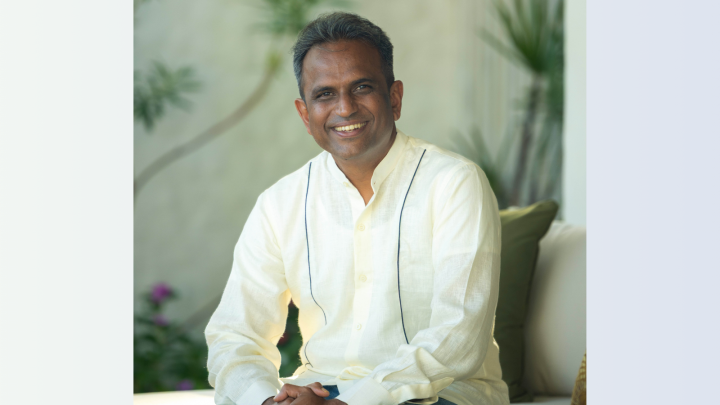
For Harish Nair, the next chapter of his hospitality career is not simply about opening or operating resorts. It is about helping two Maldivian islands develop distinct identities, building teams that understand the emotional purpose of service and creating places that remain in guests’ memories long after their departure.
As Cluster General Manager of SIX & SIX PRIVATE ISLANDS, Nair is helping guide the development of RAH GILI MALDIVES, which opened in early 2026, and the forthcoming DON MAAGA MALDIVES. The two properties are designed around markedly different expressions of island hospitality: one is playful, social and community-led, while the other is private, expansive and discreet.
The task, therefore, extends beyond ensuring that operational standards are met. It requires the creation of two separate cultures, each with its own atmosphere, service language and relationship with guests.
“After many years in hospitality, you begin to understand that true luxury is not about scale alone,” Nair said. “It is about emotion, memory and the feeling a place leaves behind long after a guest has departed.”
That understanding was central to his decision to join SIX & SIX PRIVATE ISLANDS. Rather than viewing the opportunity as another senior operational appointment, he saw the chance to contribute at a formative stage, when the values, behaviours and character of each island could still be shaped from the ground up.
“What drew me to SIX & SIX PRIVATE ISLANDS was the clarity of its intention,” he said. “The vision was never to create another resort collection simply because the Maldives needed more luxury. It was about creating islands with soul, individuality and a genuine sense of human connection.”
For Nair, this clarity gives the role its significance at this point in his career.
“The opportunity was not only to operate resorts, but to help shape cultures, communities and experiences from the very beginning,” he said.
A leadership philosophy built around people
Nair’s approach has been informed by years of working across luxury hospitality brands and alongside teams representing different cultures, generations and professional backgrounds. The experience has reinforced his belief that leadership in hospitality is ultimately measured by its effect on people.
“Luxury hospitality often speaks about service, standards and excellence, but leadership is ultimately about people and how you make them feel,” he said.
This philosophy becomes particularly important in an island setting, where colleagues do not simply share a workplace. They live together, spend extended periods within the same community and collectively influence the atmosphere encountered by guests.
In such an environment, leadership is visible not only in formal meetings or operational decisions, but also in how a leader responds to pressure, uncertainty and change.
“I have learned that leadership is not about being the loudest voice in the room,” Nair said. “It is about presence, consistency and trust. Teams do not only remember what you say. They remember how you behave during pressure, uncertainty and change.”
He believes strong leaders create confidence rather than dependence, bringing stability to the workplace while enabling others to develop.
“The best leaders create confidence and calm around them,” he said. “That is something I continue to learn every day.”
This view also informs how he interprets the concept of the Bodu Edhuru within his role. To Nair, the idea moves leadership away from authority and towards guidance, positioning it as a responsibility to support the growth of others.
“For me, being a Bodu Edhuru means creating an environment where people feel seen, supported and empowered to grow,” he said. “It is not about standing above the team. It is about walking beside them while helping them find clarity, confidence and purpose in what they do.”
In island hospitality, he added, this responsibility becomes personal. A leader is not only overseeing rooms, restaurants, activities and service delivery. The leader is also influencing how people feel while living, working and holidaying on the island.
“You are not only managing operations,” Nair said. “You are shaping the emotional atmosphere that both guests and teams experience every day.”
Managing a resort, guiding an island
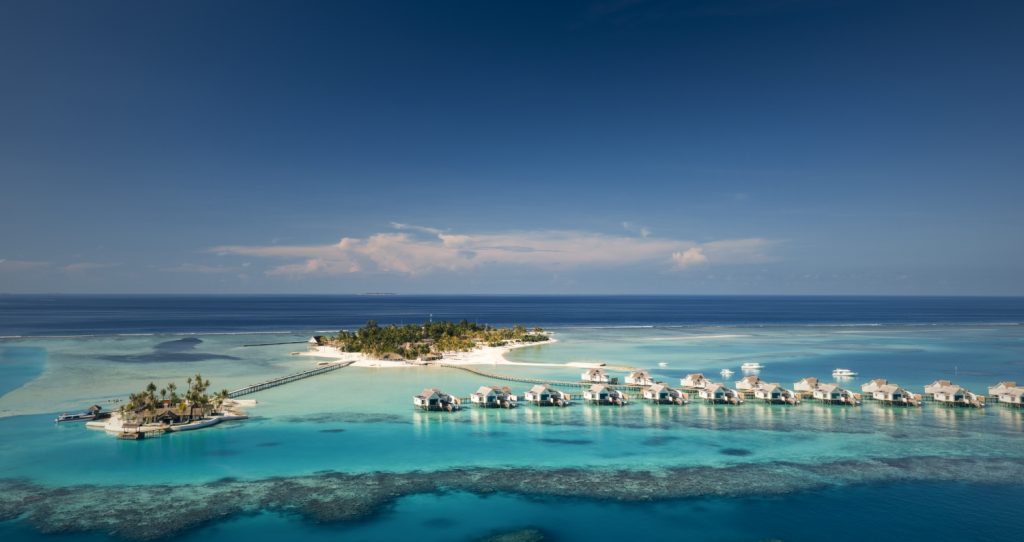
Nair draws a distinction between managing a resort and guiding the life of an island. The former can be organised through systems, schedules and processes. The latter requires a more intuitive understanding of people, place and atmosphere.
“An island is different. An island has rhythm, energy and emotion,” he said. “People live together closely. Teams become communities. Guests arrive carrying expectations, emotions and personal stories of their own.”
This changes the role of the general manager. Operational controls remain essential, but they are not sufficient on their own. Guiding an island requires an awareness of when to introduce activity, when to preserve quiet and when not to interfere with the natural character of the setting.
“Guiding the life of an island requires sensitivity and intuition,” he said. “You must understand when to create energy, when to create stillness and when simply to allow the island to breathe naturally on its own.”
For RAH GILI and DON MAAGA, finding that balance also means resisting the tendency to apply a single service template across both resorts. Nair wants each team to understand the emotional identity of its island and deliver service in a manner consistent with that character.
“I want the teams to understand that these islands are not meant to feel interchangeable,” he said.
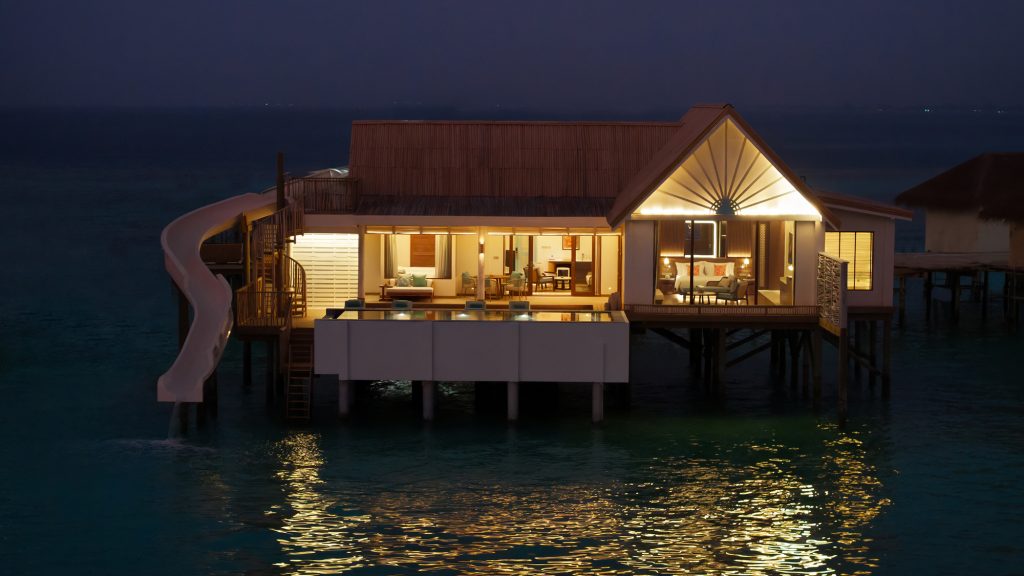
RAH GILI will have a lighter and more social personality, with its experience shaped by movement, music, spontaneity and a sense of community.
“RAH GILI has a lighter, more playful and social spirit,” Nair said. “It is warm, spontaneous and connected to community. There is movement, music and a sense of ease that should feel natural rather than staged.”
DON MAAGA, by contrast, will be shaped by a quieter form of luxury.
“Its energy is quieter, more expansive and deeply private,” he said. “It is about presence, scale and discretion. Guests there will value space, stillness and emotional comfort at the highest level.”
The distinction will affect not only the guest experience, but also recruitment, training, team communication and leadership behaviour. Service cannot simply be copied from one property and transferred to the other.
“The role of the team is not to perform service in the same way everywhere,” Nair said. “It is to understand the emotional language of each island and respond to it intuitively.”
Protecting the feeling of RAH GILI
At RAH GILI, the intended experience is barefoot, social and community-oriented. Nair believes its success will depend on the team’s ability to keep that experience authentic.
The greatest risk is not a lack of activity, but the possibility that the island’s personality could become overly programmed. Although standards and planning will remain important, guests should not feel that every interaction has been rehearsed.
“The most important thing is authenticity,” he said. “Guests can immediately feel when an experience becomes overly scripted or forced. The spirit of RAH GILI should always feel relaxed, natural and human.”
Protecting that character will require colleagues to remain approachable and emotionally present, both with guests and with one another. The team’s internal relationships will inevitably influence the energy guests perceive across the island.
“That means the team must remain approachable, emotionally present and connected to one another,” Nair said. “Energy matters. Warmth matters. Simplicity matters.”
The statement captures a recurring theme in his leadership approach: hospitality should be intentionally designed, but it should not feel manufactured. Standards should support natural interaction rather than replace it.
“Protecting the spirit of RAH GILI is not about maintaining a performance,” he said. “It is about protecting a feeling.”
Discretion and anticipation at DON MAAGA
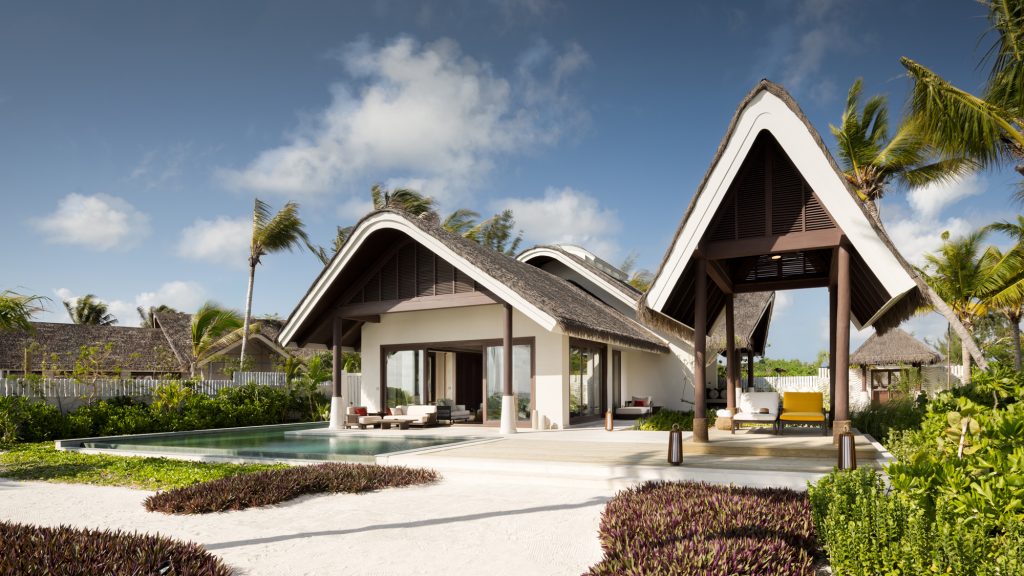
DON MAAGA will require a different service vocabulary. As an ultra-luxury destination, its culture will centre on privacy, precision and anticipation. Guests may wish to retreat from visibility, maintain complete calm or experience highly personalised service without having to make repeated requests.
“At DON MAAGA, the approach to luxury becomes far more discreet and deeply personalised,” Nair said.
This places greater emphasis on emotional intelligence. Team members must be able to read preferences, recognise boundaries and adapt their presence without making service feel distant.
“The leadership culture there must focus on precision, anticipation and emotional intelligence at an entirely different level,” he said.
Guests could arrive with different interpretations of privacy. Some may value attentive interaction, while others may want the team to remain almost invisible while still anticipating their needs.
“Guests may arrive seeking privacy, calm or complete invisibility from the outside world,” Nair said. “The team must understand that without needing excessive instruction.”
Yet discretion should not be confused with formality or detachment. Despite its refined and private nature, DON MAAGA must retain the warmth and humanity that Nair considers fundamental to hospitality.
“The service culture will feel quieter and more refined, but never cold,” he said. “True luxury is often about what you do not need to ask for.”
Belonging through the Rayyithun philosophy
Across both islands, Nair sees the Rayyithun philosophy as a foundation for team behaviour. He interprets it as the creation of genuine belonging: a culture in which hospitality is understood not as a transaction, but as a network of human relationships.
“For me, the Rayyithun philosophy is about creating genuine belonging,” he said.
The philosophy applies equally to interactions between colleagues and those between team members and guests. Every exchange, regardless of how brief it may be, has the potential to influence the atmosphere of the island.
“It reminds the team that hospitality is not transactional,” he said. “Every interaction leaves an emotional impression, whether between colleagues or with guests.”
In daily practice, this means treating people with sincerity, respect and generosity; supporting colleagues; sharing responsibility; and recognising that every position contributes to the character of the island.
The philosophy is therefore not confined to guest-facing departments. It extends across the resort community, from operations and culinary teams to engineering, housekeeping, finance and administration.
“In practical terms, it means treating people with sincerity, respect and generosity every single day,” Nair said. “It means supporting one another, sharing responsibility and understanding that every individual contributes to the atmosphere of the island.”
Guests may not be familiar with the terminology behind the philosophy, but Nair believes its presence should be apparent in how they are welcomed and cared for.
“Guests may not always understand the word Rayyithun itself, but they will absolutely feel its spirit,” he said.
Mentorship within an island community
Mentorship is closely connected to this sense of belonging. Island life can be demanding, particularly for young professionals who arrive with ambition but may still be developing confidence and direction.
Unlike a conventional workplace, the boundaries between professional and personal life can become narrower on an island. Colleagues work and live within the same community, making guidance and support particularly important.
“Mentorship in island hospitality is very important because island life is intense, personal and deeply immersive,” Nair said. “People are living and working together in the same environment every day.”
Young team members may arrive with clear career ambitions but remain uncertain about how to reach them. Nair sees mentorship as a stabilising influence that can help them identify strengths they have not yet recognised.
“Young team members often arrive with ambition, uncertainty and hopes for growth,” he said. “Good mentorship provides stability and direction.”
For Nair, mentoring does not always require a formal programme or a scheduled development meeting. Its effect can often be found in smaller, more personal exchanges.
“Mentorship means listening carefully, encouraging confidence and helping people discover strengths they may not yet see in themselves,” he said. “Sometimes the smallest conversations can have the biggest impact on someone’s journey.”
Principles rather than scripts
Creating two emotionally distinct resorts still requires consistency. Guests must be able to trust that standards will be maintained across every part of their experience.
Nair’s solution is not to reduce service to prescribed language and fixed responses, but to train teams around principles and intent.
“Standards are important because they create trust and reliability,” he said. “But hospitality should never feel robotic.”
Scripts can help establish procedures, but they can also limit a team member’s ability to respond naturally. Nair believes colleagues should understand why an experience has been designed in a particular way, rather than simply memorising a sequence of actions.
“The key is to train principles rather than scripts,” he said. “Teams should understand the intention behind the experience, not simply memorise actions.”
When team members understand that intention, they can make decisions with greater confidence. This allows them to adapt to individual guests while remaining aligned with the standards and identity of the resort.
“When people feel confident and empowered, they naturally bring more personality, warmth and intuition into service,” Nair said. “That is where individuality comes alive without compromising consistency.”
A meaningful connection to the Maldives
Nair also believes Maldivian culture and local knowledge must occupy a meaningful place within the guest journey. For travellers who have crossed long distances to reach the country, the experience should offer more than scenery and photographs.
“It should play a very important role because it gives the experience meaning and authenticity,” he said. “Guests travel far to come to the Maldives. They should leave with a deeper understanding of the place, the people and the culture, not only beautiful photographs.”
However, cultural expression must be integrated with care. Rather than presenting traditions as a staged addition to the programme, he wants them woven naturally into storytelling, food, music and personal interaction.
“For me, local knowledge should not feel performative or overly commercialised,” Nair said. “It should feel natural and respectfully woven into the experience through storytelling, traditions, food, music and human connection.”
This approach aligns with the broader aim of building emotional connections. A guest may remember the design of a villa or the colour of the lagoon, but personal stories and cultural encounters can give those visual memories greater meaning.
“That emotional connection is what creates lasting memories,” he said.
A legacy measured by feeling
Ultimately, the legacy Nair hopes to build at RAH GILI and DON MAAGA is not defined only by industry recognition, commercial performance or the successful implementation of operating standards.
“I hope the legacy is not only measured through awards or commercial success,” he said.
Instead, he wants the islands to become places where employees feel proud to belong and where guests form an emotional attachment to the experience. In his view, this can only be achieved when the culture of hospitality is based on sincerity rather than performance.
“I would like people to remember these islands as places that felt deeply human,” Nair said. “Places where teams felt proud to belong, where guests felt emotionally connected and where the culture of hospitality was built on sincerity rather than performance.”
For Nair, that lasting feeling will be the clearest measure of whether the vision for the two islands has succeeded.
“If, years from now, people still speak about the feeling they experienced at RAH GILI and DON MAAGA, then I believe we would have created something meaningful.”