



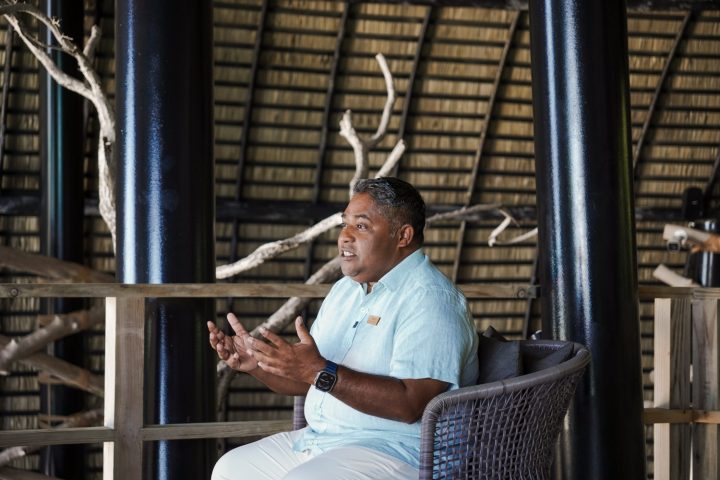
People and purpose: Niva Dhigali’s Hassan Saeed on being an award-winning Resort Manager and team leader every day
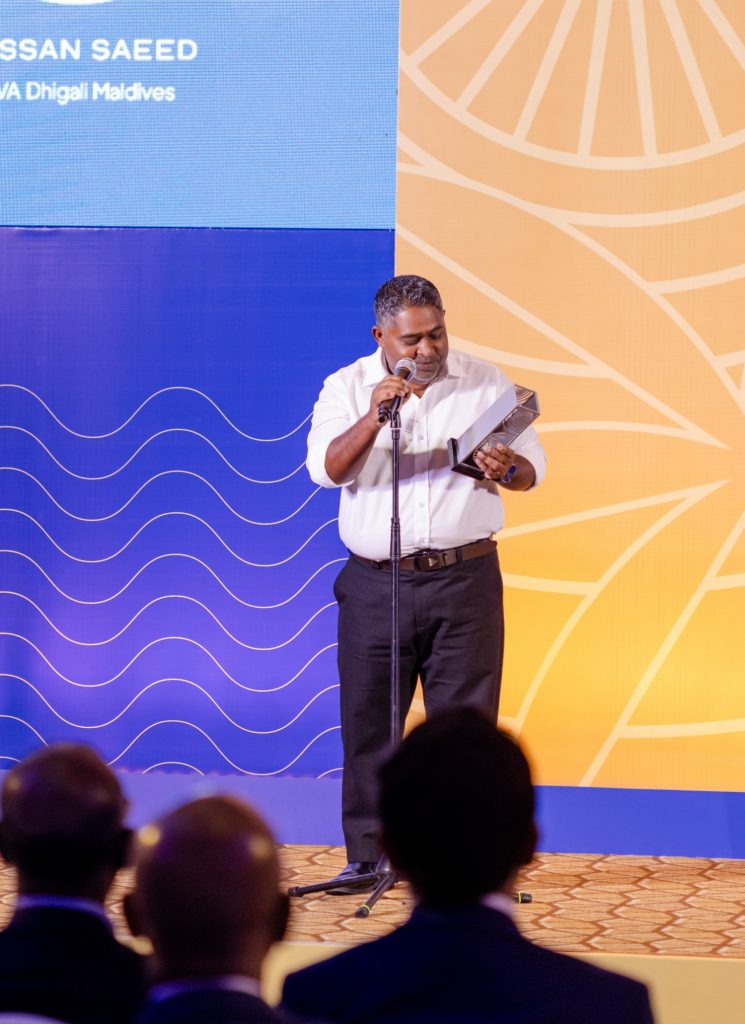
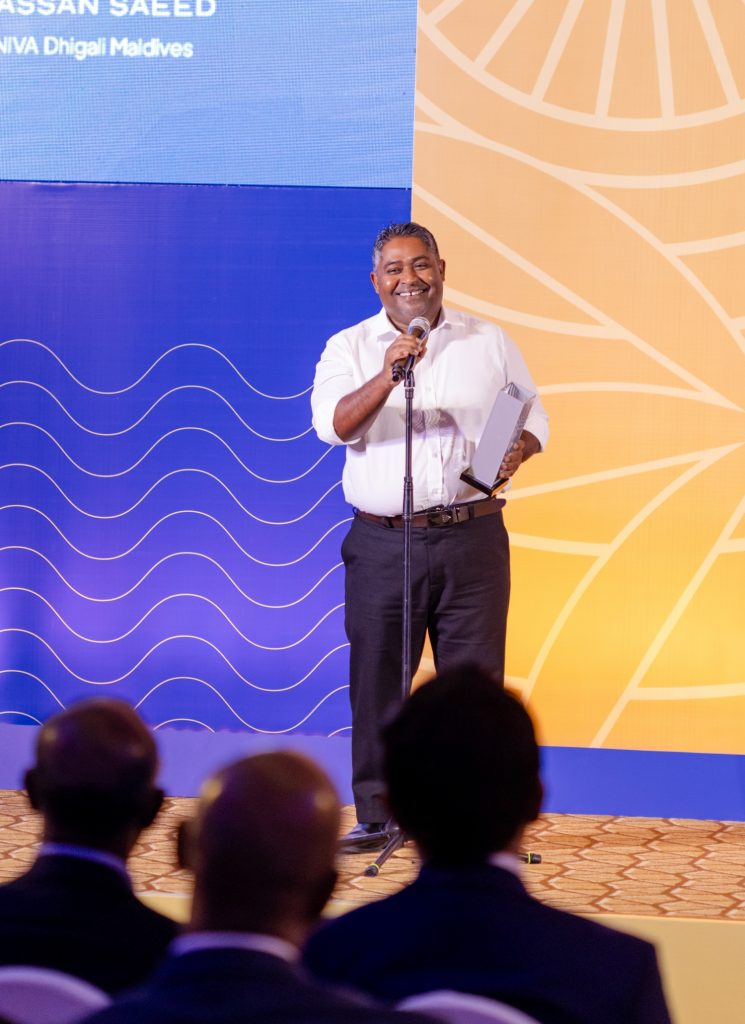
When Hassan Saeed received the Resort Manager of the Year award at the Hotelier Maldives Awards 2026, his first response was to direct the recognition towards the people working alongside him at Niva Dhigali Maldives.
“A resort manager has a team of people who make his work possible,” Hassan says. “For me, first and foremost, it is a recognition and validation of the work that is put in by my team — Team Dhigali, Team Niva Dhigali.”
Professionally, he sees the award as evidence of the work carried out by the resort’s employees over several years. Personally, it represents the distance he has travelled since entering the hospitality industry as a young Maldivian from Fuvahmulah.
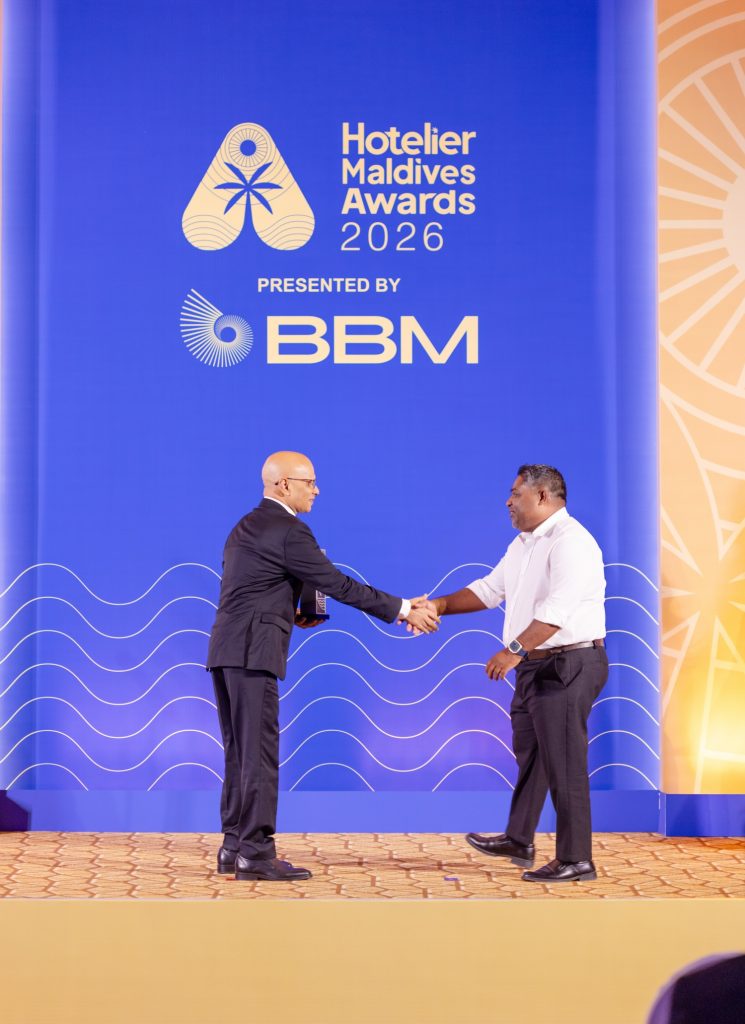
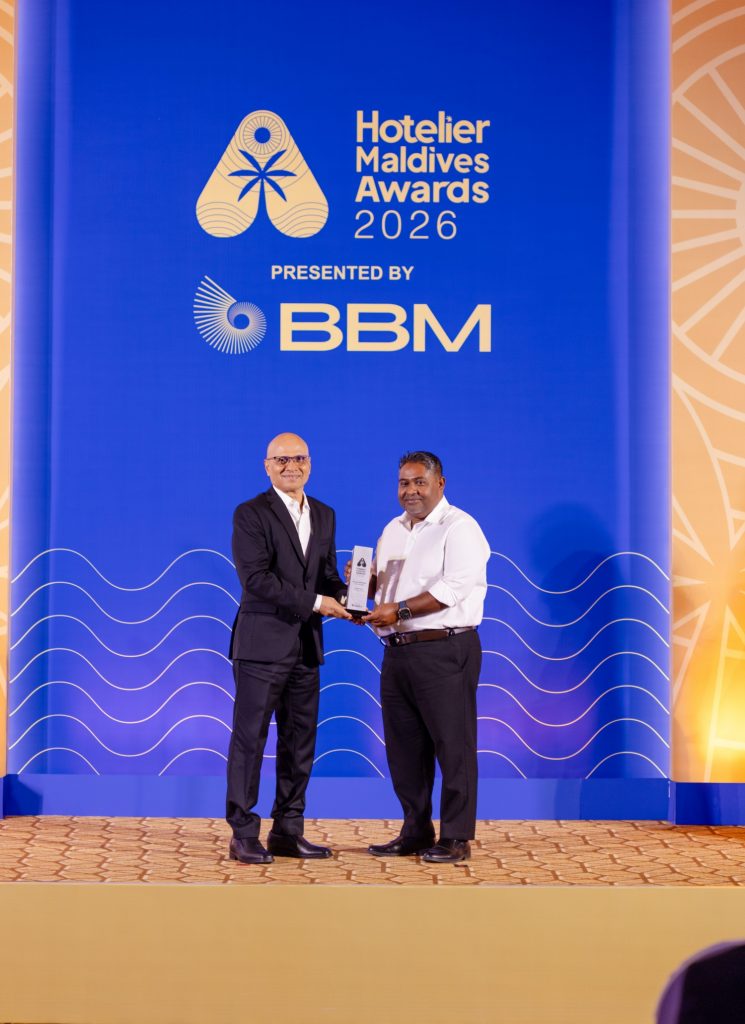
“It means that a young man from Fuvahmulah who started 25 or 30 years ago in this industry has come a long way,” he says. “It is a sign that anybody, any young person, can dream of becoming a resort manager one day.”
That distinction between personal recognition and team performance is central to Hassan’s approach to resort management. While his name appears on the award, he considers the achievement part of a wider organisational journey involving employees across departments.
His own journey began more than three decades ago, when the Maldives resort product was different from the industry that operates today. Instead of following a direct route through one department, Hassan built his career by moving across several areas of hotel operations.
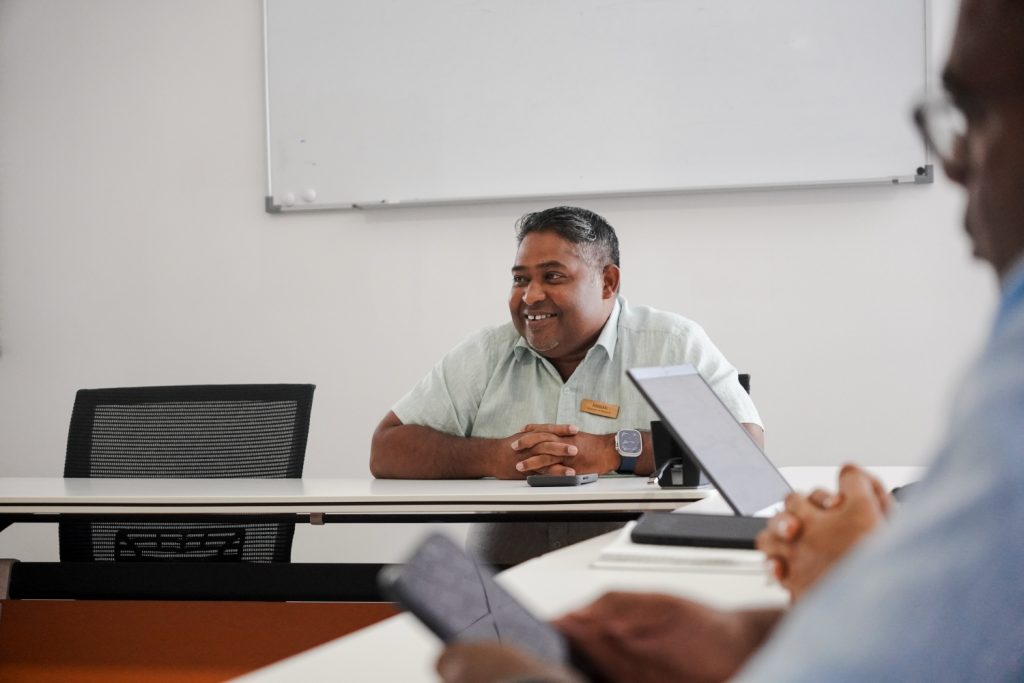
He started in food and beverage before working in front office, housekeeping and food and beverage again. He later moved into learning and development before returning to operations. Some of those moves were horizontal rather than promotions in the conventional sense, but Hassan considers them among the moments that shaped his career.
“Most of these defining moments are moments where I took up challenges,” he says. “Instead of moving up, I most of the time moved sideways, meaning I moved from one operational area to the other.”
Each move required him to learn a different part of the resort business, understand another team’s responsibilities and adapt to another set of operating pressures. Over time, those experiences gave him a view of how departments depend on one another to deliver a guest experience.
“Every time I made one of these horizontal moves, somebody gave me a challenge and I took up that challenge,” he says. “That helped me broaden my horizons, and it has made me a more versatile individual.”
Understanding how people behave
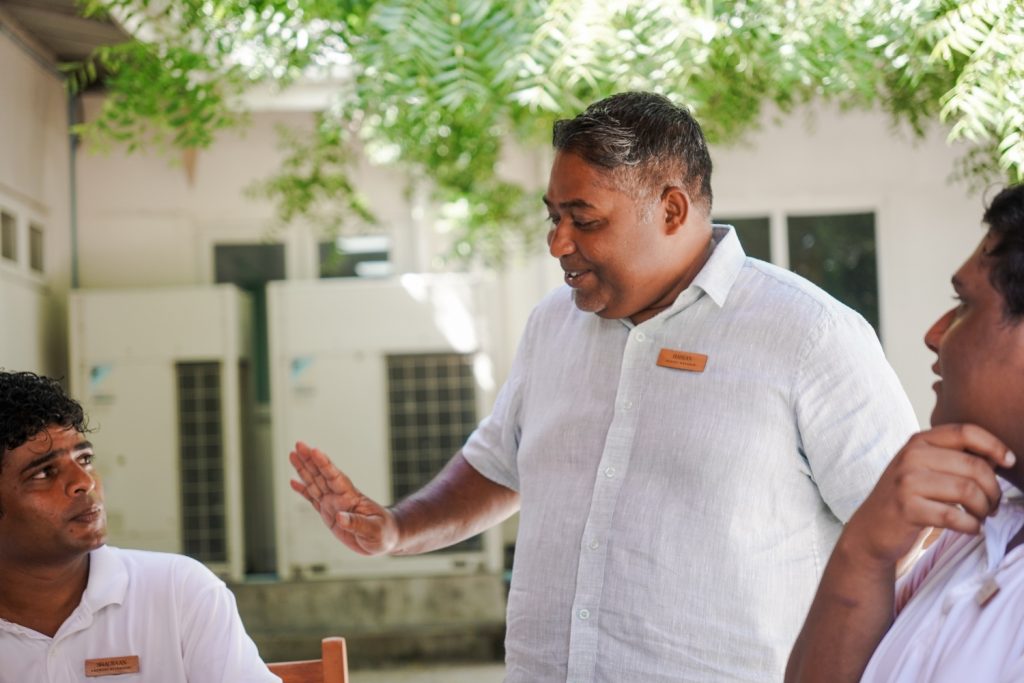
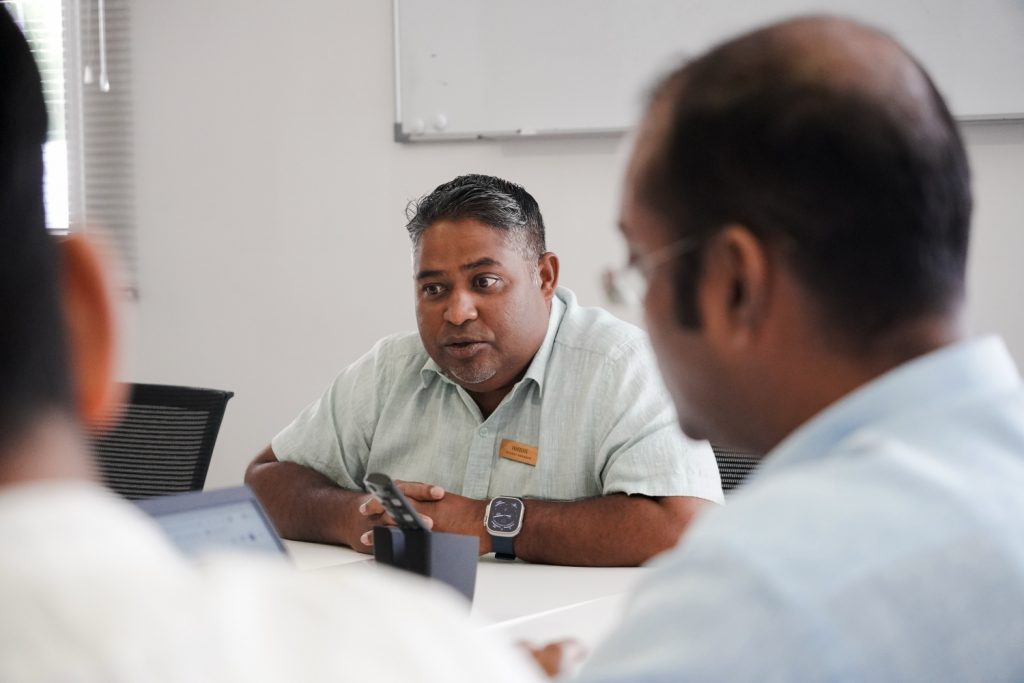
Hassan’s leadership philosophy draws from behavioural science and psychology. For him, these subjects are not separate from resort management. They are part of the daily work of dealing with guests, employees, suppliers and business partners.
“We are always dealing with people,” he says. “People perceive things not as they are, but through subjective perception.”
He recalls a customer service concept taught during his hotel school years in the late 1980s and early 1990s. Hospitality employees were told that they needed to be “DRIPS”: a diplomat, record keeper, information source, psychologist and salesperson.
“When you put all these things together, you basically need to understand people,” Hassan says. “Understanding people, trying to influence behaviour and trying to get people to behave in a certain manner requires us to understand psychology and human behaviour.”
This understanding supports both guest service and employee leadership. Managers must communicate information, respond to concerns, interpret behaviour and help people manage situations that may carry emotional pressure.
Hassan believes knowledge of behavioural psychology can help hospitality professionals influence outcomes without losing sight of the people involved.
“Behavioural sciences and behavioural psychology are important for anyone trying to achieve a career milestone in hospitality,” he says. “They are especially important for anyone trying to make a difference in the lives of the people he or she works with, and in the lives of the guests who experience the service.”
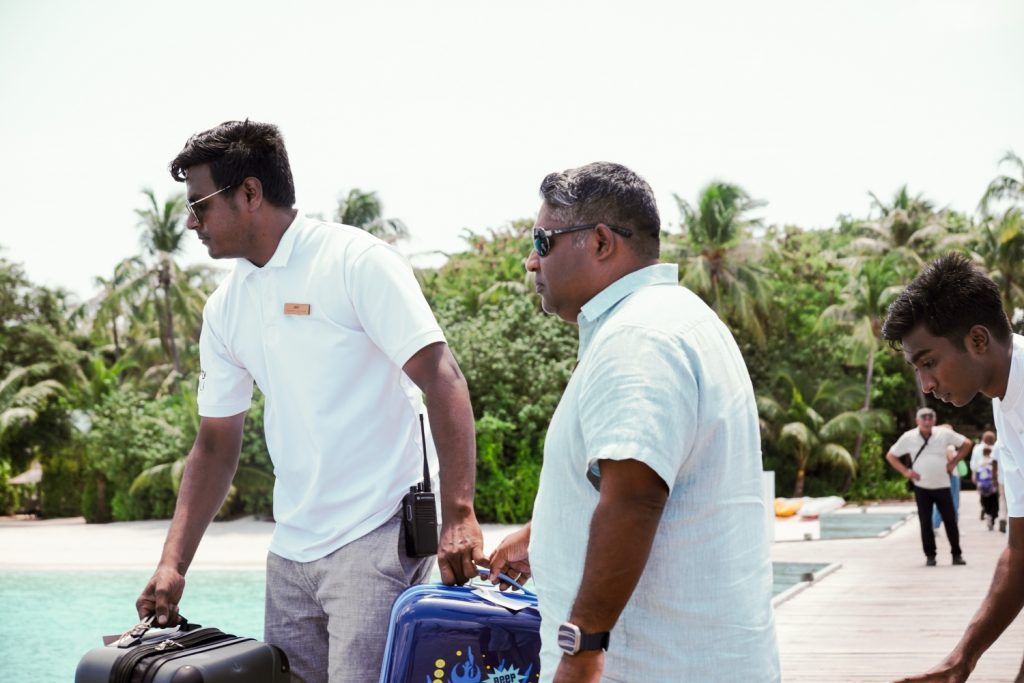
At Niva Dhigali, this approach is connected to a shared vision of the guest experience. Hassan does not view guest value as something created only by employees who have direct contact with visitors.
Housekeeping attendants, beach cleaners, transport teams, restaurant employees and employees working behind the scenes all contribute to how guests remember the resort.
“Everybody creates equal value,” he says. “Whether you are in housekeeping, whether you are cleaning the beaches, whether you provide transportation through the island or whether you are serving a meal in a restaurant, you are creating value.”
The guest does not divide the holiday into departmental functions. The experience is understood as a stay at Niva Dhigali rather than a series of separate interactions with housekeeping, food and beverage, transport or recreation.
“The guest, at the end of the day, talks about his or her experience of the island, the resort and Niva Dhigali,” Hassan says. “Everyone in the team creates value towards that end result.”
He also notes that people do not experience service in a linear manner. Memories are often formed around emotional peaks and troughs. A single interaction can affect how the entire stay is recalled.
“We are trying to make sure that we are there to help guests remember the emotional peaks where they are happiest,” he says.
Making tomorrow better
Learning and development has occupied a substantial part of Hassan’s career. His time in the field continues to influence how he leads employees and approaches retention.
He believes development should be understood not only as training or career progression, but as an effort to change what may be possible for an employee.
“At the end of the day, you are trying to change people’s lives,” Hassan says. “You are trying to make tomorrow better for somebody.”
Doing that requires managers to understand why a person has joined the industry and what he or she hopes to achieve. It also requires leaders to connect daily work with a longer-term purpose.
“You want to motivate that person, inspire that person and convince that person that he or she will be better off tomorrow if they have a growth mindset and try to improve every day,” he says.
This connection between development and retention has become part of his management approach. Employees are more likely to remain with an organisation when they can see how their time there contributes to their skills, careers and personal goals.
“If you want to retain staff, you have to show them where they benefit from the organisation,” Hassan says. “Learning and development plays an important role in making sure that someone believes he or she is benefiting by staying with the company, the team and the organisation.”
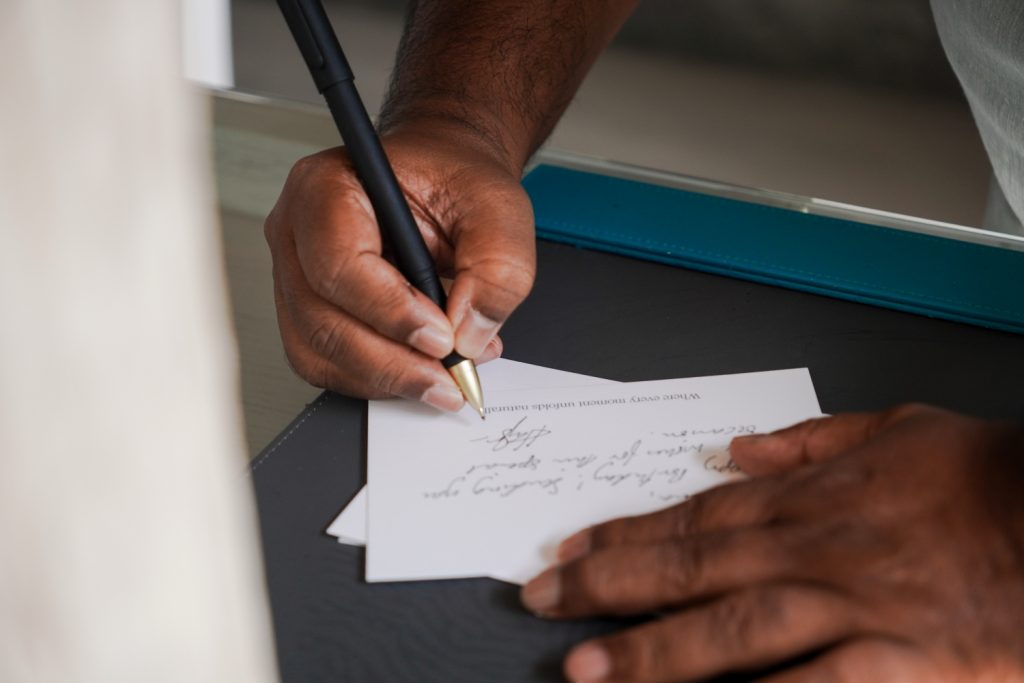
Managing the guest journey
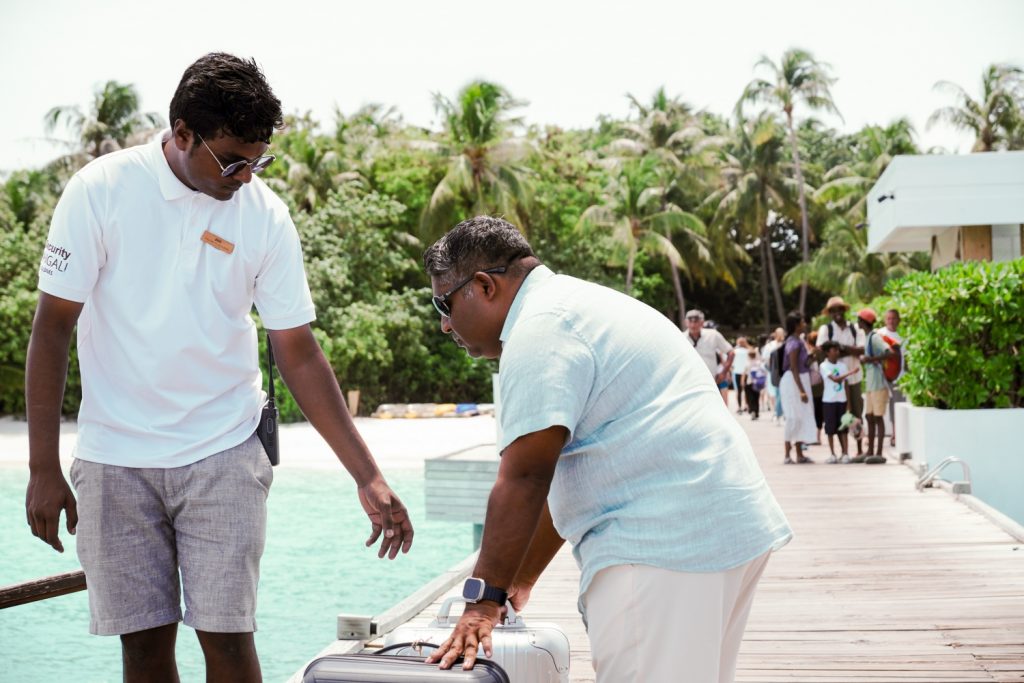
At an island resort, the guest experience often begins before the guest reaches the property. Visitors may arrive after long-haul flights, airport procedures and a seaplane transfer. By the time they reach the island, they may be tired or uncertain about what to expect.
Hassan says the team must recognise the condition in which guests arrive rather than assume that every visitor will step onto the island in a celebratory mood.
“We talk about first impressions and last impressions,” he says. “Sometimes none of these things are in our control because we have guests who arrive on this island after 10 hours on board a long-haul flight and then take a seaplane. They are tired and they are worried.”
The resort’s task is to manage those expectations, create a sense of welcome and demonstrate that the guest is receiving the experience that was promised.
“We are trying to create these impressions where people feel they are welcome,” Hassan says. “They feel that they are getting value out of what they buy and that they are getting an experience they have planned for.”
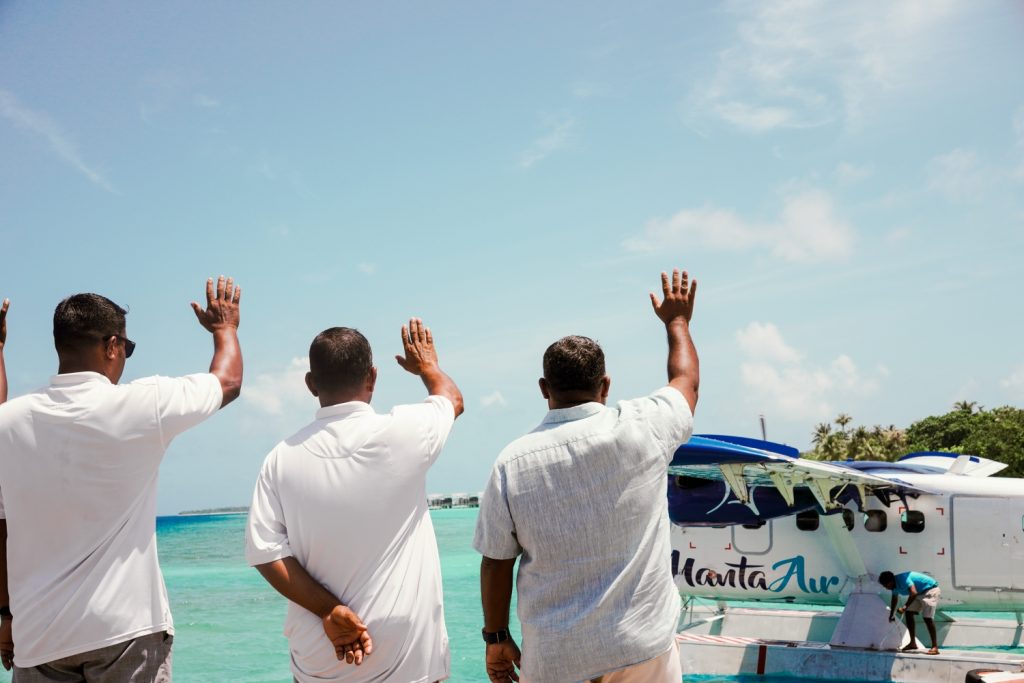
The departure experience carries equal weight. Hassan wants guests to leave the resort with their final interaction reinforcing their memories of the stay.
“We try to make sure that every guest leaves on a high because, for us, the last impression matters a lot,” he says.
This requires attention throughout the stay rather than intervention only at arrival and departure. Every stage of the guest journey can affect the final assessment of the resort.
“Throughout the journey, we are trying to stay focused and make sure that we create a positive experience for the guest,” he says.
Addressing the pressures of resort work
Hassan also recognises the emotional labour involved in hospitality. Resort employees are expected to maintain service standards while living and working away from their homes, often within the same physical environment for long periods.
Supporting employee wellbeing while meeting operational requirements remains a challenge.
“It is easier said than done,” Hassan says. “Everybody says that they understand that people need wellbeing and that they focus on the wellbeing of staff.”
At Niva Dhigali, he began placing attention on mental health before the COVID-19 pandemic. The resort introduced mental health awareness programmes for employees and continued them over the following years.
“We would probably be one of the first resorts to run mental health awareness programmes for staff even before COVID,” he says. “We have done that consistently throughout the last five or six years.”
The programmes are intended to help employees recognise stress and understand the effect it can have on their work and lives. The resort has also sought to establish channels through which employees can share concerns.
Department heads are part of the process. Hassan says managers must be able to identify signs of burnout and respond when wellbeing concerns appear within their teams.
“We educate our heads of department so that they can recognise and address issues of burnout and wellbeing when they see them,” he says.
Working with the atoll’s communities
Niva Dhigali’s work extends beyond the boundaries of the resort. Hassan identifies its relationship with schools and communities in Raa Atoll as an area of focus.
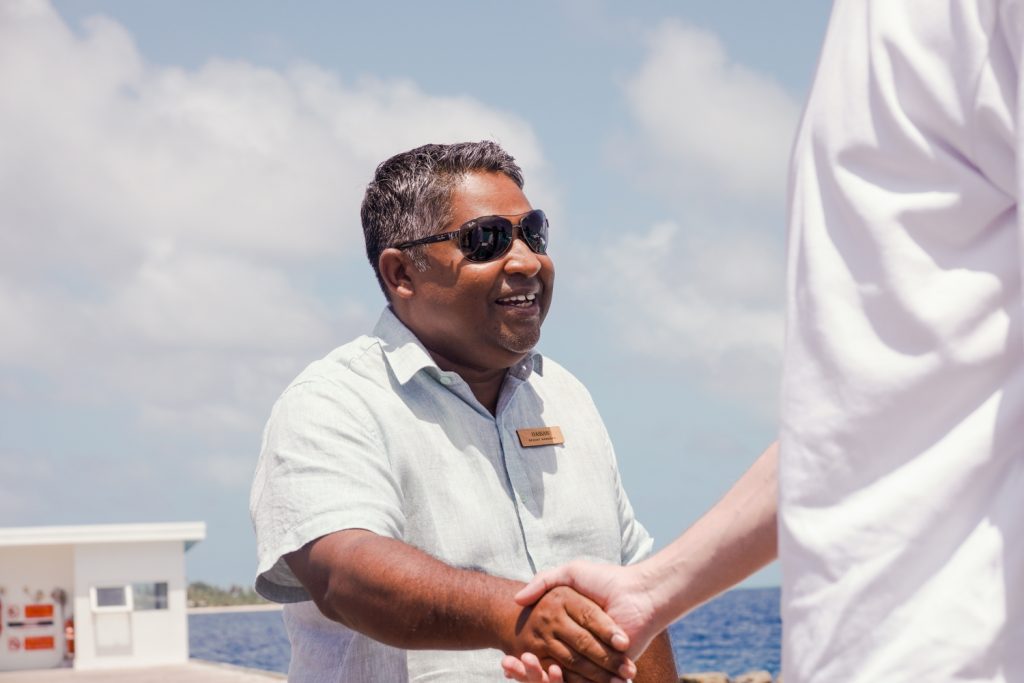
Between 2022 and 2026, he visited almost every school in the atoll to conduct career guidance sessions. These visits allow him to speak with students about hospitality work, career routes and the realities of resort operations.
“We work very closely with the schools,” he says. “Between 2022 and 2026, I personally visited almost all the schools in this atoll and conducted career guidance sessions for the students.”
The relationship also brings students into the resort. Niva Dhigali facilitates field visits for students, including those studying BTEC programmes, so they can observe resort operations.
“They come to Niva Dhigali and experience our operation so that they have a better understanding of what goes on in a resort,” Hassan says.
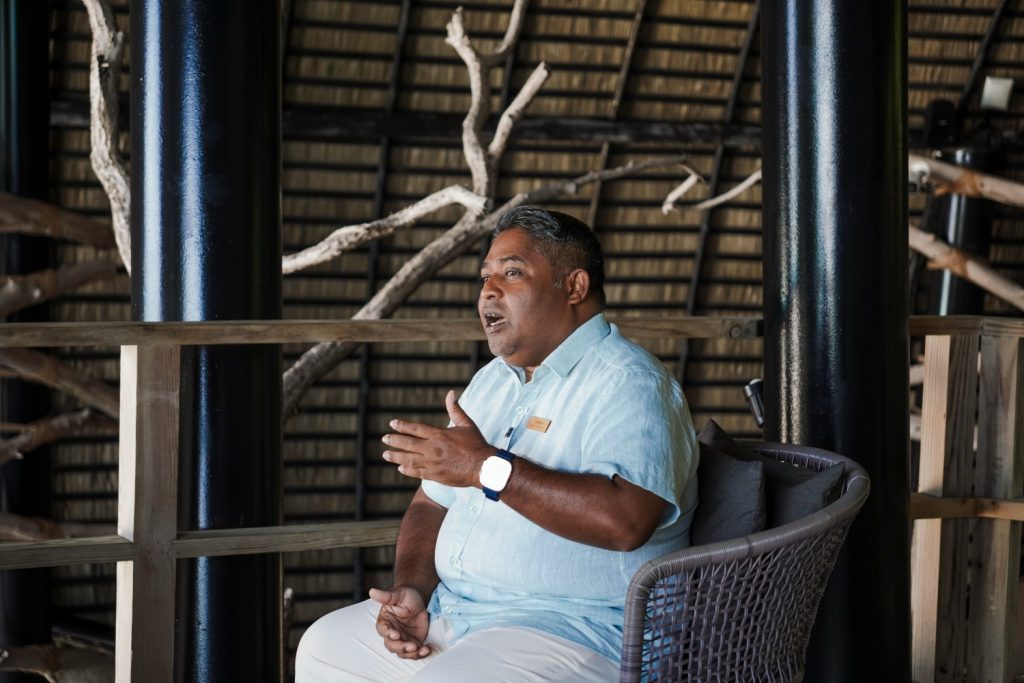
The resort has also worked with communities and councils in Meedhoo, Fainu and Maduvvari. Activities have included environmental programmes, tree planting and island clean-ups.
“We are trying to stay as engaged as we can with the community, the councils and the people,” he says.
Hassan does not see community responsibility, employee engagement, guest satisfaction and commercial performance as separate obligations. In his view, each affects the others.
“Sometimes we try to separate all these things, but I do not believe that we can,” he says. “They all go hand in hand.”
Many of the resort’s employees come from neighbouring islands. Supporting those employees therefore has an effect beyond the workforce.
“If we look after the staff, their communities are also looked after,” Hassan says. “If everything works well, then we achieve our commercial objectives.”
Guiding the next generation
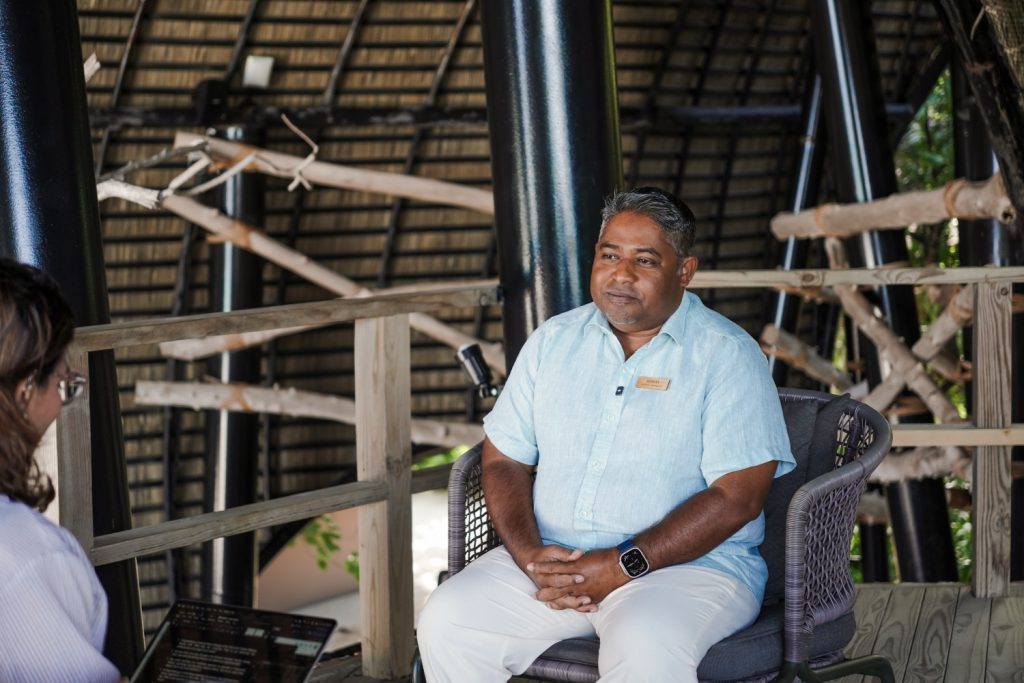
In addition to his work at Niva Dhigali, Hassan has served as a mentor, lecturer and industry speaker. He has contributed to structured courses at the Maldives National University and Villa College and has worked with other colleges as a visiting or part-time lecturer.
He believes senior Maldivian hoteliers have a responsibility to help younger people understand the industry and navigate the decisions they face.
“One of the things I often see with students is that they are always looking for guidance,” he says. “The more people we have who can give this guidance, the better it is for the future.”
Students may enter hospitality with questions about working conditions, career progression, family life and the time required to reach leadership positions. Hassan says experienced professionals can help address these concerns.
“All of us as leaders, especially Maldivians, need to step into that role of mentorship,” he says. “We need to guide people and answer young people’s questions so that they have a better shot at success in this industry.”
He describes hospitality as a career that can offer both personal satisfaction and financial rewards. The work involves sacrifices, including time away from family, but he believes the industry can enable employees to achieve personal and professional goals.
“You are dealing with human emotions, and to see someone happy gives you a lot of satisfaction at the end of the day,” he says. “This industry rewards you well. Yes, you are away from your family most of the time, but you need to look at the cost and the benefit. I think the benefit outweighs the cost.”
Responding to a changing industry
The Maldives hospitality sector Hassan entered more than 30 years ago was based on a simpler resort product. Some rooms did not have air conditioning, menus were limited and operations involved fewer imported products.
Today’s resorts serve a market in which guests have access to more choice and arrive with more specific expectations.
“The product has grown from a very simple product to a very complex product,” Hassan says. “Now the menus are more complex, there are more imports and you have products coming from Scandinavia and other parts of the world.”
As the product has changed, competition has increased among resorts and between the Maldives and other destinations.
“The demand and expectations have gone up,” he says. “Competition is much higher as a destination and also within the industry as resorts. It has become tougher for leaders, industry people and staff.”
Niva Dhigali has also changed its own operating model. Following the pandemic, the resort moved towards a premium all-inclusive concept. Hassan says the transition required sustained work from the team.
“We were not always a premium all-inclusive resort,” he says. “We changed after COVID, and we have succeeded over the last five or six years.”
He points to the resort’s repeat guests as an indication that the product is being accepted by the market.
“We now have a lot of repeat guests, which is evidence that the product is being received well,” Hassan says. “That shows how much the team has contributed and how hard the team has worked.”
For Hassan, the Resort Manager of the Year award represents this collective work. It reflects his own journey across departments and leadership roles, but it also belongs to the employees who deliver the Niva Dhigali experience each day.
“My achievement is, in a large part, thanks to the efforts of the team,” he says. “Once again, I want to thank the team.”