



Where play shapes the journey: Krakengiri Kids’ Club’s award-winning approach at Hilton Maldives Amingiri
At a resort, a children’s club is often viewed as one part of a wider guest programme. For families, however, it can influence the rhythm of the entire stay. It determines whether children feel settled, whether parents feel comfortable spending time apart and, in many cases, whether a family chooses to return.
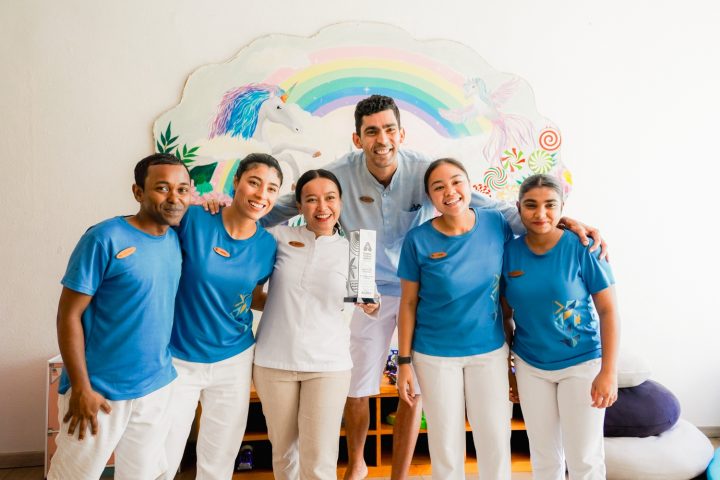
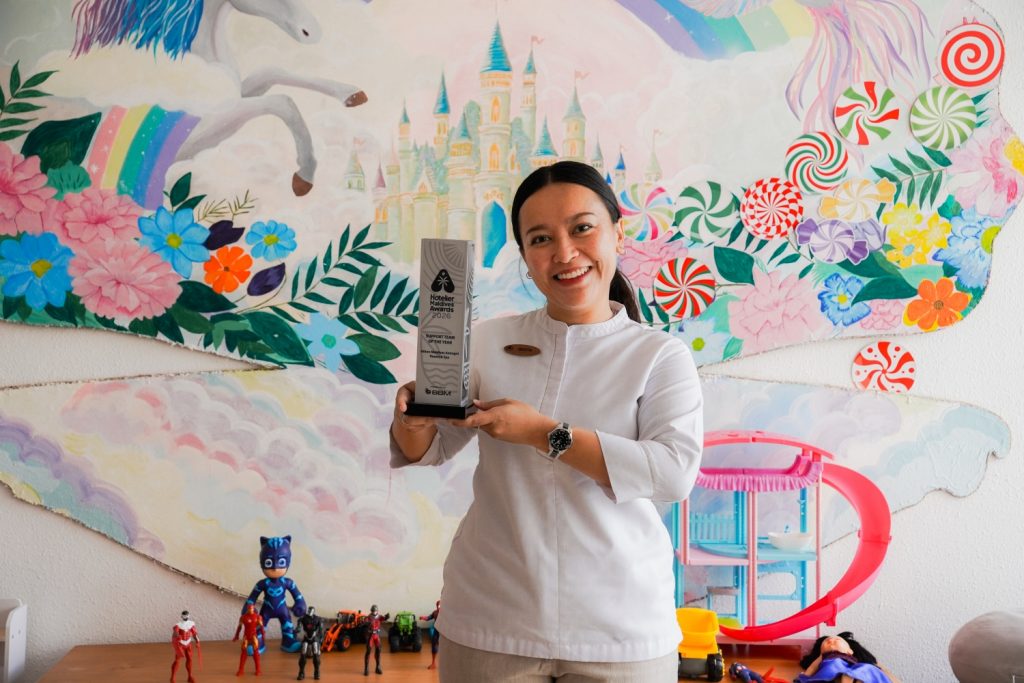
At Hilton Maldives Amingiri Resort & Spa, Krakengiri Kids’ Club approaches this responsibility through teamwork, patience and an understanding that each child and family requires a different form of engagement. That approach earned the team the Support Team of the Year title at the Hotelier Maldives Awards 2026.
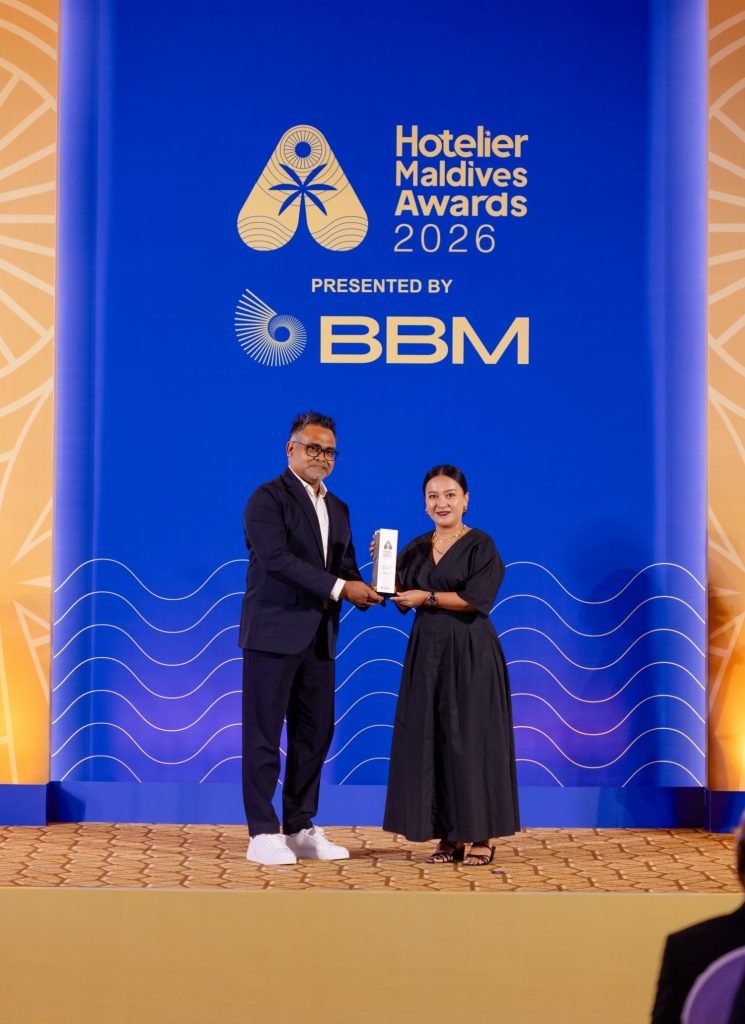
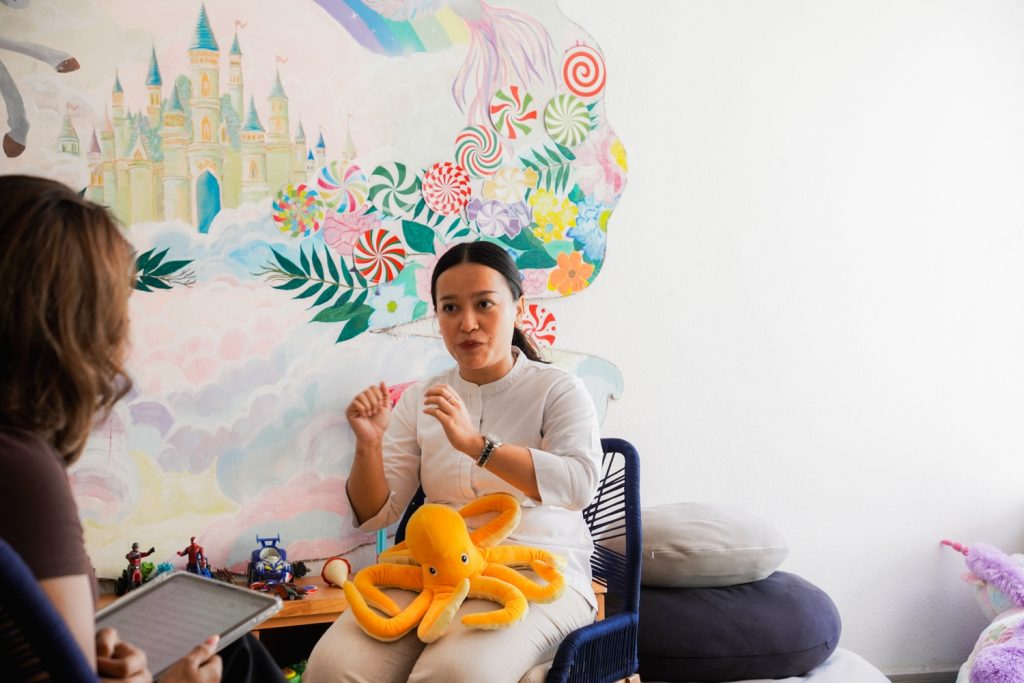
For Krakengiri Kids’ Club Manager Gesta Pattiasina, the award represents recognition of work that is not always visible beyond the families who experience it.
“This award means more than a trophy for us because it is a validation of the countless hours we put into creating experiences for guests,” she says. “We create memories, we create experiences, and we create joy for children and their families. When we receive recognition as significant as this, it becomes a celebration of everything we have done so far.”
The award also places attention on the role children’s club teams play within resort operations. Their work extends beyond organising games or supervising a play area. They must build trust, understand behaviour, manage safety, respond to different age groups and create programmes that allow children to participate at their own pace.
At the same time, the team’s performance affects the experience of parents. When children feel safe and engaged, parents can use other resort facilities with confidence. The children’s club therefore contributes to both family time and time spent apart, giving each member of the family space to experience the resort in a way that works for them.
A team built around different skills
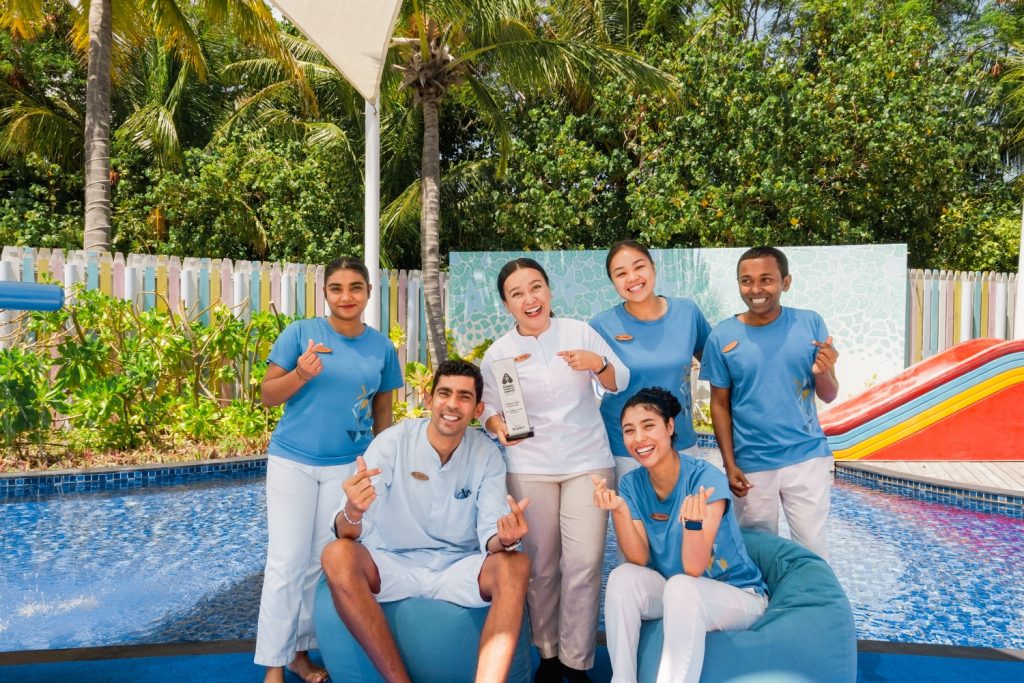
Krakengiri operates with a team of eight members representing six nationalities. While it is among the smaller departmental teams at the resort, its range of skills allows it to respond to children with different interests, languages and ways of communicating.
“In the kids’ club, each member brings a different experience, area of expertise and skill,” Gesta explains. “Someone may be good at art, while someone else is good at sport. Because of this, we can create a complete experience for children and families.”
The team’s mix of backgrounds is reflected in how activities are planned and delivered. Rather than expecting every team member to work in the same way, Krakengiri uses individual strengths as part of a shared programme. A team member with an interest in art may take the lead on a creative session, while another may guide physical games or group activities.
For Gesta, the role of leadership is to ensure that these differences support one purpose.
“Everybody has a different background and different experience that they bring to the team,” she says. “The goal is to share the same vision. When the goal is clear for everyone, everybody contributes. It makes my job easier as a leader when everybody is walking towards the same vision.”
This structure also encourages team members to support one another rather than work only within their own areas. Gesta describes the team’s approach as one of interdependence, in which each person’s contribution carries the same importance.
“We believe in interdependence. Each and every person is as important as everybody else, so everybody helps each other. It becomes effortless.”
That principle is particularly relevant in an environment where plans can change according to attendance, weather, guest requests or the needs of an individual child. Team members must be able to step into different roles while maintaining continuity in the experience.
Trust begins at the door
For children’s club teams, trust cannot be assumed. A family may be entering the space for the first time, while a child may be in an unfamiliar country, surrounded by new people and separated from their parents.
Krakengiri begins the trust-building process from the family’s first visit. Rather than focusing only on registration or explaining the activity schedule, the team introduces the environment and the people responsible for caring for the children.
“The trust starts to build when they first enter the kids’ club,” Gesta says. “When a family first visits, we give them a tour. We do not only introduce the space, facilities and activities; we also introduce the team members.”
This introduction works in both directions. The team learns about the child, while the family learns who will be spending time with them. Language skills are also explained so that parents and children know whom they can approach.
“It is not only about us getting to know the children. It is also about the children and the family getting to know us,” she says. “We introduce the team and explain, for example, who speaks Russian, who speaks Arabic, and who each person is.”
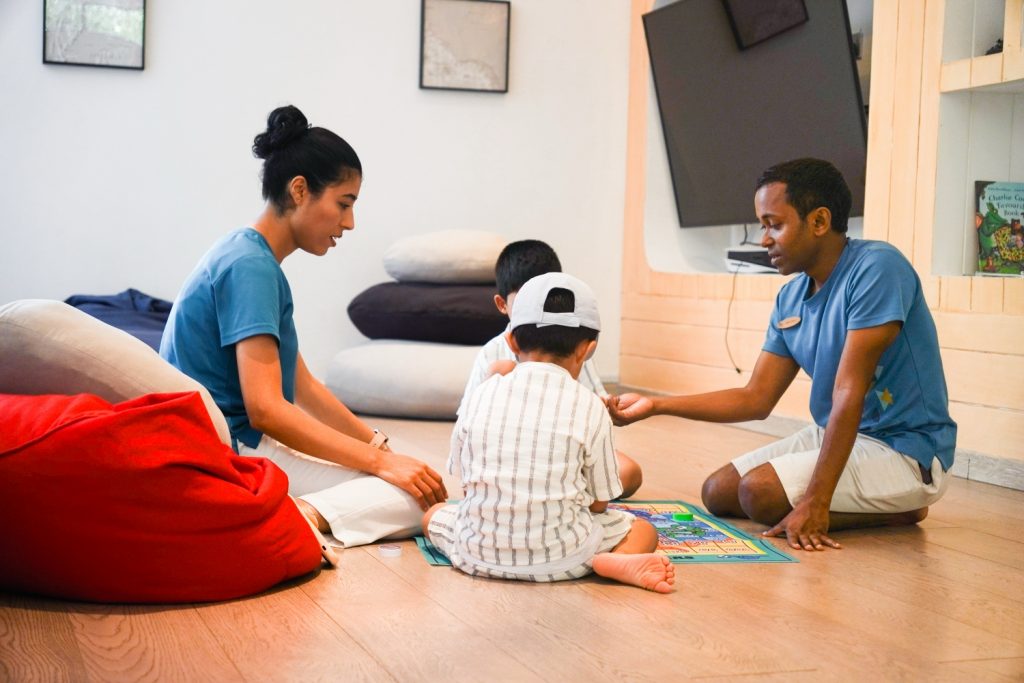
The team does not expect parents to leave immediately after arriving. Children are given time to observe, explore and decide when they are ready to participate. Parents can remain until both they and the child feel comfortable.
“We never rush the family to leave the children straight away,” Gesta says. “We give them time to settle because every child and family has their own pace, especially younger children. The main thing is to give them as much time as they need to feel comfortable and safe.”
This patient introduction sets the foundation for the rest of the stay. Once children begin to associate the club with familiar team members, activities and routines, the transition becomes easier.
“After that, the kids’ club becomes the place they do not want to leave,” she says. “Happy children, happy parents.”
The value of a “double win”
The influence of the kids’ club extends beyond its doors. For parents, knowing that their children are safe and engaged creates what Gesta calls a “double win”.
The first benefit is that children have a part of the resort designed around their interests. The second is that parents can spend time elsewhere on the island without concern about whether their children are settled.
“With the experience we give to the children and family, the kids’ club becomes valuable for the parents,” Gesta says. “It is not only that the children are happy in the kids’ club. The parents feel safe and happy because they can enjoy the resort while the children are having fun and are safe with us.”
This outcome depends on more than a full schedule. Parents must believe that the team understands their children and can respond when a child is tired, hesitant, excited or in need of individual attention.
Based on guest feedback, Gesta believes this balance is one of the reasons families return to Hilton Maldives Amingiri Resort & Spa.
“We created a feeling of a double win for parents,” she says. “They can enjoy their time on the island, but they also know their children are safe and happy with us. They can say, ‘I am happy to leave my children because I know they are also happy in the kids’ club.’ When we create that sense of safety and comfort, it is priceless.”
Activities designed around development
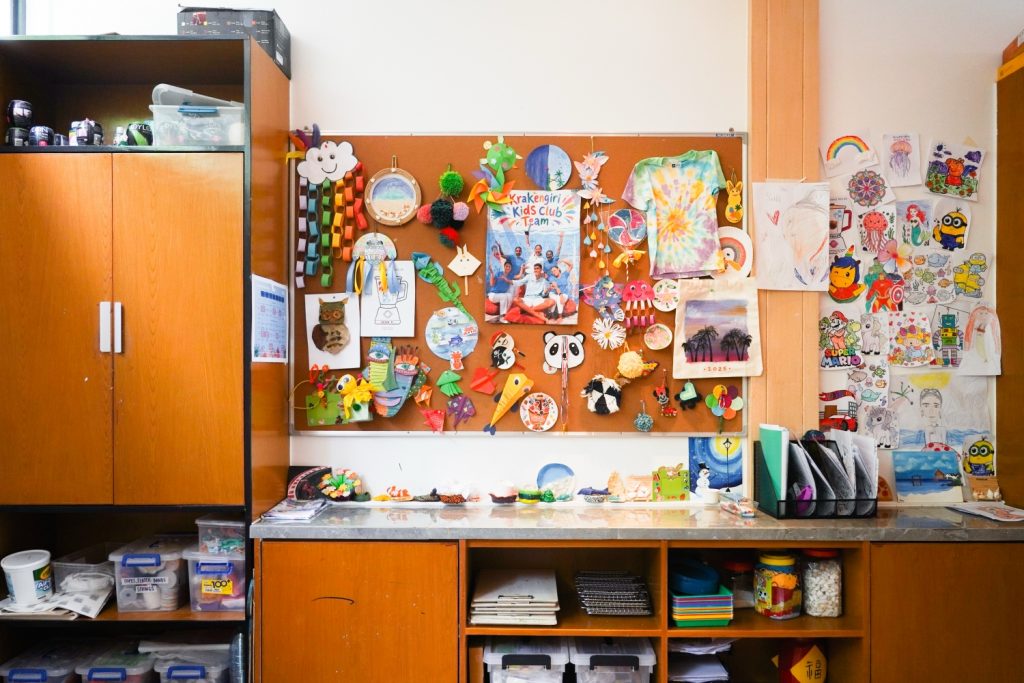
Krakengiri’s daily programme is developed with the age and developmental stage of participating children in mind. Some team members have backgrounds in education, including early childhood education, which contributes to the planning process.
“The programme is created based on developmental stages,” Gesta explains. “We design the activities to be inclusive. Even when an activity has the same name, the way we execute it can be different.”
This flexibility allows the team to adapt one activity for several ages rather than limiting participation to a narrow group. A younger child may complete a task with more guidance, while an older child may be given greater independence or a more complex version of the same activity.
The aim is not only participation but also a sense of achievement.
“We make sure children of different ages can enjoy the activities, have fun with us and feel a sense of success when they complete something,” she says.
The programme is reviewed according to guest profiles, seasons and resort events. Rainy-day options are prepared, while activities are also adapted for Christmas, Easter, Eid and other periods in the resort calendar.
“We always update and refresh the activities depending on the market and the season,” Gesta says. “We have rainy-day activities and regular activities. During Christmas, Easter and Eid, we make sure the programme aligns with the celebration.”
The team’s emphasis on inclusion also means avoiding a single measure of success. For one child, success may mean completing an art project. For another, it may mean joining a group for the first time or spending an hour away from a parent without feeling distressed.
This need for personalisation is one reason Gesta says the work cannot be managed only through procedures.
“Working with children is something that requires personalisation all the time,” she says. “It is not all in a handbook. A handbook can explain how to greet someone, but what works with one child or family may not resonate with another family.”
Planning across departments
Festive periods place further demands on the team. They involve larger programmes, decorations, events and coordination with departments across the resort.
“Festive is always a big project for us,” Gesta says. “It is the busiest time, but it is also a time when we work together, not only within the kids’ club. We collaborate with many departments to create the festive programme.”
Planning begins well before guests arrive. Once one festive period ends, discussions for the next often begin. The process includes choosing themes, evaluating previous activities and considering how to offer something different for repeat guests.
“As soon as we finish one festive period, we are already brainstorming the next theme and what we want to provide,” she says. “We have many repeat guests, so we want to make sure that we always offer something new.”
Every member of the Krakengiri team is included in this process. Ideas are discussed collectively, while previous programmes are reviewed to identify what worked and what should be changed.
“I involve all the team members in contributing ideas and evaluating what worked and what did not,” Gesta says. “From there, we decide what we want to offer and create.”
Although the children’s club has a defined audience, its festive contribution is not limited to children. The team also considers how activities can involve parents, families and couples, allowing the programme to form part of the resort-wide experience.
“During festive periods, we want to involve all guests,” she says. “Even if they are not travelling with children, we want couples and other guests to enjoy the celebrations.”
Bringing families back
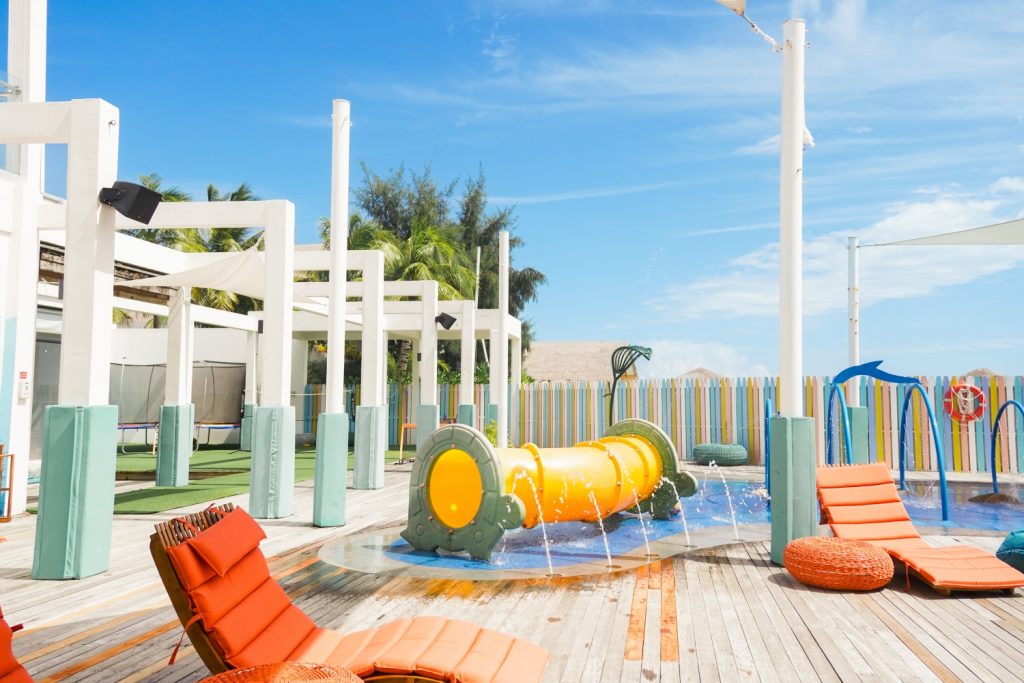
Within hospitality, repeat business is often discussed through commercial performance, loyalty programmes and brand relationships. At the operational level, however, a return visit can begin with a child asking to go back to a place where they felt recognised.
Gesta measures the team’s work through these moments. Awards matter, but so do the smaller signs that a family has formed a connection with the resort.
“I celebrate every achievement, not only an award or something big,” she says. “The most rewarding part is when a family is happy and when a family returns.”
She recalls a message often shared by the resort’s commercial team: the commercial function may bring a guest for the first stay, but the operational teams help bring them back for the second.
“When a family comes back, or when they are still at the resort and already planning their second stay, that is the most rewarding part,” Gesta says. “When a guest says, ‘We are leaving tomorrow, but we are coming back in December,’ that is priceless for me.”
The children’s club contributes to this return by maintaining relationships throughout a stay. Children become familiar with the team, learn the activity programme and begin to treat the space as part of their daily routine. For parents, that familiarity reduces the uncertainty involved in leaving a child in someone else’s care.
Years later, Gesta hopes families will remember the experience through one simple thought: “The best holiday ever.”
Working with patience and purpose
Managing a team of eight people from six nationalities brings different cultures, communication styles and professional experiences into one department. Gesta acknowledges that this requires effort, but says the work itself gives the team a common point of connection.
“It is never easy to work with different cultures or different backgrounds,” she says. “But when you work with children, it does not matter where you are from. You work with love.”
Patience is an expected part of children’s club work, but Gesta believes patience alone is not enough. Team members must care about the children, the families and each other. They must also understand that each interaction contributes to the family’s view of the resort.
“People always say, ‘You work with children, so you must be very patient.’ Yes, that is true, but you cannot work with children if you do not work with love,” she says.
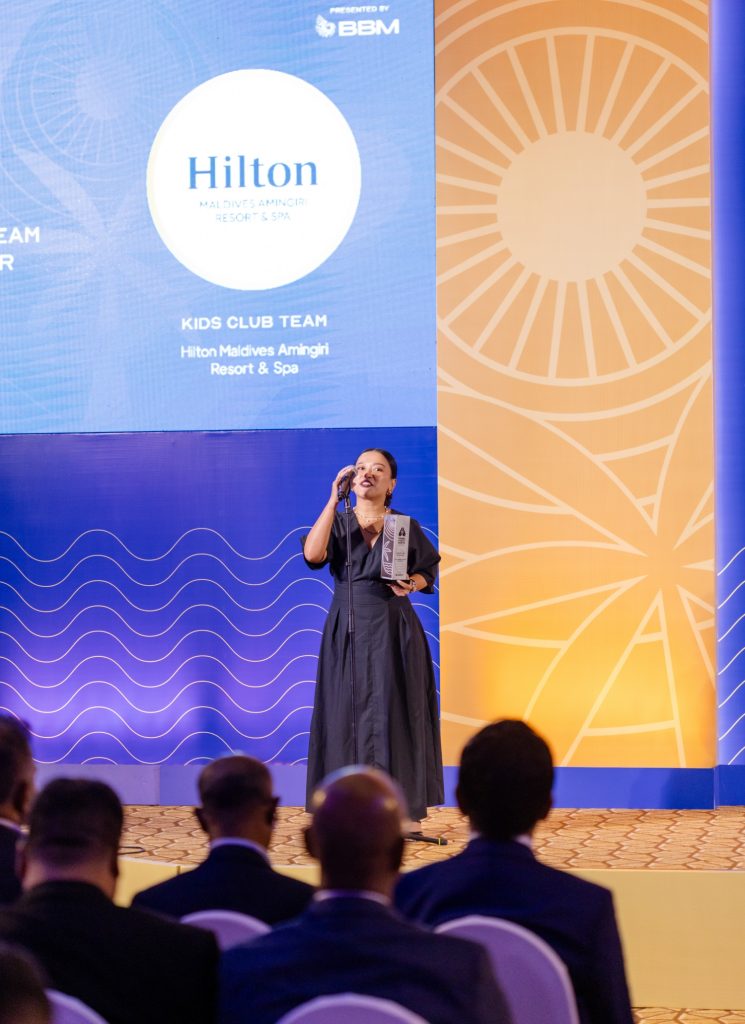
For Gesta, the Hotelier Maldives Awards recognition confirms that the team’s work is being felt beyond the department.
“This award proves once again that the Krakengiri Kids’ Club team always works with love, and that is reflected in the result,” she says. “The guests are happy, the team is happy, and I am proud of my team.”
The Support Team of the Year award recognises a department with a small number of people but a role that reaches across the family journey. Through its approach to trust, inclusion, teamwork and personalisation, Krakengiri Kids’ Club helps children find their own place within the resort while giving parents the confidence to experience theirs.
For the team, that is the work behind the trophy: children who do not want to leave the club, parents who can enjoy the island without worry, and families who begin planning their return before the first holiday has ended.