



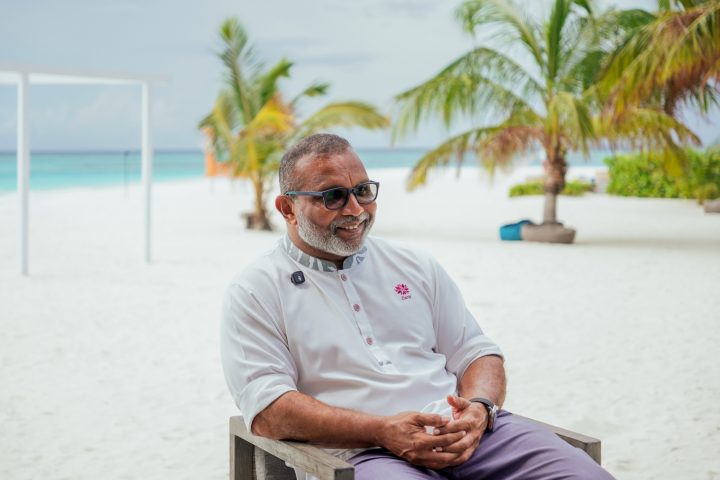
From recognition to responsibility: Ahmed Zahir on building Maldivian leadership at Angsana Velavaru
When Ali Shareef was named Procurement Personality of the Year at the Hotelier Maldives Awards 2026, the recognition reached beyond one employee and one department. It highlighted a function on which every part of an island resort depends, and it gave Angsana Velavaru a public example of the Maldivian career development that General Manager Ahmed Zahir has made a focus of his leadership.
For Zahir, the award reflects both Shareef’s work and the role he plays within the resort community.
“We are extremely proud of Ali’s achievement,” Zahir says. “He has gone beyond his normal duty and done everything to ensure that we have a smooth operation. He fully deserves it.”
Shareef handles procurement without departmental assistance, a responsibility made more demanding by the resort’s location. Angsana Velavaru relies on goods sourced from Malé and from overseas, with no option to make a quick trip to a nearby supplier when stock runs short or an operational need changes. Procurement affects villas, food and beverage, engineering, housekeeping, associate welfare and the guest journey. Timing, cost and quality have to be managed together.
“We are an isolated island, dependent on supplies from different parts of the world, and we are far away from Malé,” Zahir says. “You cannot go out and get things that easily. Procurement is important to ensure a smooth operation for guests as well as staff.”
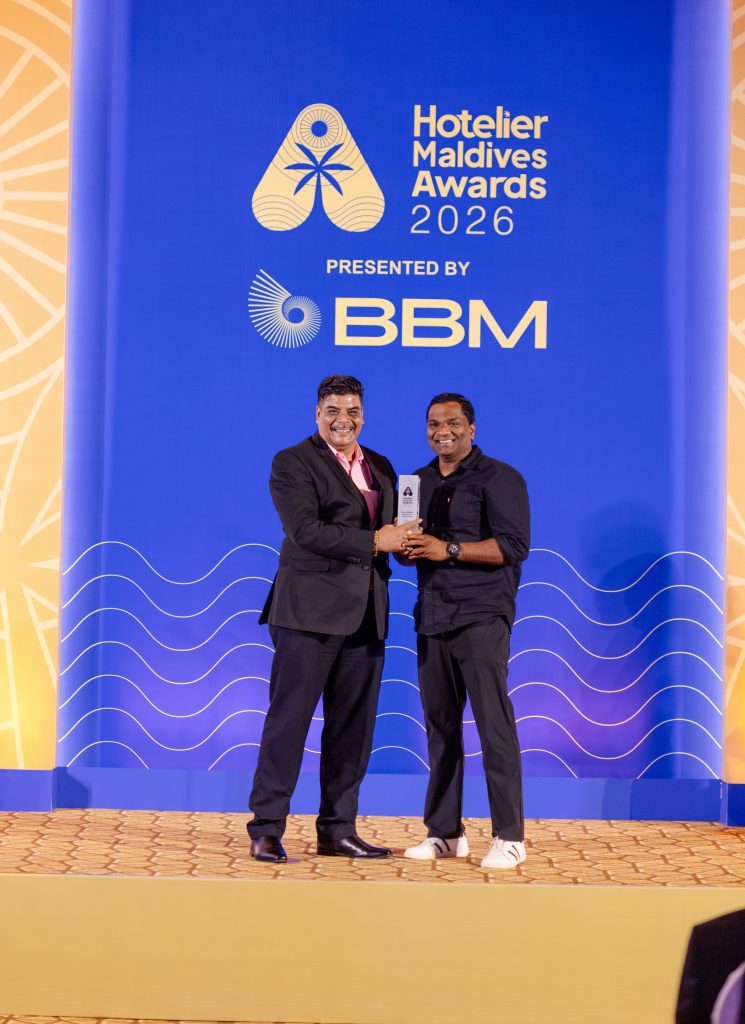
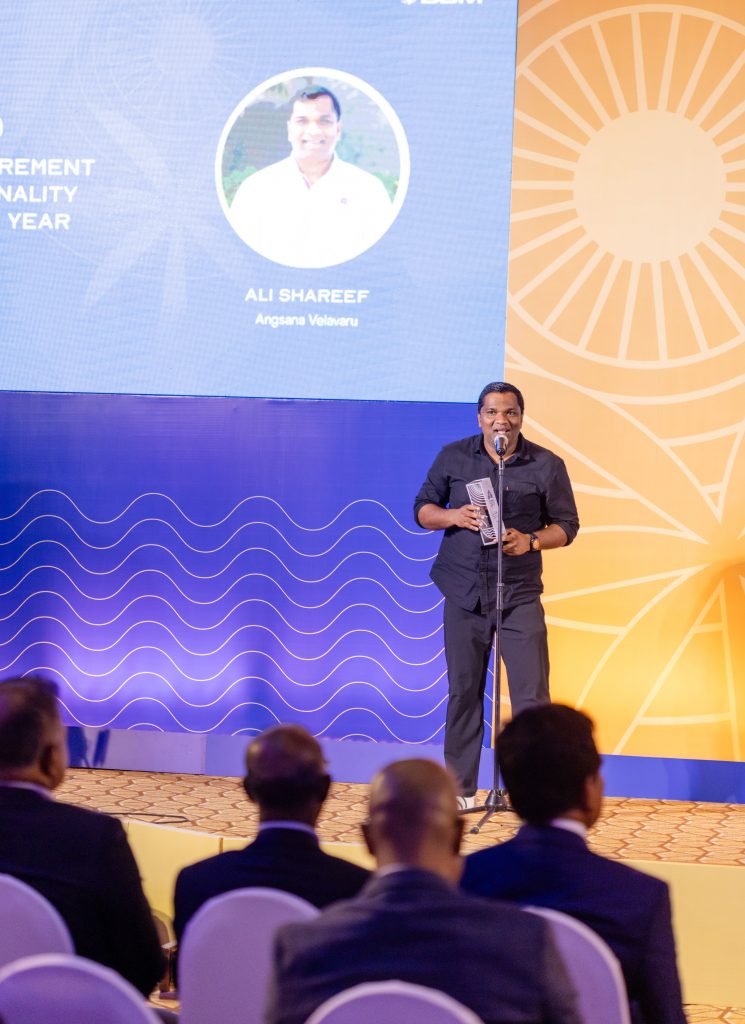
That responsibility includes the needs of 246 associates who live on the island. It also requires Shareef to anticipate demand across a 113-villa resort and work with departments whose requirements differ from day to day. Zahir describes him as reliable and willing to contribute outside the limits of his position. On days off, Shareef has helped colleagues purchase personal goods and arrange air tickets. He also takes leadership roles in community activities that are not part of his job description.
These actions matter to Zahir because his view of leadership is not confined to title or rank. He looks for people who take initiative, support colleagues and accept responsibility. Shareef’s award gives that form of leadership visibility in a part of hotel operations that guests seldom see.
A route from junior roles to leadership
Zahir’s commitment to local development is grounded in his own career. He began in a junior role and progressed to become the first Maldivian general manager within the group. That experience shapes how he speaks to associates who may not yet see a route beyond their current position.
“Sometimes we put barriers and boundaries around ourselves and think that is our limit,” he says. “What I always tell Maldivians is that we have the potential, like anyone else in the industry. It is not limited to certain nationalities or expatriates.”
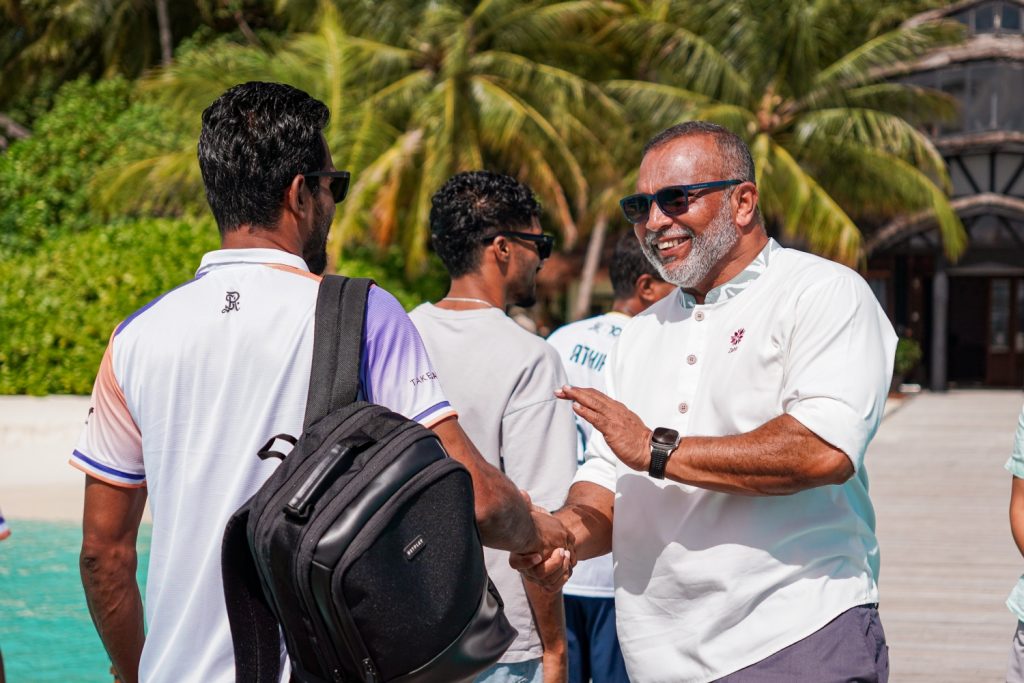
At Angsana Velavaru, more than 75 per cent of leadership positions are held by Maldivians. Zahir presents this not as an end point, but as the result of a system intended to identify potential and turn it into progression.
Associates are encouraged to go beyond their daily tasks and take on more responsibility. Performance is reviewed twice each year, giving managers a structured way to record strengths, identify gaps and select high-potential employees. Those selected receive individual development plans tailored to the skills and experience they need. A Learning and Development department supports the process, while Banyan Academy gives associates access to digital learning materials that they can use at their own pace.
International exposure is another part of the approach. Associates may be sent to sister properties in other countries for cross-postings and experience in different operations. Zahir sees this exchange as useful for both Maldivian and expatriate employees. Local team members contribute knowledge of Maldivian culture, language and guest expectations, while international colleagues share experience from other markets and hotel environments.
The aim is not to remove mistakes from the development process. Zahir expects them and treats them as part of learning.
“We let them do things at their own pace and in their own way,” he says. “When they make mistakes, we do not punish or discourage them. We encourage them to learn from those mistakes, not repeat them, and then grow.”
Many of the resort’s current leaders, he notes, moved gradually from junior positions. His role is therefore partly operational and partly that of a mentor: setting expectations, allowing room for decisions, and providing support when an associate encounters a limit in experience.
Making Heart of House careers visible
The attention generated by Shareef’s award also raises a wider industry question. Careers in procurement, engineering, finance and housekeeping can be less visible than front-office and other guest-facing roles. Guest comments tend to name the employees with whom they have direct contact, leaving much of the work behind a stay unmentioned.
Angsana Velavaru addresses that imbalance through observation and internal recognition. Senior managers are expected to follow the performance of Heart of House teams as well as Front of House employees. The resort selects two Associates of the Month: one from each area. This gives staff in operational departments a route to recognition that does not depend on being named in guest feedback.
Visibility, however, is only one part of retention. Island employment separates associates from their home communities and families for extended periods. Zahir believes that day-to-day access to managers can reduce some of the distance created by hierarchy.
“We create a family-oriented and inclusive work environment because we are working on an isolated island, far away from our family members,” he says. “During working hours, we are managers. After duty hours, we are one family.”
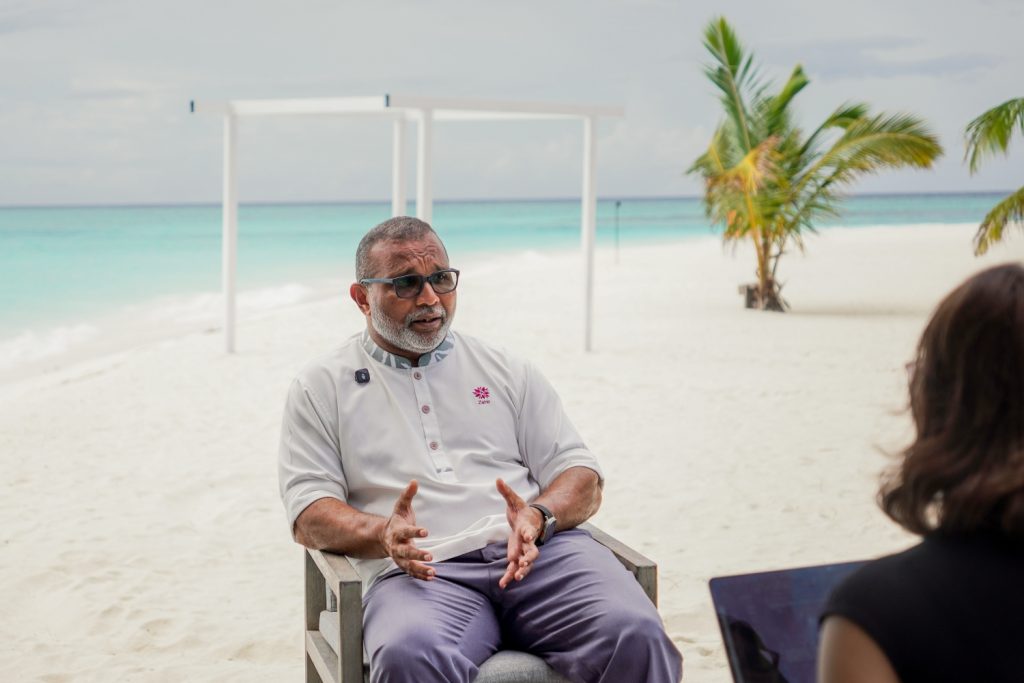
Senior managers eat in the associate restaurant, and team members spend time together outside work. Junior associates can approach a head of department or the general manager to discuss personal matters or problems encountered on the job. For Zahir, these informal conversations do not replace management systems; they help leaders hear concerns that may not surface in a meeting or appraisal.
Formal communication remains central to running the resort. Heads of Department meet each morning to review financial and operational performance and assign follow-up actions. In the afternoon, Front of House and Heart of House leaders review guest movements, requests and operational requirements for the next three days. Departmental briefings then carry key information to teams, while monthly meetings give senior managers a forum to share wider updates. Viber and WhatsApp groups connect heads and assistant heads of department between meetings, particularly during periods of high occupancy.

The structure illustrates Zahir’s wider point about operations: a guest experience may appear seamless, but it is produced by continuous coordination among departments. A procurement delay can affect a kitchen, an engineering task can determine whether a villa is ready, and transport information can change the workload for several teams. Each function depends on timely information from the others.
Measuring what happens beyond the score
Zahir does not define operational performance only through guest satisfaction. Angsana Velavaru is assessed through group audits and external programmes including Leading Quality Assurance and EcoSure. External audits are conducted annually without advance notice, and benchmark scores set the minimum expected result. When a key performance indicator is missed, the resort must prepare corrective action and close the gap within a set period.
Over the past three years, Zahir says, the resort has exceeded its benchmarks in all three audit areas. He points in particular to a score of 97 for emotional intelligence in a recent LQA assessment, a measure connected to how associates communicate and interact with guests.
The audit result is supported by what leaders do between assessments. Zahir expects managers to leave their offices, observe work and address problems as they arise.
“Every day, we do not just sit in the office and do paperwork,” he says. “We go out and observe. When we see something that needs to be addressed, we address it in a way that does not hurt the associate’s emotions.”
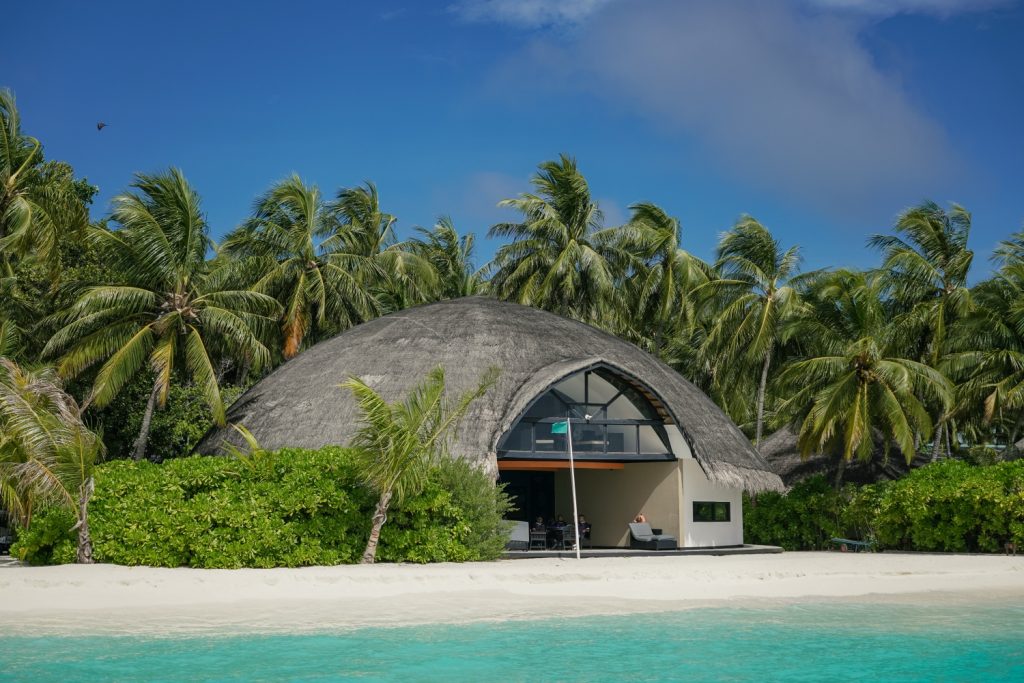
The Learning and Development team then turns observed gaps into training for the relevant employees. This links measurement with action: audits provide an external check, while daily observation and coaching allow the resort to respond before a score arrives.
The same balance between systems and people informs the resort’s response to changing guest expectations. Angsana Velavaru incorporates Maldivian cuisine and activities into the guest journey and trains employees to explain local culture and traditions. Its operational measures include solar panels, the removal of single-use plastic bottles and bags, and marine conservation programmes, supported by awareness sessions for associates.
Physical investment is guided by guest feedback and managers’ observations. As an established resort competing with newer properties, Angsana Velavaru focuses on targeted work rather than relying on frequent full closures for renovation. Villa upgrades and furniture replacement form part of that process. A futsal pitch is a recent addition and is serving as the venue for the Resort League 2026 Dhaalu Zone, giving the investment a staff and community function as well as a physical one.
Trusting the process
Shareef’s recognition brings these strands together. His work demonstrates the operational importance of procurement, but his career also shows how responsibility can grow away from the guest-facing spotlight. Zahir’s own progression adds another example for Maldivians considering whether hospitality can offer a long-term profession.
His advice is direct: seek opportunities to learn, accept that progress takes time, and do not confuse a current position with a career limit.
“Never doubt your potential, and never let a learning opportunity slip away,” he says. “Success will not come overnight. You have to work hard for it. Learn from your mistakes, trust the process, have a goal and walk towards that goal.”
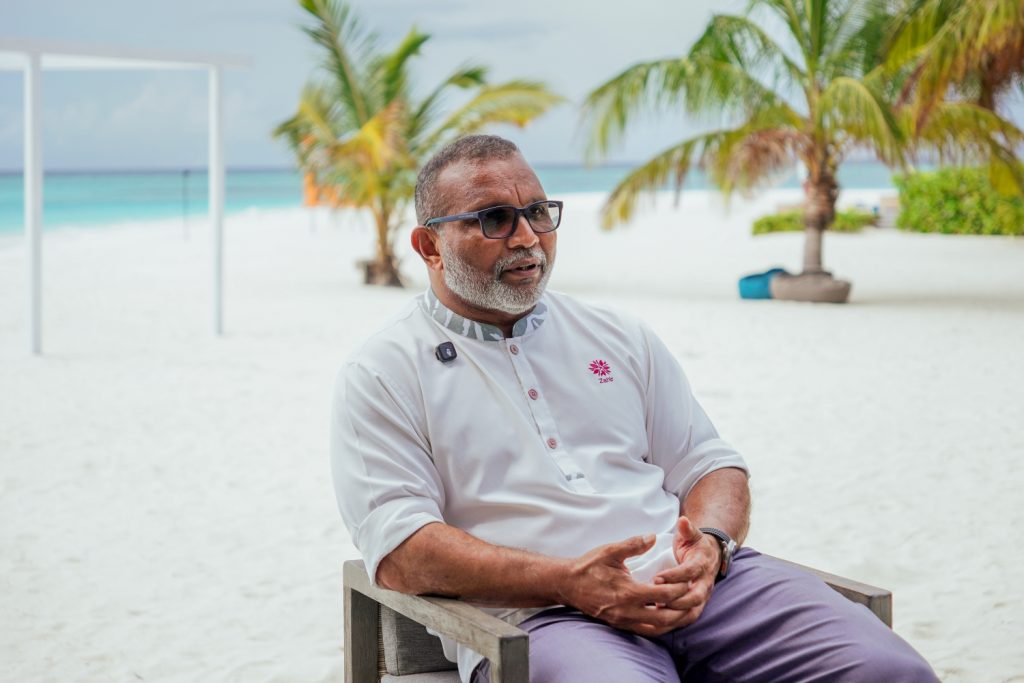
This message is consistent with the management practice he describes: give people responsibility, review performance, provide access to learning, let employees test themselves and recognise work across the resort. Awards offer a public marker, but development is built through decisions made before the nomination and after the ceremony.
Zahir is also careful not to make the resort’s results a story about the general manager alone. He regards his position as an opportunity to support a team whose work produces the outcome.
“It is not because of me as General Manager that we have achieved what we have achieved,” he says. “It is because of the team. I have been lucky enough to be the General Manager of this hotel with this team, and I would like to thank the whole Angsana Velavaru family for their hard work, dedication, passion and the friendship they show towards me.”
For Angsana Velavaru, Ali Shareef’s award is therefore both a result and a reference point. It recognises the person responsible for keeping supplies moving to an island operation. It also makes visible the wider case Zahir is advancing: that Maldivians can build careers across every part of a resort when initiative is met with training, trust and a route to responsibility.